 By Karan Singh
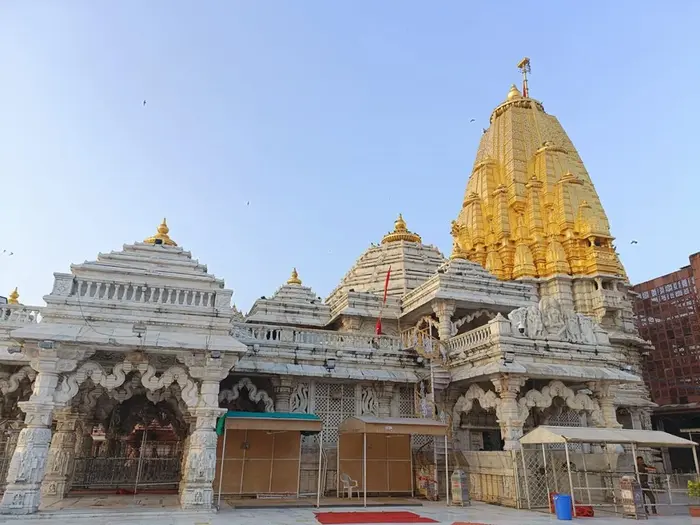
 Here’s something that genuinely surprises first-time visitors at Ambaji: there’s no idol inside the sanctum. Devotees come from across Gujarat and Rajasthan to worship a sacred Shree Yantra instead — a geometric symbol representing the Goddess, kept in a small cave-like chamber that’s never been photographed. This is one of the 51 Shakti Peeths, believed to be where Goddess Sati’s heart fell, and over 1.25 crore devotees visit annually, with millions more converging during Bhadarvi Poonam alone. If you’re planning a visit, knowing the temple’s three-session schedule and the Gabbar Hill climb genuinely shapes how smoothly your pilgrimage goes.
|
Detail |
Information |
|
Temple |
Shri Arasuri Ambaji Mata Temple |
|
Deity |
Maa Amba (worshipped as Shree Yantra, no traditional idol) |
|
Location |
Ambaji, Danta Taluka, Banaskantha District, Gujarat |
|
Morning Darshan |
7:00 AM – 11:30 AM |
|
Afternoon Darshan |
12:30 PM – 4:30 PM |
|
Evening Darshan |
6:30 PM – 9:00 PM |
|
Entry Fee |
Free for all devotees |
|
Gabbar Ropeway |
₹125 (adults), ₹70 (children) |
|
Nearest Railway Station |
Abu Road, Rajasthan (~20–23 km) |
|
Nearest Airport |
Ahmedabad (~180–185 km) |
Temple Timings: The Three-Session Daily Schedule
Ambaji Temple follows a structured three-session pattern with two closure breaks built in. Morning darshan runs from 7:00 AM to 11:30 AM, followed by a break until 12:30 PM. The afternoon session then continues from 12:30 PM to 4:30 PM, closing again for a longer evening break until 6:30 PM, when the final evening session opens and runs until 9:00 PM.
Both closures — 11:30 AM to 12:30 PM and 4:30 PM to 6:30 PM — are specifically for ritual preparation and cleaning, not optional windows you can slip into. The temple remains open all 365 days of the year, with these three sessions repeating daily regardless of season.
Aarti schedule:
- Morning Aarti — 6:00 AM
- Afternoon Aarti — 12:00 PM
- Evening Aarti — 7:00 PM
Best time for a peaceful visit: Early morning between 7:30 AM and 9:00 AM on weekdays offers the calmest atmosphere, well before crowds build through the day. Weekends and festival days, particularly Navratri and Bhadarvi Poonam, see dramatically heavier footfall.
Understanding the Shree Yantra: What You’re Actually Seeing
This is genuinely what sets Ambaji apart from nearly every other major Indian temple. Instead of a traditional idol, the sanctum houses a gold-plated Shree Yantra inscribed with 51 Bijpatras — one representing each of the 51 Shakti Peeths across India. This sacred geometric form rests in the Gokh, a small cave-like inner chamber, positioned so devotees can view it during darshan, but it has never been and will never be photographed.
For visitors expecting a conventional deity statue, this can initially feel unfamiliar. But many devotees describe the experience as more profound precisely because of this — understanding that the Goddess is represented through sacred geometry rather than form adds a different, contemplative layer to the darshan itself.
Photography rule: No photography is permitted inside the sanctum under any circumstances, and mobile phones, cameras, and electronic gadgets are strictly prohibited inside the temple premises entirely — not just around the sanctum.
Gabbar Hill: The Original Shakti Peeth Site
Roughly 3 to 5 km from the main temple sits Gabbar Hill, the rocky hilltop where Sati’s heart is specifically believed to have fallen — making it, in many devotees’ understanding, the original and primary site of this Shakti Peeth, with the main Ambaji temple below serving as the more accessible daily place of worship.
Reaching the summit involves climbing 999 steps, though a ropeway (operated by Udan Khatola) offers a much faster alternative, taking just 5 to 10 minutes to reach the top. Ropeway tickets cost around ₹125 for adults and ₹70 for children, making it a genuinely practical option for elderly visitors, families with young kids, or anyone who finds the full climb too demanding.
Gabbar Aarti timings: Morning around 7:30 AM, evening around 6:30 PM. The traditional pilgrimage sequence most devotees follow is completing main temple darshan first, then climbing or taking the ropeway up to Gabbar Hill afterward.
Important 2026 note: The evening light and sound show normally held at Gabbar Hill’s summit is currently suspended — the climb itself and shrine darshan remain unaffected, but if the light show was part of your plan, verify current status on ambajitemple.in before traveling.
Festivals: Navratri and Bhadarvi Poonam
Navratri stands as the most significant annual celebration at Ambaji. Over nine nights, the temple transforms with continuous bhajans, traditional Garba performances, and special decorations, drawing lakhs of devotees from Gujarat, Rajasthan, Madhya Pradesh, and beyond. Temple timings extend significantly during this period, with additional darshan counters and organized queue systems put in place.
Bhadarvi Poonam, the full moon of the Hindu month of Bhadrapad (typically September), marks the single largest annual gathering at Ambaji — one of the biggest Shakti Peetha festivals in India. The entire town transforms during this fair, with the state government deploying special transport, additional police, and extended medical services to manage the crowds. Since the exact date follows the lunar calendar and shifts yearly, check ambajitemple.in closer to September for the confirmed 2026 date.
Ambaji Bhojanalaya: Meals for Pilgrims
The temple trust runs a well-managed dining facility, the Shree Ambika Bhojanalaya, serving simple, sattvic Gujarati meals — typically roti, dal, rice, sabzi, and occasionally sweets. Meals are affordably priced, with a full meal typically running around ₹165, children’s portions around ₹115, and a full meal with sweet around ₹215, though exact rates can shift slightly.
The bhojanalaya operates daily and extends its hours during festivals and peak pilgrimage seasons to handle increased crowds — arriving a bit early during busy periods helps avoid the longer waits that build up later.
Location: Where Exactly Is the Temple?
Ambaji Temple sits in Ambaji town, Danta Taluka, Banaskantha district, Gujarat, right near the Gujarat-Rajasthan border, surrounded by the peaceful Aravalli hills. This border location is part of why the temple draws devotees so heavily from both states, with Rajasthan pilgrims often finding it just as accessible as those traveling from within Gujarat.
How to Reach Ambaji Temple?
By Rail
Abu Road Railway Station in Rajasthan is the nearest, about 20 to 23 km from the temple, with strong connections to Delhi, Mumbai, Jaipur, and Ahmedabad. Taxis, autos, and buses run regularly from the station into Ambaji town.
By Air
Sardar Vallabhbhai Patel International Airport in Ahmedabad is the nearest, roughly 180 to 185 km away, translating to a 4 to 5-hour road journey. From the airport, taxis, cabs, or buses complete the trip.
By Road
From Ahmedabad, expect about 180 km and 3.5 to 4 hours by car. Palanpur, a closer regional hub, sits around 60 to 70 km away, roughly 1.5 hours. The temple itself is a short walk or auto ride from the Ambaji bus stand, which sits within the town.
Frequently Asked Questions
Q: We’re arriving around noon expecting continuous darshan — will we get in?
Possibly not immediately. The temple closes daily from 11:30 AM to 12:30 PM for ritual preparation, so arriving right at noon likely means waiting for the afternoon session to open. Plan your arrival either before 11:30 AM or shortly after 12:30 PM to avoid this gap.
Q: We have elderly parents who can’t manage 999 steps at Gabbar Hill — is the ropeway a reliable alternative?
Yes, the Udan Khatola ropeway is specifically designed for exactly this situation, taking just 5-10 minutes to reach the summit for around ₹125 per adult and ₹70 per child. It’s a genuinely practical option that lets elderly or mobility-limited visitors still experience the original Shakti Peeth site without the physical strain of the full climb.
Q: s it worth planning our trip around Bhadarvi Poonam, or will the crowds make the experience overwhelming?
Bhadarvi Poonam is genuinely one of the most spiritually significant times to visit, drawing millions for a reason, but it does mean substantially longer queues, extended waits, and a much busier town overall. If a peaceful, unhurried darshan matters more to you than experiencing the grand fair atmosphere, a regular weekday outside major festival periods will serve you better.
Q: Can we bring our phones to photograph the temple exterior and Gabbar Hill views?
Photography and electronic devices are strictly prohibited inside the temple premises entirely, not just within the sanctum, so plan to leave phones and cameras secured before entering. Once you’re outside the temple complex — including areas around Gabbar Hill’s base and the surrounding Aravalli scenery — photography is generally not restricted in the same way.