 By Karan Singh
 Ask any Delhi local for a day-trip recommendation that doesn’t cost much but still feels like a full experience, and Akshardham comes up almost immediately. It’s free to enter, it’s genuinely one of the most architecturally stunning places in the country, and yet most first-timers still end up confused at the gate — not sure what’s actually free, what needs a ticket, whether their phone gets confiscated, or why the water show keeps getting mentioned by everyone who’s been. If you’re planning a visit, here’s the complete picture so you walk in knowing exactly what to expect.
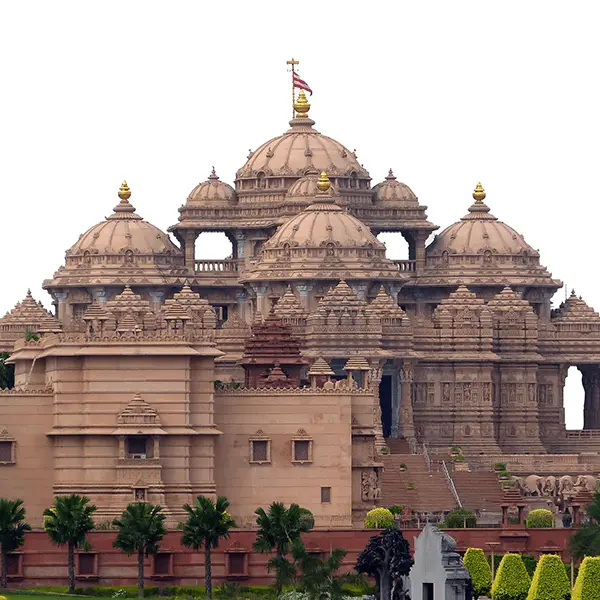
|
Detail |
Information |
|
Full Name |
Swaminarayan Akshardham, New Delhi |
|
Location |
NH 24, Pandav Nagar, East Delhi – 110092 |
|
Temple Darshan |
Free |
|
Complex Timings |
9:30/10:00 AM – 6:30/8:00 PM (varies by section) |
|
Exhibition Timings |
11:00 AM – 6:00 PM |
|
Water Show |
After sunset, usually 7:15–7:30 PM |
|
Weekly Off |
Closed every Monday |
|
Exhibition Ticket |
Approx. ₹220–250 (adults) |
|
Water Show Ticket |
Approx. ₹80–110 (adults) |
|
Nearest Metro |
Akshardham Station (Blue Line) – 5-minute walk |
Akshardham Temple Timings: What’s Actually Open When
Akshardham runs on a genuinely layered schedule, and this is where most first-time visitors get tripped up. The temple darshan itself — the main mandir where you view the gold-plated idol of Bhagwan Swaminarayan — is typically open from around 10:00 AM to 8:00 PM, though some sources cite the broader complex gates opening as early as 9:30 AM.
The paid exhibitions (Hall of Values, the giant screen film, and the boat ride) run on a tighter window, generally 11:00 AM to 6:00 PM, with the ticket counter itself closing earlier — often by 5:30 PM — even though the complex stays open later. This gap between “complex closes” and “ticket counter closes” is exactly what catches people out. If your priority is the exhibitions, don’t count on walking in after 5:30 PM expecting to buy a ticket.
The Sahaj Anand Water Show, held at the massive Yagnapurush Kund stepwell, starts after sunset — typically between 7:15 PM and 7:30 PM depending on the season. This is genuinely the highlight for most evening visitors, and arriving in good time for seating matters since it draws large crowds nightly.
The entire complex is closed every Monday without exception, along with select major festival days like Diwali — so build that into your Delhi itinerary before finalizing your date.
Best strategy for a full day: Arrive by 10:00–10:30 AM for peaceful morning darshan, move to exhibitions by late morning, have lunch at the on-site food court, revisit the main temple in the afternoon, and close the evening with the water show around 7:15 PM. Budget a full 4 to 5 hours if you want to cover everything comfortably.
Akshardham Temple Darshan and Ticket Pricing
Here’s the detail that surprises almost everyone: entry to the main temple and darshan is completely free. You can walk in, view the mandir, wander the gardens, and experience the core spiritual purpose of Akshardham without spending a single rupee.
Where the costs come in is the paid attractions:
- Exhibitions (Hall of Values, giant screen film, cultural boat ride combined) — approximately ₹220 to ₹250 for adults, with lower rates for seniors and children
- Water Show — approximately ₹80 to ₹110 for adults, with a reduced children’s rate
- Abhishek Mandap ritual — around ₹50 per person, for those wanting a personal worship ritual
Pricing varies slightly across different visitor reports and time periods, so treat these as a close estimate rather than an exact figure — confirming at the counter on arrival is your safest bet.
Important booking note: As of 2026, Akshardham does not offer online ticket booking for individual visitors. All exhibition and water show tickets must be purchased in person at the on-site counters, on a first-come, first-served basis. The one exception is large groups of 50 or more, who can request advance booking through the official website at least a week ahead.
Akshardham Temple Dress Code and Security Rules
Akshardham runs some of the strictest security protocols of any Delhi attraction, and knowing them in advance saves real time at the gate.
Electronics: Mobile phones, cameras, smartwatches, pen drives, and headphones are strictly banned inside. Everything gets deposited at a free cloakroom near the entrance — but queues here can run long on weekends, so factor in 15 to 20 extra minutes.
Dress code: Shoulders and knees need to be covered. If your outfit doesn’t meet this, sarongs are provided free of charge with a refundable deposit — so it’s not a dealbreaker if you show up underdressed, just a minor inconvenience.
Bags: Only small purses are allowed inside; backpacks and larger bags aren’t permitted and will need to go into the cloakroom as well.
Photography: Completely prohibited throughout the complex. If you want a memory of the visit, professional photographers on-site sell pictures you can purchase before leaving.
Payment: Ticket counters are cash-only in most reports — carry sufficient cash, since digital payment isn’t reliably accepted everywhere inside.
Akshardham Temple Location: Where Exactly Is Akshardham?
Swaminarayan Akshardham sits on NH 24 in Pandav Nagar, East Delhi, close to the Yamuna River and near the Noida border. The complex spans over 100 acres, making it one of the largest religious and cultural campuses in the country — genuinely large enough that first-time visitors often underestimate how much walking is involved.
What makes the location distinctive is how visible and easy to navigate it is — cab drivers and locals across Delhi recognize “Akshardham” instantly as a landmark, and the metro station sharing its name sits almost directly opposite the main gate.
How to Reach Akshardham Temple?
By Metro
This is genuinely the easiest and fastest way in. Akshardham Metro Station on the Blue Line is just a 5-minute walk from the temple gate, with the exit opening almost directly opposite the complex entrance. If you’re coming from anywhere along the Blue Line corridor — which runs from Dwarka in the west through to Noida and Vaishali in the east — this is your best option, especially given how congested NH 24 traffic can get during peak hours.
By Road
The temple sits directly on NH 24, one of Delhi’s key eastern arterial roads. Taxis and auto-rickshaws reach the complex easily from anywhere in the city, though road traffic near the temple can slow things down significantly during rush hour — another reason the metro is often the faster choice.
By Rail
Anand Vihar Railway Station is the closest at about 6 km away, while New Delhi Railway Station is roughly 12 km out. Both connect to Akshardham via metro or a short taxi ride.
By Air
Indira Gandhi International Airport is about 25 km from the temple, with a taxi ride typically taking 45 to 60 minutes depending on traffic. Metro connectivity is also available from the airport terminals if you’d rather skip the road congestion.
Akshardham genuinely earns its reputation as one of Delhi’s most complete day-trip destinations — free spiritual access at its core, with enough paid cultural and evening entertainment layered on top to fill an entire day without ever feeling repetitive. Plan around the Monday closure, arrive early enough to beat the exhibition counter’s earlier cutoff, and save the water show for last — it’s the kind of ending that makes the whole day worth the trip.
Frequently Asked Questions
Q: Is it worth paying for both the exhibitions and the water show, or should we pick just one?
If you only have half a day, the water show tends to leave the stronger impression given its scale and technology, but the exhibitions — especially the boat ride through Indian history — offer a genuinely different, more contemplative experience. For a first visit with a full afternoon and evening available, doing both is worth the roughly ₹300–350 combined cost per adult.
Q: We’re travelling with young kids — will the strict no-electronics rule be a hassle?
It’s manageable but worth planning around. Leave phones, tablets, and any gadgets in your car if you’re driving, or budget extra time at the cloakroom queue if you’re arriving by metro. Kids generally do fine here since the exhibitions and water show are visually engaging enough to hold their attention without any screens.
Q: Can we skip the exhibitions entirely and just do a free darshan visit?
Absolutely, and plenty of visitors do exactly this. A basic darshan-only visit takes about 1 to 1.5 hours, covers the main temple and gardens, and costs nothing at all — a good option if you’re short on time or specifically want the spiritual experience without the added activities.
Q: What happens if we arrive after 6 PM planning to see the exhibitions?
You’ll likely miss them, since the exhibition ticket counter typically closes by 5:30 PM even though the broader complex stays open later into the evening. If evening arrival is your only option, shift your plan to prioritize darshan and the water show instead, and save the exhibitions for a future visit or an earlier arrival next time.
Q: Is there anywhere to eat inside, or should we plan to leave the complex for food?
The Premvati Food Court inside the complex serves pure vegetarian meals, including thalis, dosas, and snacks, at reasonable prices — genuinely convenient enough that most visitors don’t need to leave at all during a full-day visit.