 By Karan Singh
 Walk through any of Meenakshi Amman Temple’s four towering gopurams, and you’ll understand instantly why Madurai is called the Athens of the East. This isn’t just a temple visit — it’s stepping into 2,500 years of continuous worship, architecture, and Tamil culture, all in one sprawling complex right at the city’s heart. But between the strict no-electronics policy, the daily midday closure, and the temple’s famous evening ceremony that draws crowds specifically to watch it, a bit of planning transforms this from a rushed tourist stop into the genuinely moving experience it’s meant to be.
Quick Overview
| Detail | Information |
| Temple | Arulmigu Meenakshi Sundareswarar Temple |
| Deities | Goddess Meenakshi (Parvati) and Lord Sundareswarar (Shiva) |
| Location | Madurai, Tamil Nadu – 625001 |
| Morning Darshan | 5:00 AM – 12:30 PM |
| Evening Darshan | 4:00 PM – 10:00 PM |
| General Darshan Fee | Free |
| Special Darshan | ₹50 (single deity) / ₹100 (both deities) |
| Nearest Railway Station | Madurai Junction (~2 km) |
| Nearest Airport | Madurai International (~12 km) |
Temple Timings: The Two-Session Daily Schedule
Meenakshi Amman Temple follows a genuinely consistent daily rhythm — morning darshan from 5:00 AM to 12:30 PM, followed by a substantial midday closure, then evening darshan resuming at 4:00 PM and continuing until 10:00 PM. General darshan typically opens about 30 minutes after the temple’s actual opening time, once the morning prayers and rituals are complete.
That midday gap — roughly 12:30 PM to 4:00 PM — is the detail most first-time visitors don’t account for. If you’re planning a Madurai day trip and hope to squeeze in a quick early-afternoon visit, you’ll find the doors closed for a solid three and a half hours. Plan your visit around either session rather than assuming continuous access.
Key daily rituals worth knowing:
- Thrikalasandhi and Uchikkal Puja — late morning rituals
- Maalai Aarti — the evening lamp ceremony
- Palliarai Pooja — the temple’s most distinctive nightly ritual, typically beginning around 9:15 PM (sometimes shifting to 9:30 PM depending on the day’s schedule)
Best time for a peaceful visit: Weekday mornings between 7:00 and 10:00 AM, ideally between December and February when Madurai’s weather is at its most comfortable, offer the calmest atmosphere with minimal queues. Fridays and festival days consistently bring extended lines, so plan accordingly if a quieter darshan matters more than catching a specific auspicious day.
Don’t Miss the Palliarai Pooja
This is genuinely the highlight most repeat visitors specifically plan their evening around. Each night, the idol of Lord Sundareswarar is carried in a palanquin — accompanied by Nadaswaram (a traditional double-reed wind instrument) and Thakil drumming — from his shrine to Goddess Meenakshi’s shrine, symbolizing the divine couple’s nightly reunion before both deities are ceremonially put to rest for the day.
If you want the full experience, arrive about 30 minutes early to also catch the traditional dance or music performance often held near the Lord Shiva shrine beforehand. Keep in mind the 9:15 PM start isn’t rigidly fixed — it can shift slightly later depending on that day’s specific pooja schedule.
Darshan Ticket Types and Pricing
General darshan is completely free for everyone — Indian nationals and foreign visitors alike — involving joining the main queue through standard barricaded pathways. On regular days this works smoothly, but expect waiting times of 1 to 3 hours during festivals, weekends, and peak tourist season.
For those wanting faster, closer access, the temple offers tiered paid options:
- Special Darshan (single deity) — ₹50
- Special Darshan (both deities) — ₹100
- Special Entry Darshan — ₹300, a premium tier offering priority access with reduced waiting time (roughly 15-30 minutes instead of 1-3 hours)
If you want special darshan for both Goddess Meenakshi and Lord Sundareswarar, you’ll need either separate single-deity tickets for each shrine, or the combined ₹100 option covering both.
Senior citizens and differently-abled visitors get a dedicated Special Entry Darshan line, specifically available for those aged 60 and above, physically or mentally challenged individuals, and ill patients — genuinely worth using if this applies to anyone in your group, since it noticeably reduces standing and waiting time.
Booking process: Visit the official website, meenakshiammantemple.org, navigate to “Temple Booking Services,” then “e-Services Search” to browse available darshan and pooja options — general, special, VIP, Abhishekam, Kalyanam, and more. Select your preferred category, choose a date and time slot, complete payment, and you’ll receive an e-ticket with QR code via email and SMS. During major festivals like Meenakshi Thirukalyanam, online booking becomes especially important given how significantly crowds swell.
Dress Code and Entry Rules
The temple maintains a genuinely strict dress code to preserve its sacred atmosphere.
For men: Dhoti with shirt, or pyjama/pants with shirt.
For women: Saree, half-saree, or churidar with dupatta.
Strictly banned for everyone: Jeans, T-shirts, shorts, skirts, and leggings.
Electronics ban: This is one of the strictest rules you’ll encounter at any major Indian temple. Mobile phones, cameras, smartwatches, and tablets are completely prohibited inside — not just restricted in certain areas. Authorized deposit counters near the entrances issue tokens for collection afterward, and locker facilities are available near the East Tower Gate. Given the strictness of this enforcement, it’s genuinely safer to leave electronics in your vehicle or hotel rather than carrying them to the temple at all.
Bags: Backpacks, large handbags, and luggage aren’t allowed beyond security — only small wallets and tiny purses pass through.
Photography: Strictly prohibited throughout the entire temple premises, not just inside the sanctums.
Entry restriction: While people of every caste, creed, and gender are welcome into the broader temple complex, only Hindus are permitted inside the actual Goddess Meenakshi and Lord Sundareswarar shrines specifically.
Location: Where Exactly Is the Temple?
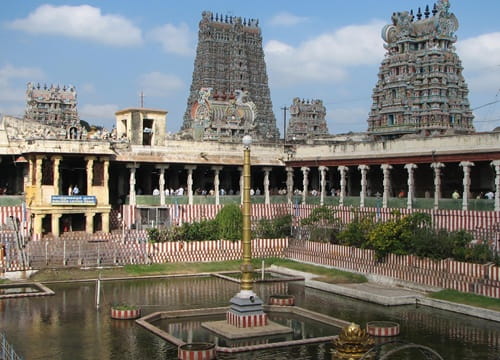
Meenakshi Amman Temple sits right at the heart of Madurai city, Tamil Nadu, with the city itself historically laid out in a lotus shape radiating from the temple’s location — a genuinely rare example of urban planning built entirely around a single religious structure. The complex spans 45 acres and features 14 towering gopurams, including four massive nine-tier Rajagopurams marking the cardinal directions, with the South Tower reaching an impressive 170 feet (51.9 metres), making it one of the tallest temple towers in Asia.
References to the temple appear in Tamil Sangam literature dating back to the 6th century CE, and it’s counted among the 275 Paadal Petra Sthalams — Shiva temples specifically revered in the verses of Tamil Saiva saints between the 6th and 9th centuries. The temple was significantly reconstructed under Nayaka king Vishwanatha Nayaka after 14th-century destruction, with the present grand structure largely shaped during Thirumalai Nayak’s rule (1623-55 AD).
Beyond the two main shrines, don’t miss the Golden Lotus Tank, believed to be where a golden lotus bloomed for Lord Indira’s puja, and the Aayiramkaal Mandapam — the Hall of a Thousand Pillars — known for its musical pillars and intricate carvings.
How to Reach Meenakshi Amman Temple
By Rail
Madurai Junction is remarkably close, just about 2 km from the temple, making rail travel genuinely one of the most convenient ways to arrive given the short onward journey.
By Air
Madurai International Airport sits roughly 12 km from the temple, with taxi services typically available for around ₹200-300 for the ride into the city center.
By Road
The temple is easily accessible via auto-rickshaws and city buses that connect well throughout Madurai. It’s worth negotiating auto fares beforehand, or using prepaid taxi services available directly from the railway station or airport for a more predictable cost.
Frequently Asked Questions
Q1. We’re planning to arrive around 2 PM after checking into our hotel — will we get darshan?
No, you’d be arriving right within the mandatory midday closure, which runs from 12:30 PM to 4:00 PM daily. Plan your temple visit for either the morning session before 12:30 PM or the evening session after 4:00 PM, and use the early afternoon for hotel check-in or a nearby meal instead.
Q2. Is it worth paying ₹300 for Special Entry Darshan, or is the ₹100 combined ticket enough for a normal day?
On a regular weekday, the ₹100 ticket covering both deities is usually sufficient and cuts your wait significantly compared to free darshan. The ₹300 Special Entry tier becomes genuinely more valuable during weekends, Fridays, or major festivals like Meenakshi Thirukalyanam, when even the standard special darshan queue can stretch longer than expected.
Q3. We want photos of the temple’s architecture for our trip memories — is there any way around the no-photography rule?
No, photography is strictly prohibited throughout the entire temple premises without exception, so there’s no workaround for capturing images inside. Many visitors instead purchase postcards or photo books available at shops just outside the temple complex, or simply photograph the exterior gopurams from the surrounding streets, which aren’t covered by the in-temple restriction.
Q4. We’re traveling with elderly grandparents — how do we make sure they get a smoother darshan experience?
Request access to the dedicated Special Entry Darshan line specifically reserved for senior citizens aged 60 and above at the ticket counter — this noticeably reduces standing time compared to the general queue. Additionally, arriving right at the 5:00 AM or 4:00 PM opening tends to have the shortest lines overall, which helps minimize the total time your grandparents need to spend waiting.