 By Karan Singh
 Tucked into the green folds of the Western Ghats, at the foot of Kodachadri Hill, sits a temple that draws devotees from across South India for one specific reason — this is where Goddess Mookambika embodies Mahalakshmi, Kali, and Saraswati all at once, worshipped above a swayambhu jyotirlinga that Adi Shankaracharya himself is believed to have consecrated. Students specifically travel here before exams, seeking Saraswati’s blessing for wisdom, while others come for the temple’s reputation as a Siddhi Kshetra — a place where genuine spiritual power is believed to reside. But between the split darshan sessions, the seva booking rules, and the genuinely long journey through ghat roads, knowing what to expect changes this from an exhausting trip into a meaningful one.
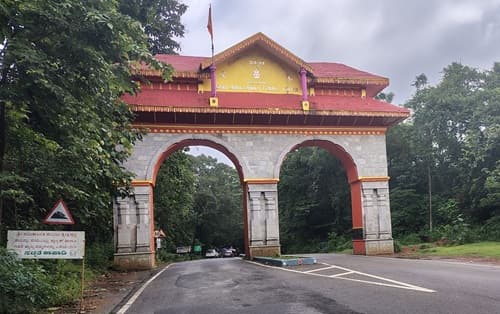
Quick Overview
| Detail | Information |
| Temple | Sri Mookambika Temple |
| Deity | Goddess Mookambika (union of Shakti and Shiva) |
| Location | Kollur, Kundapura Taluk, Udupi District, Karnataka – 576220 |
| Morning Darshan | 5:00 AM – 1:30 PM |
| Noon (Darshan Only) | 3:00 PM – 5:00 PM |
| Evening Darshan | 5:00 PM – 9:00 PM |
| General Darshan Fee | Free, no advance ticket needed |
| Special Darshan | ~₹100 per person |
| Nearest Railway Station | Byndoor/Mookambika Road (~20–28 km) |
| Nearest Airport | Mangalore International (~130–150 km) |
Temple Timings: The Three-Block Daily Schedule
Kollur Mookambika Temple, according to the official temple website, runs on three distinct daily blocks: Morning from 5:00 AM to 1:30 PM, a shorter noon window from 3:00 PM to 5:00 PM reserved purely for darshan (no other rituals during this stretch), and evening from 5:00 PM to 9:00 PM, except on special festival days when timings shift.
Within the morning block, several rituals happen in sequence that shape when darshan actually flows. Panchamrutha Abhishekam takes place at 7:30 AM, with darshan resuming at 7:45 AM and continuing until 11:30 AM. Mangala Aarti happens at 8:00 AM, followed by Uday Bali Pooja at 8:15 AM. Around 11:30 AM, gates close briefly as preparations begin for the noon Mahamangala Aarati, which happens around 12:30 PM, alongside a noon Bali Pooja at 12:45 PM.
The doors close again around 1:30 PM, reopening at 3:00 PM for the dedicated darshan-only window until 5:00 PM. Evening darshan then flows continuously from 5:00 PM through to 9:00 PM, wrapped around the final aartis of the day.
A ritual worth planning around: The evening Pradosha Pooja and Panchamrita Abhisheka at 6:30 PM is considered especially auspicious, and many devotees specifically time their visit to catch this exact slot.
Best time for a peaceful visit: Weekdays see noticeably fewer crowds and faster darshan than weekends, when waits can stretch to 45-60 minutes. October through May’s first week offers the most pleasant weather overall, while Tuesdays, Fridays, the month of Shravana, and Moola Nakshatra day in Phalguna (the Goddess’s birthday) draw the heaviest devotee turnout given their special spiritual significance.
Darshan and Seva: What’s Free and What Needs Advance Booking
General darshan is completely free, and no advance ticket is required — devotees can simply walk in during official darshan hours.
For those wanting priority access or a specific vantage point near the deity, Special Darshan tickets cost around ₹100 per person, purchased at on-site counters near the temple entrance. These become genuinely useful during crowded periods like Navaratri, when general queues can stretch to 1-2 hours on weekends and holidays.
Seva pricing varies by ritual — Ekavara Rudrabhisheka costs around ₹30, Ekadasa Rudrabhisheka around ₹100, with more elaborate offerings like Maha Chandika Homam and Rudra Homam ranging from a few hundred to several thousand rupees depending on complexity.
Important booking rule: Many sevas require a minimum of 3 days advance booking, either online through the official portal or through the temple office, and you’ll need to carry a printed ticket along with valid ID proof to actually perform the seva. Given how tightly packed the temple’s daily ritual schedule is, walk-in seva slots are often simply unavailable if you haven’t pre-booked — this genuinely catches devotees off guard who assume they can arrange everything on arrival.
A warning worth repeating: Use only official counters or the temple’s own website for donations and seva bookings. Avoid third-party booking websites or unauthorized agents claiming to offer Kollur Mookambika services, since these aren’t sanctioned by the temple administration.
Dress Code and Practical Rules
For men: Shirts and vests must be removed before entering for darshan — this is specifically enforced here, not just a general suggestion.
General expectation: Clean, modest, traditional South Indian attire is preferred for all visitors, in keeping with the temple’s status as a powerful Shakti shrine.
Photography: Restricted in certain areas, particularly with large cameras or tripods — check locally before assuming you can photograph freely throughout the complex.
Parking: Available at the temple premises, though it can get limited during festival seasons, so arriving early or using local transport is worth considering during Navaratri or other peak periods.
Location: Where Exactly Is the Temple?
Sri Mookambika Temple sits in Kollur village, Kundapura Taluk, Udupi District, Karnataka, nestled at the foothills of Kodachadri Hill on the banks of the Souparnika River. The sanctum houses a swayambhu (self-manifested) linga marked with a golden line — one side representing Maha Kali, Maha Lakshmi, and Maha Saraswathi combined, and the other Shiva, Vishnu, and Brahma, making this genuinely one of the most spiritually layered idols in South Indian temple tradition.
According to legend, Adi Shankaracharya visited Kollur specifically to perform penance and is credited with consecrating the idol here in the 8th century. Interestingly, the same tradition holds that when he later brought Goddess Saraswati toward Kerala, she chose to remain partly at Kollur and partly at Chottanikkara Temple — staying at Chottanikkara mornings and returning to Mookambika by noon, a belief that ties these two distant Devi temples together in local tradition.
How to Reach Kollur Mookambika Temple
By Rail
Byndoor, also called Mookambika Road railway station, is the closest railhead, roughly 20 to 28 km from the temple depending on the exact source, with taxis and buses covering the last stretch in 30 to 45 minutes. Kundapura, about 32 to 40 km away, is a busier Konkan Railway stop offering wider taxi and bus availability, while Udupi, roughly 80 km out, works well for those wanting more hotel options along the way.
By Air
Mangalore International Airport is the nearest, with distances cited anywhere from 110 to 150 km depending on the source — expect roughly 3 to 4 hours by road. Bengaluru’s Kempegowda International Airport, about 400 to 430 km away, offers wider flight choices but requires a considerably longer surface journey afterward.
By Road
From Mangalore, expect about 130 to 135 km, roughly 3 hours by direct bus or taxi. From Bengaluru, the distance runs 400 to 430 km, typically 8 to 10 hours depending on traffic and the route taken — most travelers go via Hassan and Sakleshpur through the Shiradi Ghat, or the longer but more reliable Mangaluru-Kundapura route via NH66. KSRTC and private operators run regular buses from Mangalore, Udupi, Kundapura, Byndoor, Shimoga, and Shringeri, with super deluxe services also connecting from Chennai, Coimbatore, and Hyderabad.
Getting around Kollur: The temple, main bus stand, and most accommodation options sit close together — the bus stand itself is just about 500 metres from the temple, making local movement genuinely simple on foot or by short auto ride.
Frequently Asked Questions
Q1. We’re planning to arrive around 2 PM expecting continuous darshan — will we get in
Partially. The temple observes a closure from roughly 1:30 PM to 3:00 PM for noon ritual preparations, so arriving at 2 PM means waiting. The 3:00 PM to 5:00 PM window that follows is reserved purely for darshan (no other rituals), so plan your arrival for after 3:00 PM if you’re aiming for this particular slot.
Q2. We want to book a Rudra Homam but only decided on our trip 2 days ago — is that enough time?
Likely not, since most sevas require a minimum of 3 days advance booking, either online or through the temple office, along with ID proof and a printed ticket on the day. If your timeline is tight, check directly with the temple office for any last-minute availability, but don’t count on securing a slot without having pre-booked.
Q3. Is the journey from Bangalore genuinely manageable in a single day, or should we plan an overnight stop?
Given the 400-430 km distance and 8-10 hour drive through ghat sections, most families find it considerably more comfortable to split the journey — either an overnight bus/train to Udupi or Mangalore followed by a shorter road leg the next morning, rather than attempting the full drive in one stretch, especially if you’re hoping for an unhurried early darshan on arrival.
Q4. We’re visiting with elderly parents — is the shirt-off dress code for men strictly enforced even for older devotees?
Yes, this rule applies to all men regardless of age during darshan, so it’s worth mentally preparing elderly family members for this in advance rather than discovering it at the entrance. The temple environment itself is well-established for pilgrims of all ages, with local infrastructure genuinely geared toward accommodating families and seniors comfortably.