 By Karan Singh
 Deep in the Nallamala forest, at the foot of hills that have sheltered sages for centuries, sits a temple where you can actually touch the water flowing beneath a 1,500-year-old Shiva lingam. Mahanandi isn’t your typical darshan stop — it’s the primary shrine among the Nava Nandulu, nine sacred Nandi temples scattered across this region, and it draws lakhs of devotees every month specifically for its crystal-clear Pushkarini and the rare chance to see the deity’s original, unadorned rock form. If you’re planning a visit, understanding the darshan windows, the seva pricing, and the genuinely remote location makes the difference between a smooth pilgrimage and a confusing scramble.
Quick Overview
| Detail | Information |
| Temple | Sri Mahanandeeswara Swamy Temple |
| Deity | Lord Shiva (Swayambhu Linga) with Sri Kameswari Devi |
| Location | Mahanandi Village, Nandyal District, Andhra Pradesh |
| Morning Darshan | 4:30 AM – 1:00 PM |
| Evening Darshan | 2:00 PM – 9:30 PM |
| General Darshan (Sarva Darshan) | Free |
| Seeghra Darshan | ₹20 |
| Sparsha Darshan | ₹100 |
| Nearest Railway Station | Nandyal Railway Station (~15–21 km) |
| Nearest Airport | Rajiv Gandhi International, Hyderabad |
Temple Timings: The Full Daily Ritual Schedule
Mahanandi Temple opens before dawn, with the day beginning around 4:30 AM to 5:00 AM with Suprabhatha Seva, the ritual that formally awakens the deity. Darshan then continues through the morning until roughly 1:00 PM, when the temple closes for a short afternoon break before reopening around 2:00 PM and continuing until approximately 9:30 PM, when the day closes with final Ekantha Seva rituals.
Given some minor variance across sources — a few list slightly earlier evening closures around 8:00 PM — it’s worth treating late evening as a safe buffer zone and arriving well before 9:00 PM rather than counting on the latest possible entry.
Key daily windows worth knowing:
- 8:00 AM – 9:00 AM — Nijaroopa Darshan (see below), ₹50
- 11:00 AM onwards — Nithya Kalyanam (celestial wedding ritual), ₹1,116
- 11:00 AM – 12:00 PM — second Nijaroopa Darshan session, ₹50
- 12:30 PM – 1:00 PM — Maha Nivedana (main food offering to the deity)
Best time for a peaceful visit: Early morning, right around opening, offers the calmest atmosphere before the day’s crowd builds. Mondays, Pradosham days, and Maha Shivaratri are considered especially auspicious, though these also bring significantly heavier footfall — worth knowing if a quiet, unhurried darshan matters more to you than catching a specific sacred day.
Nijaroopa Darshan: Seeing the Lingam’s True Form
This is genuinely the most distinctive thing about Mahanandi, and understanding it changes how you plan your visit. The Shiva lingam here is Swayambhu (self-manifested), shaped like a rough, uncut rock with two natural cavities — believed to have formed from an anthill according to local legend.
For most of the day, this lingam remains covered with a silver mask. Only during specific windows — 8:00 AM to 9:00 AM and again 11:00 AM to 12:00 PM — is this covering removed for Nijaroopa Darshan, letting devotees see the deity in its genuine, original rock form. If witnessing this holds particular significance for you, plan your visit specifically around one of these two windows rather than assuming it’s available throughout the day.
The Pushkarini: A Temple Built Around Flowing Water
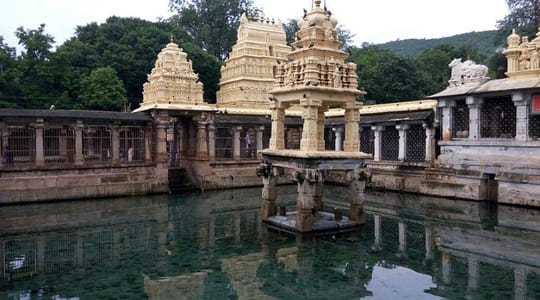
Mahanandi’s holy tank, called Rudragundam or Kalyani, is unlike most temple tanks you’ll encounter — the water here originates directly from the base of the Shiva lingam itself and flows continuously, year-round, through the temple’s main pool via a Nandi statue. The water is remarkably clear; devotees often mention being able to see a needle at the bottom despite the pool’s depth.
Historically, this same water source is said to have irrigated roughly 30,000 acres of surrounding farmland, underscoring just how significant this natural spring has been to the region well beyond its religious value. Many devotees take a dip in the pool before darshan as part of the pilgrimage tradition — if you’re planning to do this, carry a towel and a change of clothes, and be respectful of local rules around bathing.
Darshan Ticket Types and Pricing
General darshan (Sarva Darshan) is completely free and remains how most pilgrims experience the temple, joining the standard queue without any advance ticket.
For those wanting faster or more specific access, several paid options exist:
- Seeghra Darshan — ₹20 per person, for a quicker general darshan
- Sparsha Darshan — ₹100 per person, allowing devotees to touch the main deity directly
- Rudrabhishekam — ₹1,000, a couple’s ritual performed multiple times daily
- Ksheerabhishekam — ₹200, a milk-offering ritual for couples
- Mahadhaaseervachana Darshanam — ₹351, for special blessings
- Nithya Kalyanam — ₹1,116, the daily celestial wedding ceremony
Important booking note: There is currently no online booking system for Mahanandi Temple darshan or sevas. All tickets — general or special — must be purchased directly at the temple counter upon arrival. Given the temple’s remote forest location and high monthly footfall (reportedly 3 to 10 lakh devotees per month), it’s worth budgeting extra time at the counter, especially during weekends and festival periods.
No VIP or skip-the-line access: Queue management here is strictly handled by temple authorities, and there’s no paid fast-track option that bypasses the general crowd entirely — everyone moves through the same managed queue system regardless of ticket type.
Dress Code and Practical Rules
Traditional and decent clothing is required for entering the temple premises — this is consistently enforced, so plan accordingly before arrival.
Best season to visit: October through March offers the most pleasant weather for this forest-edge location, avoiding both the peak summer heat and monsoon disruptions.
Location: Where Exactly Is the Temple?
Sri Mahanandeeswara Swamy Temple sits in Mahanandi village, on the eastern edge of the Nallamala forest range, in Nandyal district, Andhra Pradesh. The temple’s core structure dates back roughly 1,500 years, originally built by the Chalukyas in the 7th century, with significant later contributions from the local Nanda dynasty in the 10th century and the Vijayanagara kings in the 15th century — a genuinely layered architectural history reflected in the mix of Badami Chalukyan style seen in the main Vimana tower and Vijayanagara-style elements elsewhere in the complex.
Just south of the main temple sits a shrine to Sri Kameswari Devi, worshipped here as Lord Mahanandeeswara’s consort — her nose stud is said to be set with a special emerald gifted by a Chalukya king, and many temple accounts describe an emerald-like glow visible during her darshan.
Beyond the main shrine, the temple complex includes the Nava Nandi shrines scattered across the wider Mahanandi area (worth combining into your trip if you have extra time), plus Vishnu Gundam and Brahma Gundam, two additional sacred pools with their own mythological significance.
How to Reach Mahanandi Temple
By Air
The nearest major airport is Rajiv Gandhi International Airport in Hyderabad. From there, you’ll need to take a taxi or bus to Nandyal and continue onward to Mahanandi — there’s no direct commercial airport serving the temple itself, so this multi-leg journey is the standard route for air travelers.
By Rail
Nandyal Railway Station is the closest railhead, with distances cited between 15 and 21 km depending on the source. Regular local transport — taxis and buses — connects the station to Mahanandi village.
By Road
Mahanandi has direct, regular bus services from Nandyal and other nearby towns, making road travel genuinely the most straightforward way to complete the final leg of your journey regardless of how you arrive in the broader region.
Frequently Asked Questions
Q1. We specifically want to witness Nijaroopa Darshan — what happens if we arrive outside the 8-9 AM or 11 AM-12 PM windows?
You’ll still get regular darshan of the silver-covered lingam, but you’ll miss seeing the deity’s original rock form, since the covering is only removed during these two specific daily windows. If this is a priority for your visit, plan your arrival specifically around one of these slots rather than treating it as available all day.
Q2. Is there any way to book Rudrabhishekam or Nithya Kalyanam online before we travel?
No, Mahanandi Temple currently has no online booking system for any darshan or seva, including these couple-specific rituals. All bookings happen directly at the temple counter on the day of your visit, so plan to arrive with enough buffer time, particularly during weekends or festival periods when counters get busier.
Q3. We’re flying into Hyderabad — is the onward journey to Mahanandi manageable in a single day?
Yes, though it involves multiple legs — a taxi or bus from Hyderabad to Nandyal, followed by local transport to Mahanandi village. Given the distances involved, most travelers find it more comfortable to treat this as a full day of travel rather than squeezing in a same-day return trip, especially if you’re also planning time for darshan and a dip in the Pushkarini.
Q4. Is the temple pond safe and clean enough for a proper dip before darshan?
Yes, the Pushkarini is known specifically for its exceptionally clear, continuously flowing water, sourced directly from the base of the Shiva lingam — devotees have taken ritual dips here as part of the pilgrimage tradition for generations. Just carry a towel and a change of clothes, and follow the temple’s local guidelines around appropriate clothing for bathing.