 By Karan Singh
 Rabindranath Tagore once said the stone at Konark speaks a language beyond words — and once you stand before this 13th-century chariot carved entirely from rock, you understand exactly what he meant. Konark isn’t a temple where you’ll find priests performing daily pooja; it’s a UNESCO World Heritage monument where the sun god’s massive stone chariot, complete with 24 giant wheels and seven horses, still tells time and season through its carvings. If you’re planning a trip to Odisha, getting your timing right here — especially around the genuinely spectacular evening Light & Sound Show — makes the difference between a quick photo stop and an experience you’ll actually remember.
Quick Overview
| Detail | Information |
| Monument | Konark Sun Temple (Surya Mandir) |
| Deity | Surya, the Sun God |
| Location | Konark, Puri District, Odisha – 752111 |
| Daily Timings | 6:00 AM – 8:00 PM (open all 7 days) |
| Entry Fee (Indian/SAARC-BIMSTEC) | ₹40 |
| Entry Fee (Foreign Nationals) | ₹600 |
| Light & Sound Show | ₹30 extra (₹70 combined) |
| Nearest Railway Station | Puri (~30–35 km) |
| Nearest Airport | Biju Patnaik International, Bhubaneswar (~65 km) |
Temple Timings: When to Actually Visit
Konark Sun Temple stays open daily from 6:00 AM to 8:00 PM, with no weekly closure — genuinely convenient given how many travelers combine this with a Puri or Bhubaneswar day trip and need flexibility around which day works best.
Best time for photography and comfort: Early morning between 6:00 AM and 8:00 AM offers the best natural light for capturing the temple’s intricate stone carvings, plus noticeably cooler temperatures before the day heats up. October to March remains the ideal season overall, given how pleasant Odisha’s coastal evenings are during these months.
Time to budget: A complete visit — covering the main temple complex, the on-site museum, and the surrounding grounds — typically takes 2 to 3 hours. If you’re also planning to stay for the evening Light & Sound Show, factor in additional time before sunset.
Entry Ticket: Understanding the Fee Structure
Konark Sun Temple, being an ASI-protected monument rather than an active place of daily worship, charges a standard entry ticket rather than offering “darshan” in the traditional temple sense. Indian nationals pay ₹40 for general entry, and this same rate extends to visitors from SAARC and BIMSTEC nations — meaning travelers from Nepal, Bangladesh, Sri Lanka, Bhutan, Myanmar, and Thailand pay the same affordable rate as Indian citizens. Foreign nationals from outside this bracket pay ₹600 for entry.
Children under 5 years enter free of charge.
Booking process: Tickets can be purchased directly at the temple entrance counters, or booked online in advance through the ASI e-ticketing portal or the official Odisha Tourism website. Online booking is genuinely worth doing during peak tourist season and weekends, when queues at the physical counter can stretch considerably.
The Light & Sound Show: Konark’s Evening Highlight
This is genuinely the part of a Konark visit most travelers end up talking about afterward. Introduced in 2017, the show transforms the ancient temple into a storytelling experience using dynamic lighting, music, and narration covering the temple’s history, architecture, and legendary origins.
Show timings shift by season:
- December to February — 6:30 PM and 7:30 PM (some sources cite 6:30 PM and 7:20 PM)
- March to November — 7:30 PM and 8:20 PM
Each show runs approximately 40 minutes, and every visitor receives wireless headphones set to their chosen language — English, Hindi, or Odia — ensuring clear audio without disturbing others nearby, a genuinely thoughtful touch that keeps the monument’s peaceful atmosphere intact even during a fully narrated performance.
Ticket cost: The show requires a separate ₹30 ticket on top of your ₹40 temple entry, bringing the combined total to ₹70 for Indian visitors. This pricing applies regardless of nationality for the show portion specifically.
Booking tip: Since seating is limited to roughly 200-250 people per show, booking at least a day in advance is genuinely recommended, particularly on weekends and during the October-to-March tourist season when demand peaks. On-site purchase remains available, but online booking through the ASI portal or Odisha Tourism site guarantees your preferred show timing and seat.
A practical caution: Rain or technical issues can occasionally cancel evening shows without advance notice. Keep your booking confirmation screenshot handy as proof of purchase, and if a cancellation happens, the ASI helpline or Odisha Tourism desk can assist with refunds.
The Architecture: What You’re Actually Looking At
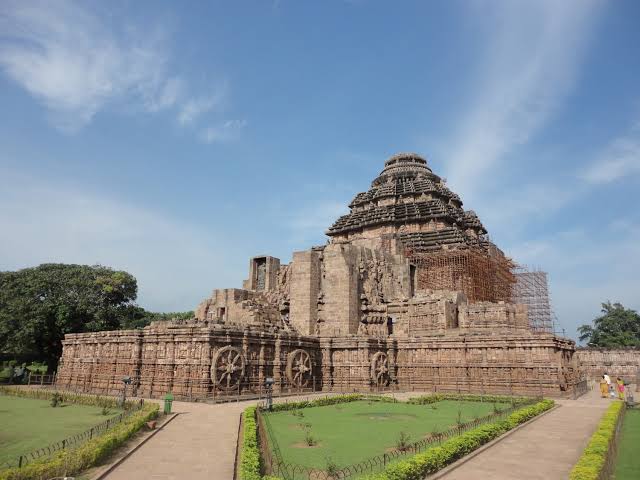
Understanding the temple’s design genuinely transforms how you experience the visit. Built between 1238 and 1250 CE by King Narasimhadeva I of the Eastern Ganga dynasty, with construction overseen by Samantaraya Mahapatra, the entire structure represents a colossal stone chariot dedicated to Surya, the Sun God.
The temple features 24 intricately carved wheels, each 12 feet in diameter, pulled by seven horses — together forming a complete cosmic calendar carved in stone. The seven horses represent the days of the week, the 24 wheels symbolize the months (two per wheel across twelve months), and each wheel’s eight spokes represent the divisions of a single day. It’s a genuinely remarkable piece of architectural storytelling, where the entire monument functions as both a religious dedication and a symbolic timekeeping device.
The original sanctum once rose 230 feet high but no longer survives today. What remains — the 128-foot audience hall, the dance hall, and the dining hall — still showcases the temple’s Kalinga architectural style in remarkable detail, built from Khondalite rock.
European sailors historically called the temple the “Black Pagoda” due to its dark facade, using it as a navigational landmark for ships along the coast — some accounts even suggest the temple’s magnetic properties helped draw ships toward shore, adding to its mystique.
Dress Code and Practical Tips
There’s no strict dress code enforced at Konark — jeans and regular comfortable clothing are perfectly acceptable, though modest attire remains generally recommended given the site’s spiritual origins.
Basic snack and water vendors operate near the entrance, but carrying your own water bottle is genuinely worth doing, especially if you’re visiting during warmer months or planning to stay through the evening show.
Location: Where Exactly Is the Temple?
Konark Sun Temple sits in Konark town, Puri District, Odisha, roughly 35 km from Puri city and about 60-65 km from the state capital, Bhubaneswar. Its coastal Odisha setting, combined with its UNESCO World Heritage status, makes it one of the most visited heritage sites in Eastern India.
How to Reach Konark Sun Temple
By Rail
Puri Railway Station is the nearest, roughly 30-35 km from Konark. From there, taxis, autos, or buses complete the onward journey.
By Air
Biju Patnaik International Airport in Bhubaneswar is the nearest, approximately 65 km away, about an hour’s drive. Taxis are readily available for hire directly from the airport.
By Road
Konark Bus Stand sits just about 6 minutes from the temple itself. Regular buses operated by OSRTC and private operators (including MO Bus services) connect Puri to Konark in roughly an hour. Renting a cab from Puri remains genuinely the fastest and most convenient way to reach the temple, especially if you’re planning to combine your visit with the evening Light & Sound Show and don’t want to worry about return bus timings after dark.
Frequently Asked Questions
Q1. We’re planning to watch the evening show but aren’t sure which season’s timing applies to our visit — how do we confirm this?
Show timings shift specifically between December-February (6:30 PM and 7:30 PM) and March-November (7:30 PM and 8:20 PM), so check which bracket your travel dates fall into before finalizing your evening plans. It’s genuinely worth confirming the exact current timing on the ASI portal or Odisha Tourism website closer to your visit date, since minor adjustments can occur.
Q2. Is it worth paying for the Light & Sound Show, or is the daytime temple visit enough on its own?
The daytime visit alone genuinely offers a complete architectural experience, letting you appreciate the carvings and structure in natural light. That said, the evening show adds historical storytelling and a dramatically different visual atmosphere through lighting, which many visitors describe as the most memorable part of their entire Konark trip — if your schedule allows staying until evening, it’s genuinely worth the additional ₹30.
Q3. We’re traveling from Puri without a private vehicle — is public transport reliable enough for a same-day round trip including the evening show?
Yes, though it requires some planning. OSRTC and private buses connect Puri to Konark in about an hour, but if you’re staying for the evening show, confirm return bus timings in advance, since services may become less frequent after dark. Many travelers find hiring a cab for the round trip genuinely more convenient specifically when attending the evening show, avoiding any uncertainty about late-evening return transport.
Q4. Can we actually enter the temple’s inner sanctum, or is this purely an exterior viewing experience?
Given the temple’s status as an ASI-protected ancient monument with much of its original structure no longer intact, the visit is primarily focused on exploring the temple grounds, surviving halls, and exterior carvings rather than an active sanctum-style darshan you’d find at a functioning temple. This doesn’t diminish the experience — the surviving audience hall, dance hall, and the famous stone wheels themselves offer more than enough architectural detail to justify the full 2-3 hour visit.