 By Karan Singh
 Just 12 km outside Coimbatore, there’s a hilltop where the air genuinely feels different — cooler, cleaner, carrying the scent of medicinal herbs that grow wild across the slopes. Maruthamalai isn’t just another Murugan temple on the South Indian pilgrimage circuit; it’s a place locals treat as a weekend ritual, climbing the steps for both devotion and exercise. But between the two ways up the hill, the specific darshan windows, and a genuinely unique lifetime pooja option most visitors never hear about, a little planning turns this from a quick tourist stop into a proper spiritual morning.
Quick Overview
| Detail | Information |
| Temple | Arulmigu Subramaniaswamy Temple (Maruthamalai) |
| Deity | Lord Murugan as Dandayuthapani |
| Location | Maruthamalai Adivaram, Coimbatore, Tamil Nadu – 641046 |
| Morning Darshan | 6:00 AM – 1:00 PM |
| Evening Darshan | 2:00 PM – 8:30 PM |
| General Darshan Fee | Free |
| Special Darshan | ₹50 |
| Distance from Coimbatore City | ~12–15 km |
| Hill Height | 600 feet |
Temple Timings: Morning and Evening Sessions
Maruthamalai Temple runs a fairly consistent two-session schedule across the week, though exact minute-by-minute timings vary slightly between sources — some list 5:30 AM to 1:00 PM and 2:00 PM to 8:30 PM, others cite 6:00 AM openings. Treating 6:00 AM to 1:00 PM as your morning window, and 2:00 PM to 8:30 PM as evening, gives you a safe planning buffer either way.
Darshan duration to expect: On a regular weekday, darshan typically takes just 15 to 20 minutes. Weekends stretch this to 20-30 minutes, and during major festivals, expect anywhere from 1 hour to 1.5 hours given the significantly heavier crowd.
Best time for a peaceful visit: Early morning between 6:00 AM and 8:00 AM offers the calmest atmosphere before the day’s crowd builds, and October to March brings the most comfortable weather for both the climb and the visit overall. Evenings around sunset carry their own appeal too — the temple lights up and devotional music fills the hillside, making it a genuinely beautiful, if slightly busier, alternative to the early morning slot.
Getting to the Hilltop: Steps or Electric Van
This is the part that surprises first-time visitors — reaching the actual temple isn’t as simple as parking and walking in, since Maruthamalai sits 600 feet up the hill.
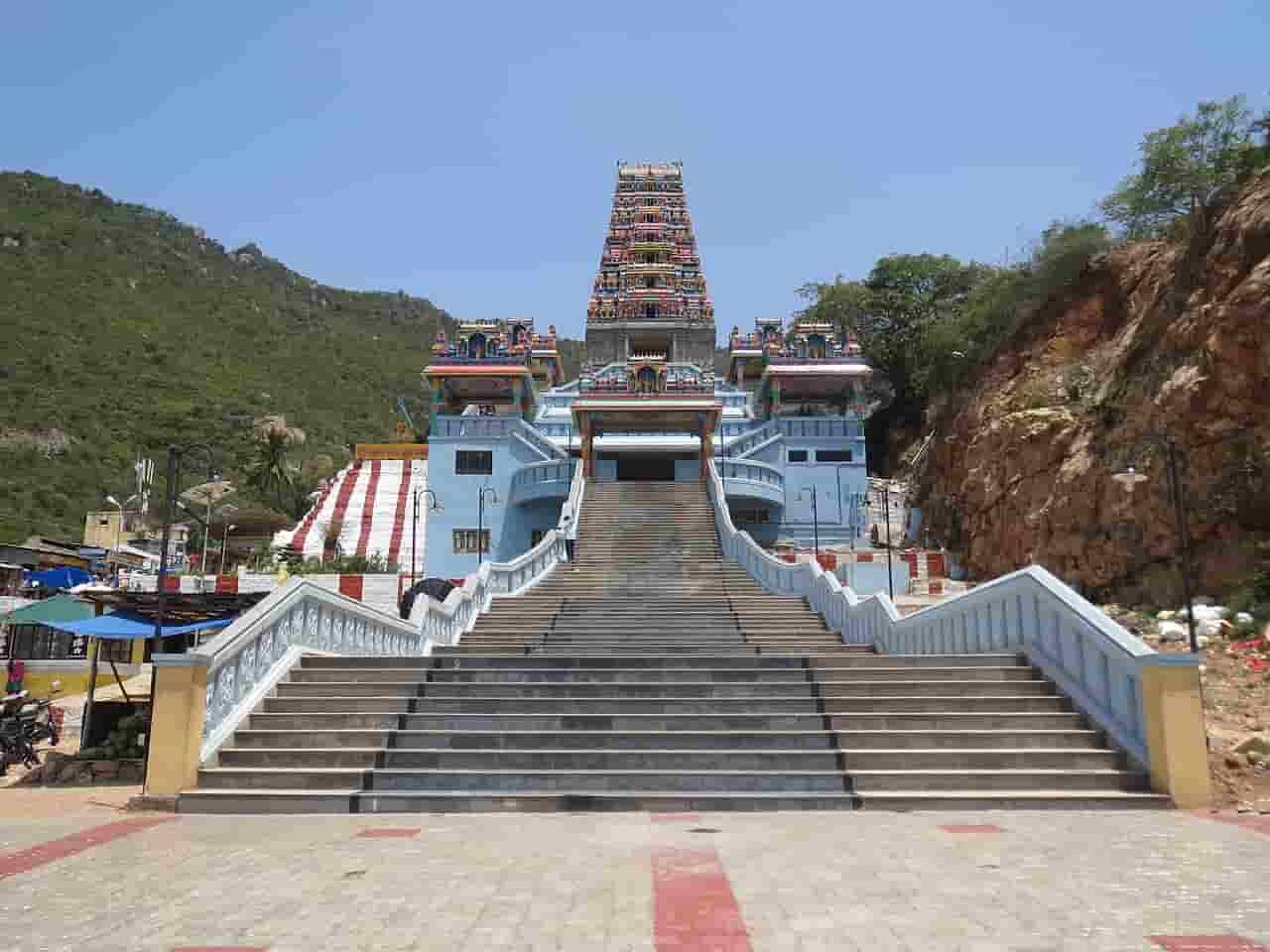
By steps: A steep, scenic staircase of roughly 160-plus steps leads to the top, typically taking 15 to 20 minutes to climb at a moderate pace. Along the way, you’ll pass resting spots and shops selling flowers, prasadam, and snacks.
By electric van/bus: For those who’d rather skip the climb, a paid electric van or bus service runs from the foothill to the temple roughly every 15 minutes — genuinely the most common and convenient option for most pilgrims, especially elderly visitors or those with health conditions who want to reach the top without the physical strain.
If you’re driving your own vehicle up, a nominal toll applies for taking it directly to the hilltop rather than parking at the base.
Darshan Ticket Types and Pricing
General darshan is completely free, and this remains how most devotees experience the temple, joining the standard queue during either the morning or evening session.
For faster access, Special Darshan tickets cost around ₹50 per person, purchased directly at the counter near the entrance. For those wanting to sponsor rituals, archana and abhishekam tickets range from ₹10 to ₹500 depending on the specific type of offering.
The Nitya Pooja Kattalai is genuinely worth knowing about if you’re a regular devotee or want a meaningful long-term connection to the temple — for ₹8,000, this lets you perform abhishekam and archana in your name (or someone else’s) on a day of your choosing, essentially reserving a personal ritual slot.
There’s also a distinctive annual offering: paying ₹250, or ₹2,000 for 15 years, secures prasadam from an archana performed in your name every year on Krithigai (the star day associated with Lord Murugan) — a genuinely unique long-term devotional option not commonly found at other temples.
Booking process: Online booking is not available for standard pooja tickets — these are purchased directly at the temple counter. Abhishekam specifically requires one day’s advance booking, so if this is part of your visit plan, arrange it ahead rather than expecting a same-day slot.
Dress Code and Practical Rules
Strictly traditional wear is expected. Men should wear a dhoti/veshti or pants, and women a saree or salwar kameez. Shorts, skirts, and sleeveless clothing are not permitted inside the temple.
Footwear must be removed at the foothill before beginning your ascent, whether by steps or van, with cloakroom and locker facilities available there to store shoes and bags securely.
Mobile phones are restricted specifically inside the sanctum, though general use elsewhere in the complex is typically fine.
What Else Is Worth Seeing at Maruthamalai
The temple complex extends beyond the main Murugan shrine — you’ll also find shrines dedicated to Lord Shiva, Goddess Parvati, Lord Ganesha, and the Navagraha within the same hilltop complex, along with shrines to Murugan’s consorts.
Near the foothills, the Thaan Thondri Vinaayakar temple honors Lord Ganesha, and a cave known as Paambaatti Sitthar Kugai is dedicated to a Siddhar (a saint believed to have possessed supernatural powers) who is said to have lived in the area. A connecting tunnel reportedly links the main sanctum to this cave, built by the Siddhar himself according to temple tradition.
The hill itself is genuinely notable beyond its religious significance — it’s rich in medicinal herbs that have long been used in Ayurvedic preparations, adding a layer of natural, health-focused appeal to what’s already a striking Western Ghats setting.
Major festivals worth knowing about include Thai Poosam (January-February) and Thiru Karthigai (November-December), both celebrated with considerable fanfare and correspondingly larger crowds.
Location: Where Exactly Is the Temple?
Arulmigu Subramaniaswamy Temple sits on Maruthamalai Hill, roughly 12 to 15 km from Coimbatore city, at an elevation of 600 feet. The name “Maruthamalai” translates to “Hill of Marudha Trees,” referencing the specific tree species that grows across the hillside, and according to temple legend, the site’s spiritual significance traces back to a tired Siddhar who prayed to Murugan for water — with a spring miraculously appearing from beneath a Marudha tree in response.
Historical inscriptions found in the nearby Thirumuruganathaswami Temple place the origins of this site as far back as the 12th century CE, built during the era of Tamil kings.
How to Reach Maruthamalai Temple
By Air
Coimbatore International Airport is the nearest, roughly 15 to 25 km from the temple depending on the exact source consulted. Taxis are readily available for the onward journey.
By Rail
Coimbatore Railway Station serves as the main railhead, with distances cited between 12 and 16 km from the temple. Auto-rickshaws and taxis connect the station to Maruthamalai’s foothill comfortably.
By Road
From Coimbatore’s Town Bus Stand (Gandhipuram), frequent TNSTC city buses run directly to Maruthamalai, alongside readily available auto-rickshaws and taxis. The Devasthanam itself operates additional buses connecting the foothill to the hilltop temple, making the final leg of the journey straightforward regardless of how you arrive in Coimbatore.
Frequently Asked Questions
Q1. We have elderly grandparents joining us — should we plan for the steps or the van service?
The paid electric van/bus service running every 15 minutes from the foothill is genuinely the better choice for elderly visitors or anyone with health concerns, since it eliminates the need to climb the roughly 160-plus steps. Many families choose to have younger members climb while older relatives take the van, then reunite at the top for darshan together.
Q2. Is the ₹8,000 Nitya Pooja Kattalai worth it for a one-time visitor, or is it meant for regular devotees?
This option is genuinely better suited to devotees with an ongoing connection to the temple or a specific significant occasion in mind, since it reserves a personal abhishekam and archana slot in your name on a day of your choosing. For a one-time visitor, the standard ₹50 special darshan or smaller archana tickets (₹10-500) offer a meaningful experience without the larger commitment.
Q3. We’re planning to arrive around 1:15 PM — will we be able to get darshan?
Not immediately, since the temple closes between the morning and evening sessions, with the exact break window falling somewhere around 1:00 PM to 2:00 PM depending on the specific day. Plan your visit for before 1:00 PM or after 2:00 PM to avoid arriving right in this gap.
Q4. Can we combine this with other Coimbatore attractions in a single day without it feeling rushed?
Yes, many visitors pair Maruthamalai with nearby spots like Perur Pateeswarar Temple or a visit to Indira Gandhi Wildlife Sanctuary given the manageable distances involved. A sensible approach is doing Maruthamalai darshan in the early morning (6:00-8:00 AM) when crowds are lightest, then continuing to other attractions once you’re already up and out early.