 By Karan Singh
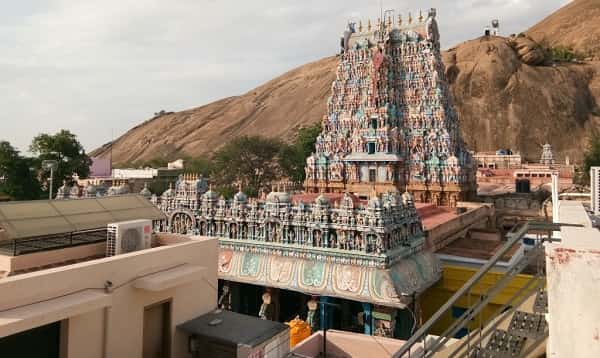
 Ask any serious Murugan devotee which temple holds the top spot among the six sacred Arupadai Veedu shrines, and Thiruparankundram comes up first — literally. This is Muthalam Padai Veedu, the very first abode, carved directly into a rock hill on the outskirts of Madurai, where legend says Lord Murugan married Devasena after defeating the demon Surapadman. But this isn’t just a mythology stop on your Madurai itinerary — the temple’s genuine architectural rarity, its afternoon closure that catches visitors off guard, and its unusual interfaith history make it worth understanding properly before you go.
Thiruparankundram Murugan Temple Quick Overview
| Detail | Information |
| Temple | Thiruparankundram Murugan Temple (Muthalam Padai Veedu) |
| Deity | Lord Murugan with Devasena (Deivayanai) |
| Location | Thiruparankundram, ~8–10 km from Madurai, Tamil Nadu 625005 |
| Darshan Timings | 5:30/6:00 AM – 8:30/9:00 PM (with afternoon break) |
| General Darshan Fee | Free |
| Special/Speed Darshan | ₹100 |
| Time Required | 60–90 minutes |
| Distance from Madurai Junction | ~8 km |
Temple Timings: Morning, Afternoon Break, and Evening
Thiruparankundram Murugan Temple opens early, generally between 5:30 AM and 6:00 AM, and stays accessible until somewhere between 8:30 PM and 9:00 PM depending on the day. Within this broad window, however, the temple observes a closure during the afternoon between rituals — visitor accounts consistently confirm the temple shuts for a stretch during the middle of the day, so arriving mid-afternoon expecting continuous darshan can mean waiting outside.
Given the slight variance in exact opening and closing minutes across sources, treat early morning (before 11:30 AM) and evening (after 4 PM) as your two safest windows, and avoid planning a visit strictly around the early-to-mid afternoon hours.
Best time for a peaceful visit: October to March offers the most comfortable weather for exploring the hillside temple complex. Early morning and evening hours consistently see lighter crowds than midday, and weekdays are noticeably calmer than weekends — one visitor specifically noted that even a Sunday evening visit felt manageable once they opted for Special Darshan instead of the free queue.
Darshan Ticket Types and Pricing
General darshan is completely free, and it remains how most devotees experience the temple — though be prepared for a real wait, since the free queue frequently takes considerably longer than the paid alternative, especially on weekends.
For faster access, Special Darshan (also called Speed Darshan) costs around ₹100 per person. Visitor reports describe this line as noticeably well-organized, often completing in about 10 minutes even when the general queue is visibly backed up — a detail worth knowing if your time in Madurai is limited.
Beyond standard darshan, the temple accepts bookings for special poojas including Laksharchana, Abhishekam, Special Darshan, and Homa/Havan rituals. These are best arranged in advance by contacting the temple administration directly, particularly if your visit falls during festival season when slots fill up faster.
Why This Temple Holds First Place Among the Six Abodes
Understanding the mythology here genuinely deepens the visit. According to legend, the demon king Surapadman, empowered by boons from Lord Shiva, began tormenting the celestial beings and even imprisoned Indra. Desperate, Indra turned to Murugan for help. After Murugan’s forces confronted Surapadman and a fierce battle unfolded (culminating at Tiruchendur, where Murugan ultimately divided the demon into two, forming his peacock and rooster mounts), a grateful Indra offered his daughter Devasena in marriage to Murugan — and that wedding took place right here at Thiruparankundram.
This is precisely why the temple carries such strong significance for couples. Many devotees believe that praying here, or specifically marrying at this site, secures Murugan’s blessing for a joyful, prosperous married life — a tradition that continues actively today, with the temple even hosting formal marriage blessing ceremonies for newlywed families.
What Makes the Architecture Genuinely Rare
Thiruparankundram is a rock-cut cave temple, carved directly into a hillock — a construction style that immediately sets it apart from most South Indian temples built from the ground up. The principal shrine consists of a massive rock slab containing individual cells for Subramanya, Durga, Vinayakar, Shiva, and Vishnu, all intricately carved from the same stone.
The sanctum sanctorum itself is built from Navabashana, a unique blend of nine minerals, housing a standing statue of Lord Murugan. Shiva is worshipped here as Parangirinathar alongside his consort Parvati, honored as Aavudai Nayaki.
One detail genuinely worth seeking out during your visit: the idols of Lord Shiva and Lord Vishnu face each other within the temple — an uncommon pairing you won’t find replicated at most other Hindu temples. Ask a priest to point this out specifically if you’d like to see it, since it’s not always immediately obvious to first-time visitors.
Outside the sanctum, you’ll find carvings depicting Shiva’s various dance forms, along with artistically rendered statues of Nandi, Mayil (the peacock), and Murugan’s mouse-riding attendant, positioned in front of the Kodi Maram. Additional rock carvings show Mahishasura Mardini, Karpaga Vinayagar, and other deities, while the temple’s Aasthaana Mandapam stands out for its exquisitely carved pillars.
A Temple Shared Across Faiths
This is a genuinely distinctive feature of Thiruparankundram: alongside its Hindu shrines, the complex also houses a Muslim shrine known as Sekunder, which, according to some local legends, carries its own association with Murugan. The temple consequently draws visitors well beyond the Hindu devotee community, reflecting a layered, shared religious history uncommon at most Indian pilgrimage sites.
Festivals Worth Planning Around
Skanda Sashti, observed in the Tamil month of Aippasi (October-November), stands as the temple’s most significant annual celebration — a six-day event culminating in a dramatic reenactment of Murugan’s victory over Surapadman, with the festive idol paraded through the temple’s streets on various ceremonial mounts.
The 14-day Brahmotsavam in May-June and the Panguni Uthiram festival in February-March are both celebrated with considerable grandeur, and Karthikai Deepam brings its own dedicated observance. If you’re specifically hoping for a vibrant, high-energy visit rather than a quiet darshan, timing your trip around one of these festivals delivers a genuinely different experience — just expect much larger crowds and longer waits as a trade-off.
Dress Code and Practical Rules
Modest clothing is encouraged, though not strictly mandatory. Traditional garments — dhoti or pants for men, saree or salwar kameez for women — are suggested, while shorts, sleeveless tops, and other revealing attire should be avoided as a matter of respect for the temple’s customs.
Footwear must be removed before entering the temple premises.
Photography is not permitted inside the main sanctum, so plan to capture the temple’s striking rock-cut exterior and hilltop views instead, particularly from the open courtyards that offer panoramic views over Madurai city below.
Parking is available in designated lots near the temple, but roadside parking is strictly prohibited — vehicles parked illegally are reportedly locked by police, so use the official parking area without exception.
Location: Where Exactly Is the Temple?
Thiruparankundram Murugan Temple sits on a hillock roughly 8 to 10 km from central Madurai, about 8 km specifically from Madurai Junction Railway Station. The temple’s age is genuinely debated among historical sources — some place its origins in the 8th century under Pandyan rule, while others cite records suggesting the site, then known as Kudaivari temple, existed even before the 6th century, with significant development continuing under later Pandya and Nayak rulers.
How to Reach Thiruparankundram Murugan Temple
By Road: The temple is easily reached by auto-rickshaw, taxi, or local bus from Madurai Junction or Periyar Bus Stand, with regular buses running from the city at frequent intervals. Ride-sharing apps also operate reliably in this well-connected part of Madurai.
By Rail: Madurai Junction, roughly 8 km away, serves as the primary railhead for visitors arriving by train, with straightforward onward transport to the temple.
Frequently Asked Questions
Q: We’re planning to arrive around 2 PM after checking out of our hotel — will we get darshan?
A: Possibly not immediately, since the temple observes a break during the afternoon between morning and evening sessions. Given some variance in the exact break timing across sources, your safest bet is planning your visit for before 11:30 AM or after 4:00 PM rather than the early-to-mid afternoon window.
Q: Is the ₹100 Special Darshan genuinely worth it, or is free darshan manageable most days?
A: Based on multiple visitor accounts, Special Darshan is consistently described as well-organized and fast, often completing in about 10 minutes even when the free queue is visibly longer. Given how affordable it is, it’s genuinely worth considering, especially on weekends when the free darshan line tends to stretch out.
Q: We want to combine this temple with a Meenakshi Amman Temple visit in the same day — is that realistic?
A: Yes, this is a genuinely common pairing since both sit within a manageable distance of each other in Madurai, and many visitors treat Thiruparankundram as either a morning start or an end-of-day stop bookending their Meenakshi Temple visit. Just factor in the afternoon closure here when sequencing your day, so you’re not caught between two temples at the wrong time.
Q: We’re planning our wedding blessing visit — do we need to book the marriage ceremony ritual in advance?
A: Given that the temple offers dedicated marriage blessing ceremonies and these can draw significant crowds, especially around auspicious dates, it’s genuinely worth contacting the temple administration directly ahead of time to confirm availability and any specific requirements, rather than assuming a walk-in slot will be available on the day.