 By Saurav Mehra
 There’s a promise Horanadu makes that no other Karnataka temple quite matches — no visitor, regardless of religion, caste, or background, ever leaves without a free meal. Deep in the Western Ghats, on the banks of the Bhadra River, Adi-Shaktyatmaka Sri Annapoorneshwari Temple has been feeding pilgrims for centuries, built around the belief that Goddess Annapoorneshwari ensures her devotees never go hungry. If you’re planning this pilgrimage, whether for darshan, a child’s Aksharabhyasam, or simply to experience the temple’s genuine hospitality, here’s everything you need to know before making the journey into Chikkamagaluru’s forested interior.
| Detail | Information |
| Temple | Adi-Shaktyatmaka Sri Annapoorneshwari Temple |
| Deity | Goddess Annapoorneshwari (incarnation of Parvati) |
| Location | Horanadu, Mudigere Taluk, Chikkamagaluru District, Karnataka – 577181 |
| Daily Timings | 6:30 AM – 9:00 AM, 11:00 AM – 2:00 PM, 7:00 PM – 9:30 PM |
| General Darshan | Free |
| Maha Pooja | ₹500 |
| Aksharaabhyasam / Annaprashana | ₹250 each |
| Nearest Airport | Mangalore Bajpe Airport (~66 km) |
| Best Time to Visit | October to March |
Temple Timings: The Three-Session Daily Schedule
Horanadu Annapoorneshwari Temple runs on a consistent three-session schedule throughout the week, holding steady even on weekends and most regular days: morning darshan from 6:30 AM to 9:00 AM, a midday session from 11:00 AM to 2:00 PM, and an evening session from 7:00 PM to 9:30 PM. Some sources describe this slightly differently, with morning pooja beginning around 7:00 AM and the first Mahamangalarati (grand aarti) at 9:00 AM, followed by an afternoon pooja running 11:00 AM to 1:30 PM — given this minor variation, treat the three-block structure above as your safe planning framework, with darshan genuinely unavailable outside these windows.
Best time for a peaceful visit: October to March offers the most comfortable weather for this Western Ghats location, with summer temperatures climbing to around 32°C and winter settling closer to 17°C. Early morning right at the 6:30 AM opening tends to see the calmest crowds before the day’s pilgrim traffic builds.
Darshan: Free Entry, With Affordable Sevas
General darshan at Horanadu remains completely free for every visitor, and this is how the vast majority of pilgrims experience the temple. For those wanting to participate in specific rituals, several affordable sevas are available:
- Maha Pooja — ₹500
- Annaprashana (a baby’s first taste of solid food, offered as a blessing ritual) — ₹250
- Aksharaabhyasam (a child’s symbolic first step into learning) — ₹250
Booking process: Sevas can be booked either offline at the temple counters on the day of your visit, or online through the official portal, srikshetrahoranadu.com. Register with your name, email, and mobile number, log in, navigate to the booking section, and select your preferred seva or darshan slot. The same portal also handles room reservations for those planning to stay overnight near the temple.
The Annadanam Tradition: Why No One Leaves Hungry
This is genuinely the heart of what makes Horanadu different from most Shakti temples in India. The temple serves a complete three-course vegetarian meal, free of charge, to every single visitor — three times a day, covering breakfast, lunch, and dinner, with tea and coffee also provided in the evening. This applies regardless of religion, caste, or background; the temple’s entire identity is built around ensuring nobody who visits goes without food.
The scale of this commitment reflects the temple’s founding legend directly. According to tradition, Goddess Parvati once appeared in Kashi during a time of scarcity and began distributing food to the suffering. Lord Shiva himself approached her with a begging bowl, and she fed him personally with her ladle — this is precisely why she came to be worshipped as Annapoorneshwari, from “Anna” (food grains) and “Poorna” (complete or perfect). A separate local legend adds that Shiva, once under a curse, found it reversed specifically after visiting Goddess Annapoorna at Horanadu and seeking her blessing.
If you’re planning a visit specifically to witness or participate in Annadanam, time your arrival around the temple’s meal hours rather than treating it as an afterthought — for many pilgrims, sitting down for this shared meal is as meaningful as the darshan itself.
Aksharabhyasam and Namakarana: Popular Family Rituals
Beyond darshan, Horanadu is genuinely well known for two specific life-milestone rituals that families travel here specifically to perform. Namakarana, the naming ceremony for newborns, and Aksharabhyasam, marking a child’s formal introduction to learning, are both conducted here with the combined blessings of Goddess Annapoorneshwari and Goddess Saraswati — a detail that draws parents from across Karnataka who want their child’s educational journey to begin under this specific dual blessing.
Understanding the Temple’s Deity and History
The main idol of Goddess Annapoorneshwari is crafted entirely from gold, depicted in a standing posture, holding a Shanka (conch), Sri Chakra, Chakra, and Devi Gayathri across her four hands. The sanctum is surrounded by Adi Sesha, with the Padma Peeta (lotus pedestal) formed by Ashtagaja and Koorma imagery — details worth looking for once you’re inside, since they’re easy to miss in a quick darshan.
According to tradition, the original idol’s Prathistapana (consecration) was performed by the sage Maharishi Agastya centuries ago, and the hereditary Dharmakartharu family that continues managing the temple today traces its stewardship back roughly 400 years. What began as a modest shrine surrounded by dense forest underwent significant renovation in 1962, and in 1973, a new gold idol of Adi Shakti was installed — which is exactly why the temple carries its fuller name, Adi-Shaktyatmaka Sri Annapoorneshwari.
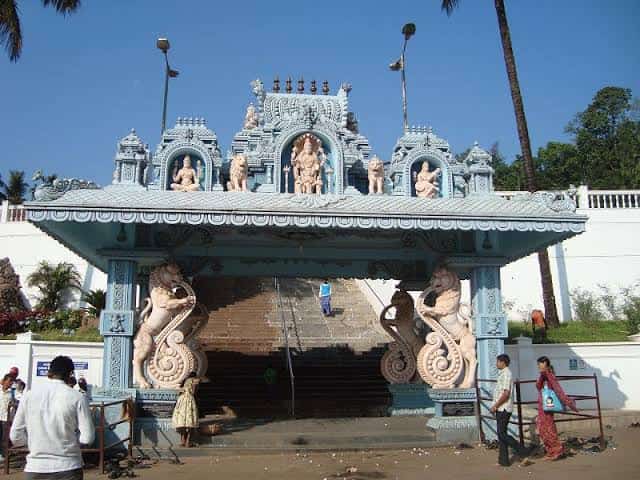
The temple’s architecture blends Dravidian and Hoysala styles, featuring towering gopurams richly decorated with sculptures of Hindu deities, intricate carved pillars, and ornate ceiling work throughout the complex.
Dress Code and Practical Rules
For men: Shirts and vests must be removed before entering the darshan queue, following traditional temple custom in this part of Karnataka. Carrying a towel or shawl to cover the shoulders is recommended, and full pants, dhotis, or mundus are the preferred lower-body attire.
For women: There’s no strictly enforced dress code, but decent, traditional clothing such as sarees or salwar kameez covering shoulders and legs is genuinely recommended out of respect for the temple’s customs.
Ritual bath: Many devotees take a holy dip in the Bhadra River before proceeding to darshan, treating this as a purifying first step of the pilgrimage.
Festivals Worth Planning Around
Akshaya Tritiya stands as Horanadu’s most significant annual celebration, marking Goddess Annapoorneshwari’s symbolic birthday and, according to tradition, the beginning of the Treta Yuga — genuinely the temple’s biggest single event of the year.
Navaratri, celebrated over nine days in September or October, draws substantial crowds given the temple’s deep Shakti significance. Rathotsava in February and Deepotsava round out the broader festival calendar, each bringing extended rituals and considerably heavier footfall than a regular visit.
Location: Where Exactly Is the Temple?
Adi-Shaktyatmaka Sri Annapoorneshwari Temple sits in Horanadu village, Mudigere Taluk, Chikkamagaluru District, Karnataka, on the banks of the Bhadra River, surrounded by dense Western Ghats forest. The temple is roughly 100 km southwest of Chikkamagaluru town, about 42 km from Sringeri, and around 90 km from Chikmagalur bus stand — genuinely remote enough that the journey itself feels like part of the pilgrimage experience.
How to Reach Horanadu Temple
By Air – Mangalore’s Bajpe Airport is the nearest, roughly 66 km away, connecting Horanadu to major Indian cities. Mysore Airport, about 178 km away, serves as a more distant alternative.
By Rail – Bantawala Railway Station is the closest, approximately 55 km from Horanadu. Kabakaputtur Railway Station, about 58 km away, offers another accessible option.
By Road – Horanadu is well connected by public and private buses from Bengaluru, Mysore, Shimoga, and Mangalore. Private cabs are also readily available for those wanting a more direct, flexible journey through the Western Ghats.
Frequently Asked Questions
Q1. We’re planning to arrive around 3 PM — will we get darshan and a meal?
Darshan itself would need to wait until the evening session opens at 7:00 PM, since the temple observes a closure between the midday session (ending 2:00 PM) and evening reopening. That said, the Annadanam meal service typically continues through the day’s three main sittings, so it’s worth checking locally whether food service is still available in that gap, or planning your arrival around one of the three main darshan windows instead.
Q2. We want to perform Aksharabhyasam for our child — do we need to book this in advance?
Given the relatively affordable ₹250 cost and how commonly this ritual is performed at Horanadu, same-day counter booking is often possible, but booking through the official portal, srikshetrahoranadu.com, in advance is genuinely safer, particularly if your visit falls during a weekend or festival period when demand for such rituals increases.
Q3. Is the journey to Horanadu manageable for elderly family members given how remote it is?
The drive through the Western Ghats can be genuinely long depending on your starting point, so it’s worth planning for rest stops and possibly an overnight stay nearby rather than attempting a rushed same-day round trip, especially for elderly travelers. The temple itself, once you arrive, involves manageable walking distances, and the overall unhurried, forest-surrounded atmosphere tends to feel restorative rather than exhausting for most visitors.
Q4. We’re vegetarian by choice but want to understand what the free Annadanam meal actually includes — is it substantial enough for a full day’s nourishment?
Yes, the Annadanam is a genuine three-course vegetarian meal served three times daily (breakfast, lunch, dinner), with tea and coffee also provided in the evening — it’s designed as complete, proper nourishment rather than a token offering, reflecting the temple’s core belief that no visitor should leave hungry.
 Karan Singh