 By Saurav Mehra
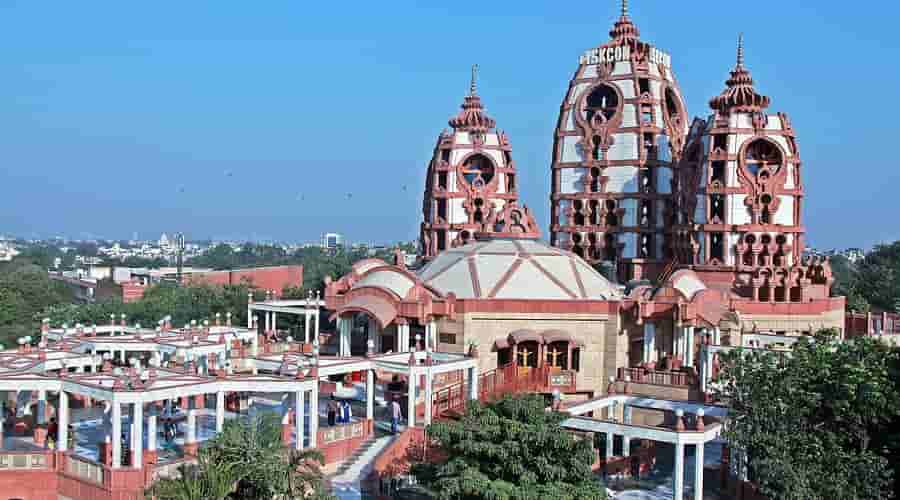
 Right in the middle of South Delhi’s busy Nehru Place corridor sits a hilltop temple where the traffic noise fades and continuous kirtan takes over — Sri Sri Radha Parthasarathi Mandir, better known simply as ISKCON Delhi. This isn’t just one of the capital’s most visited spiritual landmarks; in 2026, it also became home to a genuinely cutting-edge VR museum backed by the Ministry of Culture, marking ISKCON’s 60th anniversary. Whether you’re planning a quiet early-morning darshan or want to catch the temple’s newest attraction, here’s everything you need to know before heading to Hare Krishna Hills.
| Detail | Information |
| Temple | Sri Sri Radha Parthasarathi Mandir (ISKCON Delhi) |
| Deities | Radha Parthasarathi, with Sita-Rama-Lakshmana-Hanuman and Gaura-Nitai |
| Location | Hare Krishna Hills, Sant Nagar, East of Kailash, New Delhi – 110065 |
| Daily Timings | 4:30 AM – 9:00 PM |
| Sanctum Rest Period | 1:00 PM – 4:00 PM |
| Entry Fee | Completely free, no ticket, no booking |
| Nearest Metro | Nehru Place (Violet Line), ~500 m |
| Nearest Airport | IGI Airport (~18–20 km) |
Temple Timings: The Daily Schedule
ISKCON Delhi opens at 4:30 AM and stays accessible until 9:00 PM every single day. Within this window, the sanctum closes for a rest period between 1:00 PM and 4:00 PM, while the Deities are attended to before evening worship resumes.
The six daily aartis structure the entire day:
- Mangala Aarti — 4:30 AM, the very first ritual of the day
- Tulsi Aarti, Dhoop Aarti, Raj-Bhoga Aarti, and Pushpa Aarti — spread through the morning and afternoon
- Sandhya Aarti — 7:00 PM, genuinely the temple’s most attended ritual, drawing the largest crowd of the day
- Shayana Aarti — 8:30 PM, closing the day as the Deities are put to rest
A small but useful detail: Mangala and Sandhya Aarti timings shift by roughly half an hour between summer and winter, so it’s worth checking the exact current time if you’re specifically planning around one of these two.
Best time for a peaceful visit: Early morning at Mangala Aarti (4:30 AM) or any weekday morning offers the calmest, most contemplative atmosphere. If you want the fullest kirtan energy and a real sense of the temple’s devotional intensity, the 7:00 PM Sandhya Aarti is genuinely the highlight — just expect a considerably larger crowd, especially on weekends and Thursday evenings.
Darshan: Completely Free, No Booking Required
Entry and darshan at ISKCON Delhi are entirely free for everyone, with no ticket system and no online booking required for general visits — you simply walk in during temple hours. Donation boxes are placed throughout the complex for those who wish to contribute voluntarily, and donations can also be made online through the temple’s official website if you prefer.
For special programs or large group visits, it’s worth contacting the temple office directly at 011-2623-5133 to arrange things in advance, particularly if you’re bringing a school group or organizing a spiritual retreat.
The New Rasa Museum: ISKCON Delhi’s 2026 Addition
This is genuinely the most significant recent development at the temple, and it’s worth planning your visit around if immersive cultural experiences interest you. In April 2026, coinciding with ISKCON’s 60th anniversary, the temple unveiled a completely redeveloped Rasa Museum — a 13,500 sq ft gallery using virtual reality, projection mapping, and walk-through soundscapes to retell the Ramayana and Mahabharata.
The redevelopment cost roughly ₹14 crore, with a ₹4 crore grant specifically from the Ministry of Culture, Government of India — a genuine signal that immersive Vedic storytelling is now being treated as mainstream cultural tourism rather than a niche temple exhibit. The museum draws over 30,000 visitors monthly since its relaunch.
Museum timings: Entry is free and falls within general temple hours (roughly 4:30 AM to 9 PM), though the exhibit hall itself typically closes during the same 1:00 PM to 4:00 PM window as the main sanctum. It’s genuinely worth confirming show timings on the day of your visit, since VR-based exhibits often run on scheduled slots rather than continuous walk-in access.
Beyond the Museum: What Else the Complex Offers
ISKCON Delhi spans six distinct sections across Hare Krishna Hills, making this genuinely more than a quick darshan stop.
The main temple itself, built from marble, wood, and carved stone with latticed tower walls, houses the presiding Deities. The Centre for Vedic Studies includes the Library of Vedic Research, housing texts in multiple Indian and international languages. The Centre for Vedic Performing Arts is a 375-seat open-air amphitheatre facing the temple, hosting traditional music and dance performances. Krishna Jayanti Park, inspired by Krishna’s childhood pastimes, features ponds and waterfalls adding a genuinely tranquil dimension to the grounds. The Ashram functions as a residential complex for devotees pursuing Vedic study.
A standout feature worth seeking out: the Astounding Bhagavad Gita, the largest printed sacred book in the world, weighing over 800 kilograms, unveiled by Prime Minister Narendra Modi in 2019 — genuinely one of the more unusual and photograph-worthy sights within the complex.
Govinda’s Restaurant: Prasadam Worth Timing Your Visit Around
Govinda’s, the temple’s pure vegetarian restaurant, follows ISKCON’s tradition of first offering food to Lord Krishna before serving devotees — meaning every meal here is technically prasadam. Lunch runs from 12:00 noon to 3:30 PM, and dinner from 7:00 PM to 10:00 PM, making it genuinely easy to combine a meal with either darshan session.
Devotees interested in cooking can also contribute to prasad preparation, and the temple’s broader Food for Life program has distributed over 7 crore relief meals across India since 2020 — volunteering opportunities here are available through the temple office for those wanting a more hands-on connection to the temple’s charitable mission.
Festivals Worth Planning Around
Janmashtami, celebrating Krishna’s birth, is genuinely the temple’s biggest annual event — a 12-day affair culminating in the Shobha Yatra, a grand procession held outside the temple that draws massive crowds. Rama Navami features a live dramatic performance depicting Ram’s story, while Radhastami, Gaura Purnima, and Diwali each bring special decorations and extended programs. The temple’s own event calendar also lists occasions like Rath Yatra, held annually in mid-July.
Given how significantly crowds build during these festivals, arriving early or checking the temple’s official events calendar for any schedule adjustments is genuinely worth doing if your visit coincides with one.
Accessibility and Practical Facilities
ISKCON Delhi provides wheelchair access and lift access for visitors with mobility challenges, along with ample on-site parking for both cars and two-wheelers — genuinely well-equipped compared to many older Delhi temples with limited accessibility infrastructure.
Location: Where Exactly Is the Temple?
Sri Sri Radha Parthasarathi Mandir sits atop Hare Krishna Hills in Sant Nagar, East of Kailash, South Delhi. The temple was inaugurated on April 5, 1998, by then-Prime Minister Atal Bihari Vajpayee, designed pro-bono by Padma Shri architect Achyut Kanvinde, who took no fee for the commission. The ₹12 crore project was built in cooperation with the Hinduja Foundation alongside broader contributions from Delhi and across India, blending traditional Hindu temple architecture with Kanvinde’s signature functionalist design elements.
How to Reach ISKCON Temple Delhi
By Metro
Nehru Place Metro Station on the Violet Line is the nearest, roughly 500 metres from the temple — genuinely the easiest and fastest way to arrive given South Delhi’s traffic. Kailash Colony Metro Station, about 1.2 km away, serves as an alternative on the same line.
By Rail
Nizamuddin Railway Station is the closest major station, about 5 km away, while New Delhi Railway Station sits roughly 10-12 km from the temple.
By Air
Indira Gandhi International Airport is approximately 18-20 km from the temple, with taxis and cabs available for the onward journey.
By Road
The temple is well connected via the Outer Ring Road and the Nehru Place bus stop, with DTC buses offering one of the cheapest ways to travel across the city. App-based cabs like Uber and Rapido are also widely available, though they typically cost more than public transport, especially during peak Delhi traffic hours.
Frequently Asked Questions
Q1. We’re planning to visit specifically for the new Rasa Museum — do we need to book VR show slots in advance?
The museum entry itself is free and falls within general temple hours, but since VR-based exhibits often run on scheduled slots rather than continuous access, it’s genuinely worth confirming current show timings on the day of your visit rather than assuming walk-in availability, especially given how popular the museum has become since its April 2026 relaunch.
Q2. We’re arriving around 2 PM hoping for darshan — will the sanctum be open?
No, the main sanctum closes for a rest period between 1:00 PM and 4:00 PM daily, so arriving at 2 PM means the Deities won’t be accessible for darshan during this window. Plan your visit for either the morning session before 1:00 PM or after 4:00 PM in the afternoon/evening.
Q3. Is the evening Sandhya Aarti genuinely worth attending, or is it too crowded to be meaningful?
If experiencing the temple’s fullest devotional energy matters to you, Sandhya Aarti at 7:00 PM is genuinely the highlight of the day, with the largest kirtan gathering and a palpable collective atmosphere. It does draw the biggest crowd of any single aarti, so if you’d prefer a quieter, more personal experience, the 4:30 AM Mangala Aarti offers a completely different, more contemplative alternative.
Q4. Can we combine a temple visit with a meal at Govinda’s without needing to plan around darshan timing separately?
Yes, this pairs naturally since Govinda’s lunch (12:00 PM–3:30 PM) and dinner (7:00 PM–10:00 PM) hours both overlap comfortably with the temple’s open hours outside the 1-4 PM sanctum rest period. Many visitors complete their darshan before the sanctum closes, then head to Govinda’s for lunch during that same closure window, making efficient use of the full visit.
 Karan Singh