 By Saurav Mehra
 For millions of Hindus, one belief drives everything about a Varanasi trip: dying in Kashi grants moksha, freedom from the endless cycle of birth and death. That single conviction has pulled devotees to this exact spot on the Ganga for over 3,000 continuous years. Kashi Vishwanath isn’t just another Jyotirlinga stop — it’s widely believed to be the very first one, where Shiva appeared as an infinite column of blazing light before Brahma and Vishnu. But with over 11 crore visitors passing through Varanasi in a single recent year and daily footfall regularly crossing a lakh, getting your darshan timing and ticket choice right genuinely determines whether your visit feels peaceful or exhausting.
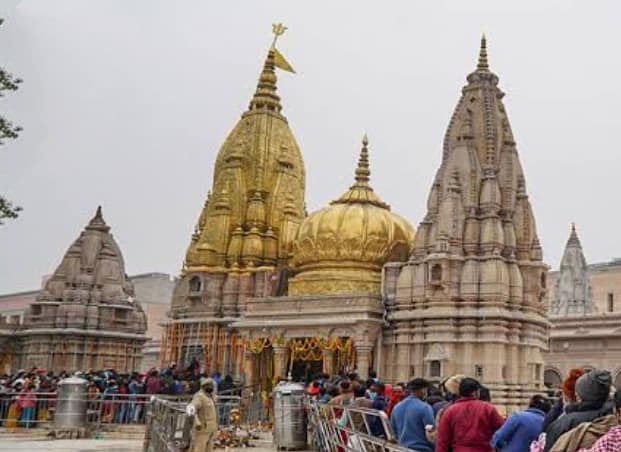
Quick Overview
| Detail | Information |
| Temple | Shri Kashi Vishwanath Temple (Golden Temple of Varanasi) |
| Deity | Lord Shiva as Vishwanath, 1st of 12 Jyotirlingas |
| Location | Vishwanath Gali, Varanasi, Uttar Pradesh |
| Daily Timings | 2:30 AM – 11:00 PM |
| Darshan Pause | 11:00 AM – 12:30 PM daily |
| General Darshan | Free (1–8 hours depending on crowd) |
| Sugam Darshan (VIP) | ₹250–₹300 per person |
| Nearest Airport | Lal Bahadur Shastri International (~20–25 km) |
| Nearest Railway Station | Varanasi Junction/Cantt (~4–6.8 km) |
Temple Timings: What Actually Happens Through the Day
Kashi Vishwanath Temple opens remarkably early, at 2:30 AM, and stays accessible until 11:00 PM. Within this long window, darshan pauses completely between 11:00 AM and 12:30 PM daily for the Bhog Aarti — arriving during this 90-minute gap genuinely means waiting outside, so plan around it deliberately.
The five daily aartis structure the entire day:
- Mangala Aarti — 3:00 AM, the most sacred moment, when Lord Vishwanath is ceremonially awakened
- Bhog Aarti — 11:15 AM, coinciding with the midday darshan pause
- Sapta Rishi (Sandhya) Aarti — 7:00 PM
- Shringar Aarti — 9:00 PM
- Shayan Aarti — 10:30 PM, the final ritual before the deity rests
Best time for a peaceful darshan: 6:00 AM to 8:00 AM on weekdays (avoiding Monday specifically) hits the sweet spot — Mangala Aarti has concluded, morning pujas are active, and queues remain genuinely short. Families with children often find 9:00 AM to 10:30 AM manageable too. Avoid 11:00 AM to 1:00 PM entirely, since this combines the aarti pause with peak tourist rush. Sugam Darshan is also unavailable during all aarti windows, so don’t count on VIP access as a workaround during these times.
Darshan Ticket Types: Free, Sugam, and Sparsh
General darshan remains completely free for every devotee, joining the standard queue. On a normal day this takes 1 to 3 hours; during festivals, weekends, or Shravan month, waits can genuinely stretch to 3-8 hours.
Sugam Darshan (VIP) is the temple’s official fast-track option, cutting your wait to just 15-45 minutes through a dedicated queue with a Shastri escort. Pricing shows some variance across current sources — most cite ₹250 per person, while a few more recent listings mention ₹300, suggesting a possible recent revision. Given this inconsistency, confirm the exact current rate directly on the official booking portal before finalizing your plans. Differently-abled devotees receive free entry to this facility. Children below 12 don’t need a separate ticket.
Sparsh Darshan, letting devotees physically touch the Shivling inside the Garbhagriha, is a genuinely rare privilege priced around ₹300, with extremely limited slots — book at least 2-3 days in advance, or 4-6 weeks ahead during festival periods.
Aarti participation tickets are booked separately from darshan passes. Mangla Aarti tickets range from roughly ₹100 to ₹600 depending on your position, though some sources cite a flat ₹500. Bhog Aarti and Sapta Rishi Aarti both run around ₹300.
Booking process: Visit shrikashivishwanath.org, click “Users,” register with your mobile number and email, verify via OTP, select your desired service (Sugam Darshan, Sparsh Darshan, or Aarti), choose your date and available slot, enter every pilgrim’s details with valid government ID, and pay via UPI or card.
Critical Fraud Warning
This genuinely matters more here than at most temples. shrikashivishwanath.org is the only authorized booking platform. Never book through WhatsApp agents, unofficial third-party websites, or anyone approaching you near the temple offering “quick darshan” for cash. Same-day Sugam Darshan booking is only possible at the official help desk counter — phone bookings aren’t available at all. Booking dates cannot be rescheduled once confirmed, so double-check your selected slot before completing payment.
The Kashi Vishwanath Corridor: A Completely Different Approach
Inaugurated on December 13, 2021, the Kashi Vishwanath Dham Corridor transformed how pilgrims actually reach the sanctum. This 5-lakh sq ft complex, built using Makrana marble, Chunar stone, Kota granite, and Baleshwar red stone, creates a 400-metre open walkway connecting the Jyotirlinga directly to the Ganga — the first time in centuries these two sacred elements have been physically linked this way.
The Corridor houses over 40 smaller temples, offers wheelchair access, free lockers, a VR Darshan experience, and a Ganga view gallery — and entry is completely free. Lalita Ghat is considered the best entry point. To reach it, walk along any Varanasi ghat toward the Corridor entrance; no vehicle is permitted beyond designated parking near Godowlia.
Understanding the Temple’s Spiritual Weight
According to the Skanda Purana and Kashi Khanda, Varanasi rests on the tip of Shiva’s trident, suspended above the material world — which is precisely why the belief that dying here grants immediate moksha, regardless of one’s karmic account, has held for millennia. The Lingam itself measures roughly 90 cm in circumference and 60 cm in height, and the temple’s three gold-plated shikharas catching morning and evening sunlight over the Ganges are exactly why it’s called the Golden Temple.
The current structure was rebuilt in 1780 (some sources cite 1777) by Maharani Ahilyabai Holkar of Indore, after the original was destroyed multiple times across centuries — first by Qutb-ud-din Aibak in the late 12th century, later by Sikandar Lodhi, and finally by Aurangzeb, during which the head priest famously grabbed the main deity and jumped into the temple well to protect it, a well still revered today as the “Well of Knowledge.” Maharaja Ranjit Singh later donated gold to cover the temple’s iconic spire.
Dress Code and Practical Rules
Modest, respectful attire is expected throughout the temple. Mobile phones, cameras, electronic digital watches, and shoes are strictly not permitted inside — free lockers within the Corridor help with this, so plan to deposit these items before proceeding toward the sanctum.
Location: Where Exactly Is the Temple?
Shri Kashi Vishwanath Temple sits in Vishwanath Gali, in the heart of Varanasi’s Old City, close to Dashashwamedh Ghat and just 400 metres from Manikarnika Ghat. A genuinely important detail: vehicles cannot drop you directly at the temple gate due to security zoning. The last 400-800 metres must be covered on foot through narrow, regulated lanes — factor this walking stretch into your timing, especially if you’re arriving with luggage or elderly family members.
How to Reach Kashi Vishwanath Temple
By Air
Lal Bahadur Shastri International Airport (Babatpur) is the nearest, with distances cited between 20 and 25 km depending on the source, roughly a 40 to 63-minute drive. Taxi fares typically range from ₹850 to ₹1,350 depending on vehicle size and time of day.
By Rail
Varanasi has multiple stations, and knowing which one you’re arriving at matters. Varanasi Junction (BSB), also called Varanasi Cantt, is the busiest and most central, roughly 4-6.8 km from the temple. Banaras Station (BSBS), the modern secondary terminal, sits about 5-6 km away. Kashi Station (KEI), near Rajghat, is closer at 2-4 km but serves mainly local and select express trains. Varanasi City Station (BCY) is technically nearest at 2-3 km but handles only local routes with limited long-distance connectivity.
From any of these, auto-rickshaws or e-rickshaws (₹50-₹150) drop you at Godowlia Chowk, from where it’s a short walk through Vishwanath Gali to the temple entrance.
By Road
Varanasi connects well via national highways: roughly 800 km from Delhi (12-14 hours via NH19), 300 km from Lucknow (5-6 hours via NH30), 250 km from Patna (5 hours via NH31), and 120 km from Prayagraj (2-3 hours via NH19). Government and private buses run regularly from these cities, dropping passengers at Varanasi’s main bus stand near the junction.
Frequently Asked Questions
Q1. We’re arriving at Varanasi Junction around 10 AM — should we head straight to the temple or wait?
Given the temple’s daily darshan pause runs 11:00 AM to 12:30 PM, arriving at the temple around 10:30-10:45 AM after your 30-40 minute transfer means you’d likely be queuing right as the pause begins. It’s genuinely better to either push for an earlier arrival (before 10 AM) or plan to visit after 1:00 PM instead, using the gap to check into your hotel or explore nearby ghats.
Q2. We keep seeing different prices for Sugam Darshan (₹250 vs ₹300) — which one is correct?
This inconsistency genuinely exists across current sources, likely reflecting a recent price revision. Rather than relying on either figure with full confidence, check the exact current rate directly on shrikashivishwanath.org at the time of booking, since this is the only way to get the accurate, up-to-date price.
Q3. Someone outside the temple offered us “quick darshan” for a fixed cash amount — is this legitimate?
No, treat this as a scam without exception. The only authorized platform for any Kashi Vishwanath booking — Sugam Darshan, Sparsh Darshan, or Aarti tickets — is shrikashivishwanath.org. Anyone approaching you in person or via WhatsApp offering paid “quick darshan” outside official channels is a fraudster, and paying them gets you nothing legitimate.
Q4. We’re traveling with elderly parents — how do we handle the fact that vehicles can’t drop us at the temple gate?
Plan for a genuine 400-800 metre walk through narrow lanes as the final stretch of your journey, and build extra time into your schedule specifically for this. Wearing simple, easy-to-remove footwear helps too, since you’ll need to take it off near the security checkpoints regardless — and the Corridor itself does offer wheelchair access if mobility is a significant concern for your family.
 Karan Singh