 By Saurav Mehra
 Every year, days before Holi turns the rest of India into a riot of color, a small hilltop town in Uttar Pradesh does something no other place does — women chase men through the streets with sticks, laughing and singing, in one of the most photographed festivals on earth. Barsana isn’t just where Lathmar Holi happens; it’s believed to be Radha’s own birthplace, and the Shri Radha Rani Temple perched atop Bhanugarh Hill is where devotees say her presence still feels genuinely personal rather than distant. If you’re planning a Braj Bhoomi pilgrimage, here’s everything you need to know before making the climb.
| Detail | Information |
| Temple | Shri Radha Rani Temple (Shriji Temple / Ladli Ji Temple) |
| Deity | Shri Radha Rani (with Shri Laadli Lal) |
| Location | Bhanugarh Hill, Barsana, Mathura District, UP – 281405 |
| Summer Timings | 5:00 AM–2:00 PM, 5:00 PM–9:00 PM |
| Winter Timings | 5:30 AM–2:00 PM, 5:00 PM–8:30 PM |
| Entry Fee | Free, no ticket required |
| Steps to Climb | ~200–300 (lift and car route also available) |
| Distance from Mathura | ~45–53 km |
| Distance from Vrindavan | ~40–45 km |
Temple Timings: Why the Exact Hours Shift by Season
Barsana Radha Rani Temple doesn’t run a single fixed schedule year-round — timings genuinely shift between summer and winter. In summer months, the temple opens as early as 5:00 AM and stays accessible until 2:00 PM, then reopens at 5:00 PM and continues to 9:00 PM. In winter, the morning opening shifts slightly later to 5:30 AM, with the evening session closing a bit earlier, around 8:30 PM instead of 9:00 PM.
Given some variance across different sources on the exact minute-by-minute schedule, it’s genuinely worth verifying the current timing locally or with your accommodation on the day of your visit, particularly if you’re planning around a specific aarti.
Daily aarti schedule:
- Mangala Aarti — around 5:00–5:30 AM, the day’s opening ritual
- Shringar Aarti — around 8:00 AM, when the deity is beautifully decorated
- Rajbhog Aarti — midday
- Sandhya Aarti — evening, widely considered the most immersive experience of the day
- Shayan Aarti — night, closing the temple
Best time for a peaceful visit: Early morning between 5:00 AM and 8:00 AM sees noticeably lighter crowds than the rest of the day. That said, many repeat visitors specifically recommend the evening Sandhya Aarti between 6:00 PM and 8:00 PM — the hilltop lighting, the chants, and the view over Barsana combine into something many describe as feeling more complete than a rushed morning visit.
Darshan: Free Entry, With Unofficial VIP Options via Tour Operators
General darshan at Shri Radha Rani Temple is completely free for every devotee, with no ticket required and offerings made purely on a voluntary basis.
For those wanting priority access during busy periods, several third-party tour operators offer VIP darshan arrangements, typically priced between ₹1,500 and ₹3,500 per person depending on the season, group size, and any bundled transport or guide services. It’s genuinely important to understand this isn’t an official temple-run VIP system — it’s a service arranged through local tour agencies to help manage crowd movement during peak hours, weekends, and festivals like Lathmar Holi or Radhashtami. If you’re specifically going through one of these operators, stick to established, well-reviewed providers rather than unfamiliar contacts approaching you near the temple.
The Climb: Steps, Lift, and Car Route Options
Reaching the main temple involves climbing approximately 200 to 300 steps up Bhanugarh Hill — sources vary slightly on the exact count, but treat this as a genuine, moderate climb rather than a quick walk-up.
The good news is that you’re no longer limited to just the stairs. A lift is now available specifically for elderly visitors or anyone who can’t manage the climb, and there’s also a car route that reaches near the top of the hill, requiring only a short final walk from there. This is genuinely useful information for families traveling with grandparents or anyone with mobility concerns, since older guides sometimes don’t mention these newer accessibility options.
Along the climb, you’ll pass small shops, resting spots, and views over Barsana town — many visitors describe the ascent itself as becoming part of the spiritual experience rather than just a physical obstacle before darshan.
Time to budget: A straightforward visit — climb, darshan, and a little time to take in the views — typically takes 1.5 to 2 hours. Festival days genuinely take considerably longer given the crowds on the steps themselves.
Why Barsana Feels Different From Other Braj Temples
This is worth understanding before your visit, since it shapes the whole experience. Unlike Krishna-centered temples in Vrindavan and Mathura, which often carry a joyful, energetic atmosphere, Radha Rani Temple carries something quieter and more personal. Devotees frequently describe feeling a one-on-one connection with Radha here, rather than the more collective devotional energy found at larger temples — an emotional quality many visitors say stays with them well after the trip ends.
According to widely held tradition, Barsana is Radha’s birthplace, though a separate, equally respected tradition names Raval, near Mahavan, as the actual site where she was found as an infant — worth knowing that this remains a genuine point of differing local belief rather than a settled fact. The temple’s founding legend describes how Krishna’s father Nanda and Radha’s father Vrishabhanu, both fed up with the tyranny of Mathura’s King Kansa, relocated with their communities — Nanda to Nandishvar Hill (now Nandgaon) and Vrishabhanu to Bhanugarh Hill, which later became Radha’s home and the site of this temple.
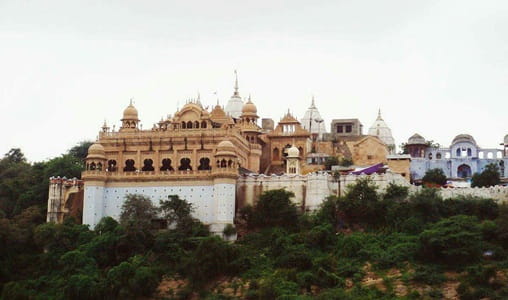
Local legend holds the temple’s origins go back roughly 5,000 years, though the structure existed in ruins before King Vajranabh — Krishna’s great-grandson, according to tradition — rebuilt it. The current Shriji Temple structure, with its arches, pillars, and red sandstone, actually reflects clear Mughal-era architectural influence, a genuinely interesting blend given the site’s deep Hindu devotional significance.
Lathmar Holi: The Most Photographed Holi on Earth
If there’s one reason Barsana appears on international travel lists, it’s this. Lathmar Holi, celebrated a few days before mainstream Holi (typically in February or March), reenacts a playful legend where young Krishna visited Barsana to tease Radha and her friends — who responded by chasing him away with sticks. Today, the tradition continues with women of Barsana playfully “beating” visiting men from neighboring Nandgaon with lathis (sticks), while the men sing traditional Holi songs and try to shield themselves, often with equal amounts of laughter as caution.
Given how intensely crowded this festival gets, and the genuine physical nature of the celebration itself, advance booking through an authorized tour operator is strongly recommended if you want organized entry, safer crowd movement, and a better vantage point to watch — rather than attempting to navigate it independently for the first time.
Radhashtami: The Temple’s Supreme Festival Day
Radhashtami, celebrating Radha’s appearance day, falls on Bhadrapada Shukla Ashtami — typically in August or September, though the exact date shifts yearly according to the lunar calendar, so it’s worth confirming the current year’s date before planning around it. This is genuinely considered the temple’s most important day, when the shrine is elaborately decorated with flowers and lights, and Chappan Bhog — 56 varieties of food — is ceremonially offered to Radha and Krishna before distribution as prasad to devotees. Expect a steep climb and a heavy crowd crush if you’re attending this specific day.
Dress Code and Practical Tips
Modest, traditional clothing is expected — kurtas or sarees for women, dhoti-kurta or simple pants for men. Shorts and revealing outfits should be avoided.
Photography is generally restricted inside the main sanctum, so plan to capture your photos of the temple exterior, the climb, and the hilltop views instead.
Practical essentials worth carrying: water and comfortable footwear, given the climb and Barsana’s often warm daytime temperatures, particularly outside the cooler October-to-March window.
Location: Where Exactly Is the Temple?
Shri Radha Rani Temple sits atop Bhanugarh Hill in Barsana, Mathura district, Uttar Pradesh. The town itself is often described as resting across four hills, traditionally held to represent the four faces of Brahma, making the entire landscape carry spiritual significance well beyond the temple structure alone.
Nearby attractions worth combining with your visit: Nandgaon, Krishna’s boyhood town, sits just 8-10 km away — a 20-25 minute drive — and is traditionally visited together with Barsana given their shared role in the Lathmar Holi tradition. Maan Mandir, Kirti Mandir, and Prem Sarovar also sit within easy reach, along with Govardhan for those extending their Braj Bhoomi circuit.
How to Reach Barsana Radha Rani Temple
By Rail
Mathura Junction is the major railhead, roughly 45-51 km from Barsana, with strong connectivity to major Indian cities. Kosi Kalan, a smaller station about 10-15 km away, offers a closer but less frequently serviced alternative.
By Air
Indira Gandhi International Airport in Delhi is the nearest major airport, roughly 150 km away, with taxis available for the onward road journey.
By Road
Barsana is approximately 45-53 km from Mathura and 40-45 km from Vrindavan, both roughly 1 to 2 hours by road depending on traffic. Taxis, private cabs, and state buses run regularly from both cities, with most pilgrims preferring taxis for comfort, especially when traveling with elderly family members or during festival periods.
Frequently Asked Questions
Q1. We’re traveling with elderly parents who can’t manage 200-300 steps — is there genuinely a way around the climb?
Yes, a lift is now available specifically for pilgrims who can’t manage the stairs, and there’s also a car route that reaches close to the top of the hill, leaving only a short final walk. This is a relatively recent accessibility addition, so don’t assume older guides mentioning only the stairs reflect the current situation.
Q2. We want to attend Lathmar Holi but are nervous about the crowd intensity — is it safe for first-time visitors?
It’s genuinely intense given the scale and physical nature of the celebration, so booking through an authorized tour operator for guided entry and a safer vantage point is strongly recommended rather than navigating it independently for your first visit. Staying with an organized group, avoiding pushing through crowds, and following local safety instructions makes a real difference in how comfortable the experience feels.
Q3. Is the VIP darshan offered by tour operators an official temple service, or should we be cautious about it?
It’s not run by the temple itself — these are arrangements made through local tour agencies to help manage crowd flow and priority access during peak hours and festivals. It’s genuinely useful during busy periods, but stick to established, well-reviewed operators rather than unfamiliar people approaching you near the temple entrance.
Q4. We’re planning to combine Barsana with Nandgaon in the same day — how should we time this given the temple’s seasonal timings?
Given the 20-25 minute drive between the two towns, a sensible approach is completing Barsana’s morning darshan before the midday closure (around 2:00 PM), then continuing to Nandgaon for the afternoon, since both towns share deep ties through the Lathmar Holi tradition and are traditionally visited as a pair.
 Karan Singh