 By Saurav Mehra
 There’s a version of the Krishna story most people don’t know until they actually travel here — that his real home during his reign wasn’t the grand mainland temple everyone visits first, but a quiet island a short boat ride away. Bet Dwarka is where Krishna is believed to have actually lived with his family, and where he welcomed his childhood friend Sudama’s humble gift of rice with genuine warmth. Unlike the busy Dwarkadhish Temple in the city, this island crossing genuinely changes the pace of your pilgrimage. If you’re planning a Dwarka trip, here’s exactly what you need to know before you catch that ferry.
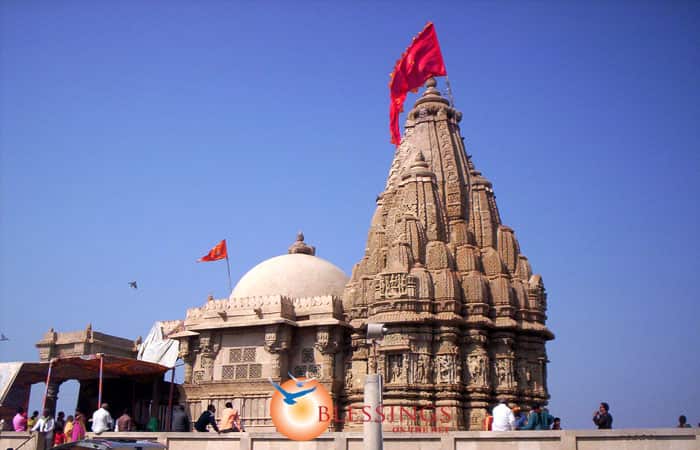
| Detail | Information |
| Temple | Dwarkadhish Temple, Bet Dwarka (Shankhodhar Island) |
| Deity | Lord Krishna (conch held in oblique position) |
| Location | Shankhodhar Island, Gulf of Kutch, off Okha coast, Gujarat |
| Temple Timings | 9:00 AM–1:00 PM, 3:00 PM–6:00 PM |
| Entry Fee | Free (ferry ticket only) |
| Ferry Ticket | ~₹20–40 per person |
| Ferry Duration | 15–20 minutes from Okha jetty |
| Distance from Dwarka to Okha | ~30–35 km |
Temple Timings: A Simple Two-Session Schedule
Bet Dwarka Temple follows a consistent daily pattern across the week — morning darshan from 9:00 AM to 1:00 PM, and evening darshan from 3:00 PM to 6:00 PM. This schedule holds steady Monday through Sunday, with hours typically extending only during major festivals like Janmashtami.
Given that some sources describe slightly different or extended timings, it’s genuinely worth confirming the current schedule at the temple notice board once you arrive, particularly if you’re planning your visit around a tight ferry connection.
Aarti schedule (Pushtimarg tradition):
- Mangla Aarti — early morning, marking the day’s opening
- Shrungar Aarti — after the deity is beautifully decorated
- Rajbhog Aarti — the grand midday meal offering
- Utthapan Aarti — afternoon, when the deity wakes from rest
- Sandhya Aarti — at sunset, with glowing diyas
- Shayan Aarti — night, before the deity rests
Best time for a peaceful visit: October to March brings the most comfortable weather, calmer sea crossings, and manageable queues. If you specifically want an unhurried, quiet darshan, reach Okha jetty by 6:00 AM, catch the first ferry, and aim to be at the temple by 6:30 AM — this schedule genuinely lets you beat both the heat and the day’s crowd.
The Ferry: No Fixed Timetable, Just Frequent Departures
This is genuinely important to understand before you plan your trip. There’s no scheduled departure time for the Okha-to-Bet Dwarka ferry — boats simply leave every 10 to 15 minutes once they fill with passengers, running from early morning until evening. The crossing itself takes 15 to 20 minutes depending on sea conditions, with morning rides typically smoother than later in the day.
Ticket pricing is genuinely budget-friendly, generally ₹20 to 40 per person, with extra charges for luggage or faster boat options. Life jackets are usually provided as a safety precaution.
A genuine seasonal warning: during the monsoon months of June through September, boat services can be delayed or suspended entirely due to rough seas. If you’re planning a Dwarka trip during this window, build in flexibility, or better yet, aim for the October-to-March period when crossings are consistently smoother.
Don’t cut the last boat close. Return ferries genuinely thin out as evening approaches and depend heavily on sea conditions — if you’re planning to catch the evening darshan session, board your return-direction boat from Okha well before 4:00 PM to comfortably make the temple’s 3:00 PM opening, and don’t linger on the island past the point where return boats become scarce.
Why Bet Dwarka Feels Different From the Mainland Temple
The moment you step off the jetty, the atmosphere shifts noticeably. Where mainland Dwarkadhish Temple buzzes with crowds and city energy, Bet Dwarka carries a genuinely quiet, contemplative feel — narrow lanes, coastal homes, waves in the background, and a steady devotional rhythm rather than a rushed one.
According to tradition, this island was Krishna’s actual residence during his years ruling Dwarka, where he lived with his family. The name itself — variously spelled Bet or Beyt — is widely understood to mean “gift,” a direct reference to the humble offering of beaten rice that his childhood friend Sudama brought when visiting him here. This story is so central to the island’s identity that rice remains the primary offering made to the deity at the Keshavraiji Temple here, a living echo of that friendship centuries later.
The island also appears in the Mahabharata under the name Antardvipa, referenced as a place the Yadava clan needed to reach by boat — and it’s separately called Shankhodhar, owing to the enormous variety of conch shells found scattered along its shores.
A distinguishing detail worth noticing: unlike the mainland Dwarkadhish idol, the Krishna idol at Bet Dwarka holds the shankha (conch) in an oblique position rather than the standard pose — a small but meaningful architectural difference between the two shrines.
What Else to See on the Island
Bet Dwarka is genuinely more than a single temple — it’s a small island with a surprisingly diverse religious landscape worth exploring during your visit.
Hanuman Dandi Temple houses idols of Hanuman and his son Makardhwaja, tied to a mythological account involving a fish that swallowed a drop of Hanuman’s sweat. Narasinhji Temple and the Vaishnav Mahaprabhu Baithak add further Vaishnavite significance to the island. A small shrine to Abhaya Mata sits at the island’s southernmost corner.
Genuinely surprising to many first-time visitors: Bet Dwarka also houses a cluster of Jain temples honoring all 24 Tirthankaras, alongside two Islamic dargahs — Sidi Baba Peer Dargah and Haji Kirmai Dargah. This layered religious coexistence on such a small island genuinely reflects centuries of shared history rather than a single tradition.
A Genuinely Ancient Archaeological Site
Bet Dwarka has drawn serious archaeological attention well beyond its religious significance. Underwater and coastal explorations conducted by the Marine Archaeology Centre of the National Institute of Oceanography between 1981 and 1994 uncovered artifacts believed to date from the Harappan era — pottery, copper fishhooks, and coppersmith molds. A protection wall stretching 580 metres, dating back to roughly 1500 BC, was discovered in 1982, and shipwrecks and stone anchors found nearby suggest historical trade links with Roman-era seafarers.
An inscription attributed to Simhaditya, dated 574 AD, also references Dwarka, adding further historical depth. It’s widely believed that continual coastal erosion has submerged a significant portion of the original island over centuries — part of why ongoing archaeological curiosity about this site hasn’t faded.
Dress Code and Practical Rules
For men: A dhoti or pajama with an upper garment, or formal trousers with a shirt.
For women: A saree, half-saree, or chudidar.
Avoid: Shorts, mini-skirts, and sleeveless tops while on temple grounds. While there’s no strictly enforced dress code, modest attire is genuinely appreciated as a sign of respect.
Non-Hindu visitors are welcome to explore Bet Dwarka and appreciate its architecture, though access to the actual sanctum sanctorum may be restricted.
Location: Where Exactly Is Bet Dwarka?
Bet Dwarka sits on Shankhodhar Island in the Gulf of Kutch, roughly 2 to 5 km off the coast near Okha, within Devbhumi Dwarka district, Gujarat. Reaching it genuinely requires two distinct legs of travel — first to Okha, then across the water by ferry.
How to Reach Bet Dwarka Temple
By Air
Porbandar Airport, roughly 95-110 km from Dwarka, and Jamnagar Airport, about 126-145 km away, both serve as the nearest air gateways, with taxis available for the onward road journey.
By Rail
Dwarka has its own railway station, well connected to major cities across India including Ahmedabad, Rajkot, Mumbai, and several others. From the station, taxis or buses continue on to Okha jetty.
By Road
From Dwarka city, Okha jetty is roughly 30-35 km away, about a 45-minute to 1-hour drive by taxi or bus. From Okha, the ferry crossing to Bet Dwarka takes the final 15-20 minutes.
Nearby attractions worth combining with your visit: Nageshwar Jyotirlinga sits about 16.6 km from Dwarka city and roughly 22.8 km from Bet Dwarka, making it easy to fold into the same trip. Rukmini Mandir, known for its striking 12th-century architecture, sits just 2 km from the main Dwarka temple.
Frequently Asked Questions
Q1. We’re planning our trip for July — will we genuinely be able to catch the ferry?
This is a real risk worth planning around. July falls within the monsoon season (June to September), when rough seas frequently delay or suspend ferry services entirely. If your travel dates are flexible at all, shifting to the October-to-March window genuinely gives you a far more reliable crossing.
Q2. We want to visit both mainland Dwarkadhish Temple and Bet Dwarka in one day — is this realistic?
Yes, many pilgrims do exactly this, but it requires starting early and planning your ferry timing carefully. Complete mainland darshan first, then head to Okha jetty with enough buffer time to catch a boat before the island temple’s 1:00 PM midday closure, or plan for the 3:00 PM reopening instead.
Q3. Is there a fixed ferry schedule we should plan around, or can we just show up?
There’s no fixed departure timetable — boats simply leave every 10-15 minutes once filled with passengers, running from early morning through evening. You can genuinely just arrive at Okha jetty and expect a boat within a short wait during daylight hours, though it’s still worth reaching with enough buffer before your intended darshan session.
Q4. We’re traveling with elderly family members — is the ferry crossing genuinely manageable for them?
The crossing itself is short at 15-20 minutes, and life jackets are typically provided, but sea conditions can make the ride bouncy on windier days. Choosing an early morning crossing, when seas are generally calmer, genuinely makes the experience more comfortable for elderly travelers than a midday or late-afternoon trip.
 Karan Singh