 By Saurav Mehra
 There’s a devotee named Bodana whose story genuinely explains why Dakor exists as a pilgrimage site at all. He walked to Dwarka every single year to worship Krishna, and when age finally made that annual journey impossible, Krishna himself is believed to have traveled from Dwarka to Gujarat’s Kheda district to be with him instead. That’s the foundation of Shri Ranchhodraiji Temple — one of the five Pancha Dwarka shrines — and it’s exactly why families across Gujarat treat a Dakor visit as genuinely equivalent to reaching Dwarka. If you’re planning this pilgrimage, here’s what actually matters before you go.
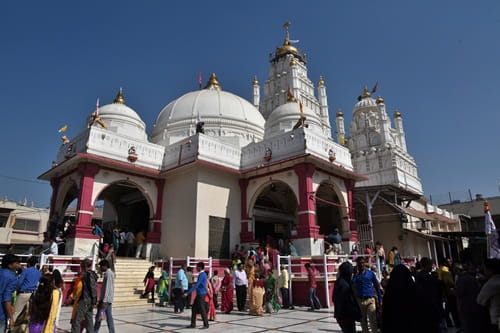
| Detail | Information |
| Temple | Shri Ranchhodraiji Maharaj Mandir (Dakor Temple) |
| Deity | Lord Krishna as Ranchhodraiji, with Goddess Rukmini |
| Location | Dakor, Kheda District, Gujarat |
| Morning Darshan | 6:00/6:45 AM – 12:00 PM |
| Evening Darshan | 4:00 PM – 7:30 PM |
| Afternoon Closure | 12:00 PM – 4:00 PM |
| Entry Fee | Free, voluntary donations only |
| Nearest Railway Station | Dakor Station (~2 km) |
| Nearest Bus Stand | Dakor GSRTC (~1 km) |
Temple Timings: The Daily Schedule
Shri Ranchhodraiji Temple opens each morning between 6:00 AM and 6:45 AM, with morning darshan continuing until 12:00 PM. The temple then closes for a substantial afternoon break — running from 12:00 PM to 4:00 PM — before reopening for evening darshan, which continues until 7:30 PM.
This four-hour midday closure is genuinely the detail that catches first-time visitors off guard the most. If you’re planning to arrive around lunchtime hoping for a quick darshan before continuing your Gujarat trip, you’ll find the doors firmly shut. Plan your visit for either the morning window or after 4:00 PM instead.
Aarti and Bhog schedule worth knowing:
- Mangla Aarti — 6:45 AM, the deity’s daily wake-up ceremony and first darshan
- Rajbhog Aarti — 12:15 PM, the grandest ritual of the day, performed right as the temple closes for the afternoon
- Sandhya Aarti — 6:30 PM, a deeply peaceful evening worship with lamps and hymns
- Shakhdibhog — the final darshan, ending at 7:30 PM as the temple closes for the night
Throughout the day, the deity receives a total of eight bhog (meal) offerings — Mangla, Balbhog, Shringar, Gwalbhog, and Rajbhog in the morning session, followed by Uttapan, Shyanbhog, and Shakhdibhog in the evening. Each offering is treated as a genuine ritual moment rather than a routine formality, which is part of why devotees describe the temple’s rhythm as feeling alive throughout the day.
Best time for a peaceful visit: November to February offers the most comfortable weather for Dakor’s often-crowded courtyards. Summer months see noticeably fewer pilgrims given the Gujarat heat, so if a quieter darshan matters more to you than ideal weather, this trade-off is worth considering.
Darshan: Completely Free, No Ticketed Entry
Entry and darshan at Dakor Temple are entirely free for every devotee, and the temple operates purely on voluntary donations rather than any mandatory fee structure. There’s no separate VIP or paid priority darshan category here — every pilgrim, regardless of background, experiences the same open access during regular darshan hours.
If you’d like to contribute toward special prasad or a particular seva, donations can be made directly at the temple, but this remains entirely optional rather than a barrier to darshan itself.
The Legend Behind the Temple’s Name
Understanding this story genuinely changes how the temple feels once you’re standing before the deity. According to tradition, a devotee named Vijaysinh Bodana walked to Dwarka every year without fail to worship Lord Krishna, a pilgrimage he continued faithfully for decades. As old age made the journey increasingly difficult, Krishna, moved by Bodana’s unwavering devotion, chose to manifest himself in Dakor instead — appearing alongside Goddess Rukmini as Bodana completed his final penance.
This is precisely why the deity here is called Ranchhodraiji — meaning “he who left the battlefield,” an epithet traditionally tied to Krishna’s decision to withdraw from a specific battle to protect his people, here reinterpreted as him leaving Dwarka to be with his most devoted follower. Overwhelmed with gratitude, Bodana established the idols of Ranchhodraiji and Rukmini at this very spot, and word of the divine arrival spread rapidly, drawing pilgrims from across the region even before the grand temple structure was built.
Understanding the Temple’s Architecture
The current temple structure was built in 1772 AD by Gopal Jagannath Tambwekar (also recorded as Ambekar), a treasurer in the Peshwa’s court at Poona, at a cost of one lakh rupees — a genuinely significant sum for the era. According to local tradition, Ranchhodji himself inspired Tambwekar through a dream to construct a temple worthy of this divine presence.
The temple features 8 domes and 24 turrets, with the central dome rising 27 metres (roughly 90 feet), making it the tallest temple structure in the district. Silver gates face Gomti Lake directly, intricately carved with depictions of Vedic gods, while the interior courtyard houses tall light towers and a Nagarkhana (drum house) used during aarti performances.
The Jagmohan, the temple’s largest audience hall, is reached via marble steps and features a dome decorated with paintings depicting scenes from Lord Krishna’s life, alongside detailed mirror work — genuinely worth pausing at rather than moving straight through to the sanctum. The main Ranchhodrai idol itself is carved from black touchstone, standing 1 metre tall and 45 centimetres wide, richly adorned with gold, jewels, and elaborate garments that change with the day’s rituals.
Dress Code and Practical Rules
For men: Traditional attire like dhoti or kurta is recommended, though shirts are permitted.
For women: Saree or salwar kameez, with modest, fully-covered clothing expected throughout the temple premises.
Not permitted: Shorts, sleeveless tops, and western casual wear.
Strictly banned inside the sanctum: Mobile phones and cameras, along with any photography equipment. Leather items including belts and bags aren’t allowed inside either.
Additional rules: Non-vegetarian food and alcohol must be left outside the temple entirely. Footwear needs to come off before entering, silence should be maintained particularly during aarti, and touching the deity, idol, or altar directly isn’t permitted under any circumstance.
Prasad and What to Expect
The main prasad offerings at Dakor are Laddu and Rasmalai, both genuinely popular among visiting devotees and often purchased as offerings to take home after darshan.
Festivals Worth Planning Around
Chaitra Purnima, falling in March, brings Dakor’s single grandest annual fair — drawing enormous crowds who consider this the most auspicious time to visit given its direct connection to the temple’s founding legend. If experiencing Dakor at its most vibrant is your priority, this is genuinely the festival to plan around, though expect substantially larger crowds than any regular visit.
Janmashtami, celebrating Krishna’s birth, and Tulsi Vivah, held in November, both bring extended rituals and heightened devotional energy. Annakoot, involving mountains of fresh food offered to the deity, is another distinctive celebration unique to how Dakor observes its festival calendar.
For those unable to travel during these occasions, live darshan is available through the temple’s official website and YouTube channels specifically during major festivals — a genuinely useful option for devotees who want to participate remotely.
Location: Where Exactly Is the Temple?
Shri Ranchhodraiji Temple sits in Dakor town, Kheda District, Gujarat, enclosed by a fort wall near the banks of the sacred Gomti Lake, right in the midst of the town’s main bazaar. Interestingly, Dakor’s earliest identity as a pilgrimage center was actually tied to the Danknath Temple, a Shiva shrine — it was only in later centuries, with the growing fame of Ranchhodraiji Temple after its 1772 construction, that Dakor developed into the major Vaishnavite pilgrimage destination it’s known as today.
How to Reach Dakor Temple
By Rail
Dakor Railway Station is remarkably close, just about 2 km from the temple, making rail travel genuinely one of the most convenient ways to arrive.
By Road
Dakor GSRTC Bus Station sits just about 1 km from the temple, with regular bus services connecting Dakor to major Gujarat cities. The town’s excellent overall connectivity makes it an easy addition to a broader Gujarat pilgrimage circuit.
Nearby attractions worth combining with your visit: Gomti Lake, right beside the temple, offers boating facilities and a genuinely scenic spot for reflection after darshan. Galteshwar Temple, a Shiva shrine roughly 15 km away, and Anand — India’s “Milk Capital,” home to the Amul Dairy Museum, about 30 km away — both make natural additions if you’re spending a full day in the region.
Frequently Asked Questions
Q1. We’re planning to arrive around 1 PM after a long drive — will we get darshan?
No, the temple observes a firm afternoon closure from 12:00 PM to 4:00 PM every single day, so arriving at 1 PM means waiting outside for several hours. Plan your visit for either the morning session (before 12:00 PM) or after 4:00 PM in the evening instead.
Q2. Is there any paid VIP darshan option to skip the crowd during Chaitra Purnima?
No, Dakor Temple doesn’t offer a separate VIP or paid priority darshan category — every devotee experiences the same free, open access regardless of the day or crowd size. During Chaitra Purnima specifically, expect genuinely large crowds given the fair’s significance, so arriving early within the morning window is your best strategy for a smoother visit.
Q3. We accidentally brought our phones and a leather bag — will we be denied entry?
You won’t be denied entry, but mobile phones, cameras, and leather items like belts and bags aren’t permitted inside the sanctum itself. Most temples with this rule provide a deposit or storage arrangement near the entrance, so plan to leave these items there before proceeding rather than trying to carry them through with you.
Q4. Can we combine a Dakor visit with the Amul Dairy Museum in Anand on the same day?
Yes, given the roughly 30 km distance between the two, this is a genuinely practical combination for a single day trip. Plan your Dakor darshan for the morning session before the temple’s midday closure, then continue on to Anand for the Amul Dairy Museum and other regional sightseeing during the afternoon.
 Karan Singh