 By Saurav Mehra
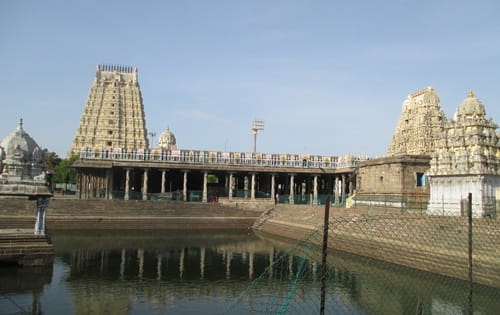
 There’s a mango tree in Kanchipuram that’s genuinely believed to be 3,500 years old, still standing where Goddess Parvati is said to have shaped a Shiva lingam out of riverbank sand and refused to let it wash away even when Shiva himself sent a flood to test her. Ekambareswarar Temple isn’t just another stop in the “City of a Thousand Temples” — it’s one of only five Pancha Bhoota Sthalams representing the earth element, and devotees genuinely travel here specifically seeking grounding and stability in their lives. If you’re planning a visit, here’s exactly what you need to know about the timings, the mango tree ritual, and getting there.
| Detail | Information |
| Temple | Ekambareswarar Temple (Ekambaranathar Temple) |
| Deity | Lord Shiva as Ekambareswarar (sand lingam, Prithvi element) |
| Location | Kanchipuram, Tamil Nadu |
| Morning Darshan | 6:00 AM–12:30 PM |
| Evening Darshan | 4:00 PM–8:30 PM |
| General Darshan | Free |
| Special Entry Ticket | Around ₹5–₹50 (varies by source) |
| Nearest Railway Station | Kanchipuram Railway Station (~1 km) |
| Nearest Airport | Chennai International Airport (~60–70 km) |
Temple Timings: The Daily Schedule
Ekambareswarar Temple follows a consistent daily rhythm across most sources — morning darshan from 6:00 AM to 12:30 PM, followed by the temple’s midday closure, then evening darshan resuming from 4:00 PM to 8:30 PM. A few sources cite slightly earlier morning closures around 11:00 AM to 12:00 PM, so treat noon as your safe cutoff if you’re timing a tight visit.
Koo Pooja, the day’s opening invocation, happens right at 6:00 AM — genuinely worth being present for if you want to experience the temple’s rhythm from the very first ritual.
Best time for a peaceful visit: Weekdays and early mornings between 6:00 and 7:30 AM offer the calmest darshan with minimal crowds. Avoid Tuesdays, Fridays, and full moon days if a quiet visit matters more to you, since these are traditionally busier days for Shiva worship. October to March brings the most comfortable weather for exploring this genuinely expansive 25-acre complex.
Darshan Ticket: Free Entry, With an Affordable Priority Option
General darshan at Ekambareswarar Temple is completely free for every devotee, and this is how most pilgrims experience the shrine, joining the standard queue.
For those wanting faster access, a special entrance ticket is available, though pricing varies genuinely across sources — some cite a nominal ₹5 fee for priority queue access, while others describe a tiered system with Special Darshan at ₹50 and VIP Darshan at ₹200. Given this inconsistency, it’s worth confirming current pricing directly at the temple counter on arrival rather than assuming a fixed figure.
Abhishekam can be booked on-site at the temple counters, with a basic version costing around ₹151 and a full abhishekam with all ritual materials priced at approximately ₹1,500. Arriving by 6:00 AM genuinely improves your chances of securing same-day booking, and advance planning matters more during festival seasons and weekends.
No online booking currently exists for darshan or sevas at Ekambareswarar Temple — everything is handled at the temple counters, so factor this into your visit planning rather than expecting a pre-booked slot.
The 3,500-Year-Old Mango Tree: What Makes It Genuinely Special
This is the reason many visitors specifically travel to Ekambareswarar rather than just passing through Kanchipuram. The Sthala Vriksham (sacred temple tree) sits within the courtyard, its four branches said to represent the four Vedas and, remarkably, each branch reportedly yielding a different flavor of mango — a genuinely unusual botanical claim that’s part of the temple’s enduring folklore.
Devotees, particularly childless couples, specifically worship this tree, offering jasmine flowers and performing pradakshina (circumambulation) around it while seeking blessings for marriage and progeny. It’s genuinely one of the most visited spots within the complex, and taking time here rather than rushing straight to the main sanctum is worth building into your visit.
Understanding the Legend Behind the Sand Lingam
This story genuinely shapes why the temple carries such spiritual weight. According to tradition, Goddess Parvati — worshipped here as Kamakshi — performed intense penance beneath this sacred mango tree on the banks of the Vegavathi river. To conduct her daily worship, she gathered sand from the riverbank and shaped it into a Shiva lingam, worshipping it as Prithvi Lingam, the lingam made of earth itself.
To test the absolute limits of her devotion, Shiva caused the Vegavathi river to flood violently, sending a wall of water directly toward her fragile sand creation. According to legend, Parvati embraced the lingam to protect it from being washed away — and a mark believed to be from this embrace is still said to be visible on the lingam today. Moved by her unwavering devotion, Shiva established himself permanently at this spot as Ekambareswarar — from “Eka” (one), “Amra” (mango), and “Nathar” (lord), meaning the Lord beneath the single mango tree.
A separate tradition also recounts how Parvati once playfully covered Shiva’s eyes, plunging the world into darkness until Shiva opened his third eye to restore light — and it was her guilt over this act that led her to undertake the penance described above, born on earth specifically as Kamakshi to atone.
Architecture Worth Slowing Down For
Spread across roughly 23-25 acres, Ekambareswarar ranks among India’s largest temple complexes, with construction history tracing back to at least 600 CE under the Pallavas, later expanded by the Cholas in the 9th century, and significantly enhanced by Krishna Deva Raya of the Vijayanagara dynasty between 1509 and 1529 AD — his contributions include the towering Rajagopuram, standing 192 feet tall and counted among the tallest temple towers in India.
The Aayiram Kaal Mandapam (Hall of a Thousand Pillars) is genuinely one of the complex’s architectural highlights, alongside 1,008 Shiva lingams carved into a single stone within the inner walls, and ten musical pillars in the inner corridor worth listening for as you walk through.
A genuinely fascinating detail: sun rays fall directly onto the main Shiva lingam specifically on the 19th, 20th, and 21st of the Tamil month Panguni (March-April) — an astronomical alignment that coincides precisely with the temple’s most important festival.
Why There’s No Separate Goddess Shrine Here
This is a detail worth understanding before your visit. Unlike most Shiva temples, Ekambareswarar has no dedicated shrine for the Goddess within its own complex — this is because the nearby Kamakshi Amman Temple, just a short walk away, is considered the supreme, centralized seat of the Goddess for the entire city of Kanchipuram. The complex also houses a Vishnu Divya Desam shrine alongside the main Shiva sanctum, adding a Vaishnavite dimension to what’s primarily a Shaivite pilgrimage site.
Dress Code and Photography Rules
For men: A dhoti or traditional pants, with the shirt removed before entering the inner sanctum — bare-chested entry is required for the sanctum specifically.
For women: A saree, salwar kameez, or half-saree with dupatta, or churidar with pyjama.
Strictly prohibited: Jeans, shorts, and t-shirts for all devotees regardless of gender.
Photography is generally allowed in the outer courtyards, sometimes for a small fee around ₹10-20, but strictly prohibited once you approach the inner sanctum — plan to put your phone away well before reaching that section.
Festivals Worth Planning Around
Panguni Uthiram (Panguni Brahmotsavam) is genuinely the temple’s grandest annual celebration, running for 10 to 13 days in March-April and celebrating the divine marriage of Shiva and Goddess Kamakshi. This massive festival draws millions of pilgrims and directly coincides with the sun-ray alignment on the main lingam described earlier — a genuinely spectacular time to visit if you don’t mind significant crowds. Maha Shivaratri also extends the temple’s regular hours and draws considerably heavier footfall than a standard visit.
Location: Where Exactly Is the Temple?
Ekambareswarar Temple sits in Kanchipuram, Tamil Nadu — a city often called the “City of a Thousand Temples” and counted among India’s seven holiest cities, the Saptapuri. Its central location within this historic temple town makes it genuinely easy to combine with several other significant pilgrimage sites in a single trip.
Nearby attractions worth visiting alongside Ekambareswarar: Kamakshi Amman Temple (walking distance), Varadaraja Perumal Temple (one of Kanchipuram’s largest Vaishnavite shrines), Kailasanathar Temple (showcasing ancient Pallava architecture), and Kanchipuram’s famous silk weaving centers for those wanting to combine spiritual and cultural exploration.
How to Reach Ekambareswarar Temple
By Rail – Kanchipuram Railway Station is remarkably close, just about 1 km from the temple, connected to Chennai and regional junctions with frequent service — genuinely one of the most convenient temple-to-station distances you’ll find.
By Air – Chennai International Airport is the nearest, roughly 60-70 km away, with airport taxis, app cabs, and pre-booked transfers all readily available for the onward journey.
By Road – Kanchipuram is about 64 km from Chennai, roughly a 1.5 to 2-hour drive via NH48, making it a genuinely comfortable day trip or weekend pilgrimage. Tamil Nadu Government buses run regularly from across the state and from major South Indian cities, with the Kanchipuram bus station sitting about 1.5 km from the temple.
Accommodation: For those staying overnight, options range from temple-managed guest houses (₹200-500) to budget hotels (₹500-1500) and mid-range hotels (₹1500-3000), most within 1-3 km of the temple.
Frequently Asked Questions
Q1. We’re planning to visit specifically for the mango tree ritual — is there a specific time we should aim for?
There’s no fixed separate time slot for this specifically, since it’s part of the broader temple grounds accessible during regular darshan hours. Early morning, right after the temple opens at 6:00 AM, genuinely offers the calmest experience for spending unhurried time at the tree before the day’s crowd builds.
Q2. We keep seeing different prices for special darshan — ₹5 in one place, ₹50-200 in another. Which is correct?
This inconsistency genuinely exists across current sources, likely reflecting either regional variation in how it’s described or a pricing update not yet fully reflected everywhere. The safest approach is confirming the exact current rate directly at the temple counter on arrival rather than assuming either figure applies.
Q3. We’re planning to attend Panguni Uthiram specifically to see the sun-ray alignment on the lingam — do we need any special entry for this?
No special ticket is required to witness this astronomical event, since it happens naturally as part of the temple’s daily rituals during the 19th to 21st of Panguni month. Given how significantly crowds swell during this festival, though, arriving very early and considering the special entry ticket for faster movement is genuinely worth it.
Q4. Can we visit Kamakshi Amman Temple and Ekambareswarar in the same trip without much extra travel?
Yes, and this is genuinely how most pilgrims experience Kanchipuram, since Kamakshi Amman Temple sits just a short walk from Ekambareswarar. Given that Ekambareswarar itself has no separate Goddess shrine, many devotees specifically plan their visit to include both temples as a complete spiritual circuit rather than treating them as separate trips.
 Karan Singh