 By Saurav Mehra
 There’s a temple near Udaipur where, technically, no Maharana has ever ruled as king — because the throne actually belongs to Shiva himself, and every Mewar ruler for over 1,200 years has governed only as his representative. That’s not folklore dressed up for tourists; it’s a living tradition still practiced today, with the current Maharana personally visiting Eklingji Temple every single Monday to pay respects to the deity considered Mewar’s true sovereign. If you’re planning a Rajasthan trip, this temple offers something genuinely rare — royal history, remarkable architecture, and an active spiritual practice all in one visit. Here’s what you need to know before you go.
| Detail | Information |
| Temple | Shri Eklingji Temple |
| Deity | Lord Eklingji (Chaturmukha, four-faced Shiva lingam) |
| Location | Kailashpuri, Girwa Tehsil, near Udaipur, Rajasthan – 313202 |
| Morning Darshan | 4:30 AM–7:00 AM, 10:30 AM–1:30 PM |
| Evening Darshan | 5:00 PM–7:30 PM |
| Entry Fee | Free |
| Distance from Udaipur | ~22 km |
| Nearest Railway Station | Udaipur Railway Station (~22–24 km) |
Temple Timings: The Three-Session Daily Schedule
Eklingji Temple opens across three distinct windows every day: early morning from 4:30 AM to 7:00 AM, a mid-morning session from 10:30 AM to 1:30 PM, and evening darshan from 5:00 PM to 7:30 PM. Some sources cite slightly earlier or later minute variations — 4:15 AM opening or a 7:45 PM close — so treat these as close approximations and confirm the exact schedule locally if your visit is tightly timed.
Mondays and Shani Pradosh days (observed fortnightly) see the temple open about 15 minutes earlier and close 15-20 minutes later than usual, since these are considered especially auspicious for Shiva worship here. Given that Mondays also draw the personal visit of the Maharana himself, expect genuinely large crowds on this day specifically — arriving at least 30 minutes early is worth doing if you want to avoid a long queue at the gate.
Aarti schedule worth knowing:
- Morning — 5:30 AM, 8:15 AM, 9:15 AM, and an extended 45-minute aarti at 11:30 AM
- Afternoon — 3:30 PM and 4:30 PM
- Evening — 5:00 PM and 6:30 PM
Best time for a peaceful visit: September to March brings the most comfortable weather for this outdoor temple complex. Early morning darshan, particularly right at the 4:30 AM opening, offers a genuinely calm, spiritually focused experience before the day’s crowd builds.
Entry: Free, With No Donations Accepted Directly by Priests
General darshan at Eklingji Temple is completely free, with no ticket or entry fee of any kind. Given the temple’s deep royal association, there’s a genuinely distinctive rule here worth knowing: priests and temple staff do not accept gifts or monetary help directly from devotees. If you wish to make a voluntary donation, it’s dropped into a designated safe maintained by the Mewar Shiva Shakti Peetha rather than handed to anyone personally.
Mobile phones and photography are strictly prohibited inside the temple premises without exception — plan to leave your phone secured or in your vehicle before entering rather than risking confiscation or being turned away at the gate.
The Chaturmukha Shivling: A Rare Four-Faced Deity
This is genuinely what makes Eklingji spiritually distinct from most Shiva temples across India. The main deity is a black stone (some accounts describe it as black marble) lingam carved with four faces, collectively representing different divine forms of Shiva — with the upper portion of the idol specifically representing Sadashiva, and Goddess Amba worshipped alongside as his divine consort.
Entering the sanctum, you’ll first encounter a beautifully sculpted silver Nandi at the entrance, considered the gate-guardian deity of Mount Kailash according to tradition, alongside two additional Nandi carvings in brass and black stone elsewhere in the complex. The inner sanctum itself features elegant silver doors, guarded on either side by idols of Ganesha and Kartikeya.
Why the Maharanas of Mewar Never Truly “Ruled”
This is genuinely the most fascinating thing about Eklingji, and understanding it changes how you see the entire temple visit. According to a tradition that continues actively today, Lord Eklingji (Shiva) is considered the true, sovereign king of Mewar — not merely a patron deity, but the actual ruler. The Maharanas of Mewar have, for centuries, governed the kingdom only as his “dewan” — his representative or caretaker, never as an independent sovereign in their own right.
This isn’t a symbolic gesture confined to history books. Every Monday, the current Maharana of Udaipur personally visits Eklingji Temple to pay his respects — a living continuation of this royal-spiritual relationship that’s genuinely rare among Indian temples. The temple’s daily poojas are still conducted in the name of the Maharanas, and the entire complex remains overseen by the Shri Eklingji Trust, a private trust established and continuously managed by the Mewar royal family.
A History Stretching Back to the 8th Century
Eklingji Temple was originally built in 734 AD by Bappa Rawal, the founding ruler of the Mewar dynasty, who was deeply devoted to Lord Shiva and credited his kingdom’s success to this devotion. Over subsequent centuries, the temple was repaired and modified multiple times by various Mewar kings, largely to restore damage inflicted during invasions.
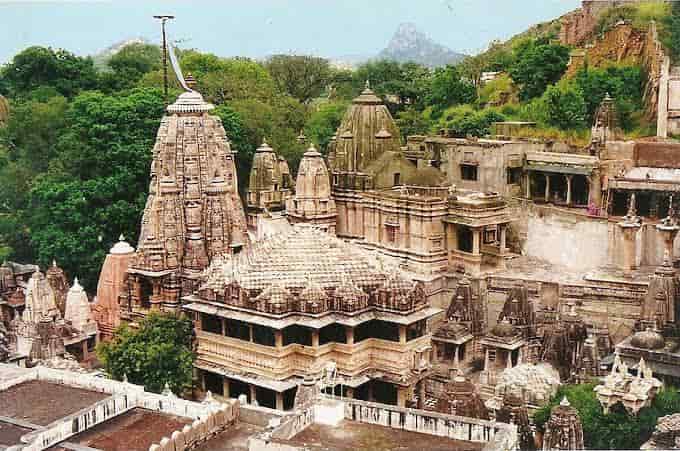
The temple’s architecture reflects this long history — a double-storied structure with a distinctive pyramidal-style roof and an intricately carved tower, its Shikhara rising roughly 50 feet with a circumference of about 60 feet. The broader temple complex is genuinely vast, described by some as a palace-like arrangement housing over 100 smaller shrines, along with two sacred water tanks, Karz Kund and Tulsi Kund, adding further spiritual and scenic depth to a visit here.
Worth knowing before you look closely at the exterior: the outer walls of the complex feature detailed carvings, some depicting intimate or Kamasutra-style imagery, reflecting the artistic sensibilities of the era’s rulers — a detail visitors sometimes find unexpected given the temple’s otherwise deeply devotional atmosphere.
Nearby Sites Worth Combining With Your Visit
The Eklingji complex sits close to two genuinely notable additional temples. Sas Bahu Temple, dating to the 10th century, is dedicated to a legendary mother-in-law and daughter-in-law and similarly features intricately carved, occasionally intimate imagery. Adbudji Jain Temple, from the 17th century, houses a black marble idol of Shanti Nath Bhagwan and offers a quieter, contemplative contrast to Eklingji’s more active devotional energy.
Just about 2 km away sit the ancient Nagda temples, now largely in ruins but still carrying traces of Mewar’s earlier royal history. Nathdwara, home to the revered Shrinathji Temple, sits roughly 27-30 km from Eklingji, and many travelers combine all three — Eklingji, Nagda, and Nathdwara — into a single, rewarding heritage day trip from Udaipur.
Festivals Worth Planning Around
Maha Shivratri stands as Eklingji’s most significant annual celebration, drawing large numbers of devotees given the temple’s deep Shaivite identity. Eklingji Patotsav is another notable temple-specific festival worth knowing about. Navratras, observed during both the Chaitra and Ashwin lunar months, also bring substantial crowds to the temple, reflecting Mewar’s broader devotional calendar throughout the year.
Location: Where Exactly Is the Temple?
Shri Eklingji Temple sits in Kailashpuri village, within Girwa Tehsil, close to Nagda — the former capital of Mewar — roughly 22 km north of Udaipur along National Highway 8, in Rajasthan.
How to Reach Eklingji Temple
By Rail
Udaipur Railway Station is the nearest, with distances cited between 22 and 24 km depending on the exact source, well connected by direct trains from Delhi, Jodhpur, Jaipur, Chittorgarh, Ajmer, and Ahmedabad.
By Air
Maharana Pratap Dabok Airport in Udaipur is the nearest, with distances ranging from roughly 27 to 33 km across different sources, serving major cities including Delhi, Mumbai, Jaipur, Jodhpur, and beyond.
By Road
Eklingji is well connected via NH8, roughly a 35-45 minute drive from Udaipur city by taxi, cab, or private vehicle. Public buses also run regularly, though most visitors find hiring a cab genuinely more convenient, especially if combining the trip with nearby Nagda and Nathdwara in the same day.
Frequently Asked Questions
Q1. We’re planning to visit specifically on a Monday to witness the Maharana’s visit — is this something the public can actually see?
While the Maharana’s personal visit is a genuine, ongoing tradition, exact timing and public visibility can vary, and it’s not formally publicized as a tourist event. Given how significantly crowds increase on Mondays regardless, plan to arrive at least 30 minutes before your intended darshan time, and treat any glimpse of the tradition as a bonus rather than a guaranteed spectacle.
Q2. We accidentally brought cash to offer as a donation directly to a priest — will this be accepted?
No, priests and temple staff do not accept gifts or money directly from devotees at Eklingji. If you wish to make a voluntary donation, it needs to go into the designated safe maintained by the Mewar Shiva Shakti Peetha instead — this is a distinctive rule specific to this temple’s royal-trust management structure.
Q3. Is it worth combining Eklingji with Nagda and Nathdwara in a single day, or should we split it across two days?
Many visitors do combine all three successfully in one day, given Nagda’s proximity at just 2 km and Nathdwara’s manageable 27-30 km distance. That said, if you want unhurried time at each site, especially given Nathdwara’s own significant crowds, splitting the visit across two days lets you experience each temple without feeling rushed toward the next stop.
Q4. We’re worried about missing the midday darshan window — what happens if we arrive around 2 PM?
You’d be arriving right within the temple’s closed period, since darshan doesn’t resume until 5:00 PM after the 1:30 PM midday session ends. Plan your arrival for before 1:30 PM or after 5:00 PM, and use any gap in between to explore nearby Nagda’s ruins or simply rest before the evening session and aarti.
 Karan Singh