 By Saurav Mehra
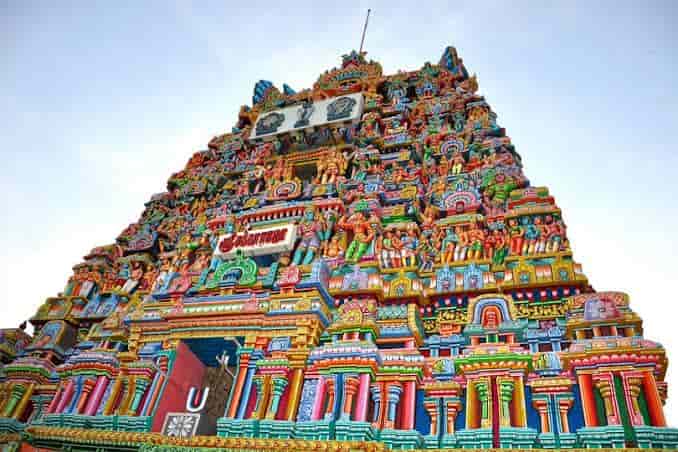
 Kumbakonam genuinely earns its nickname “Temple Town of Tamil Nadu,” and if you’re only visiting one shrine here, it should be Sarangapani — the largest Vishnu temple in the entire town and, by many devotees’ reckoning, ranked third in significance only after Srirangam and Tirupati. This isn’t just another Divya Desam on a long pilgrimage list; it’s where Goddess Lakshmi herself is believed to have been born from a lotus, and where a 173-foot chariot-shaped sanctum tells that entire story in stone. If you’re planning your Kumbakonam trip, here’s exactly what you need to know.
Quick Overview
| Detail | Information |
| Temple | Sri Sarangapani Temple |
| Deity | Lord Vishnu as Sarangapani, with Goddess Komalavalli Thayar |
| Location | Sarangapani Sannithi Street, Kumbakonam, Tamil Nadu – 612001 |
| Morning Darshan | 7:00 AM–12:00 PM |
| Evening Darshan | 5:00 PM–9:00 PM |
| Afternoon Closure | 12:00 PM–5:00 PM |
| General Darshan | Free |
| Special Darshan | ₹10 |
| Nearest Railway Station | Kumbakonam Railway Station (~1–2.5 km) |
Temple Timings: The Daily Schedule
Sarangapani Temple runs a two-session daily schedule: morning darshan from 7:00 AM to 12:00 PM, and evening darshan from 5:00 PM to 9:00 PM. The temple observes a genuinely long afternoon closure between 12:00 PM and 5:00 PM — this is worth building into your Kumbakonam itinerary carefully, since arriving during this window means waiting several hours before the doors reopen.
Thiruvanandal, the day’s opening ritual, is typically listed around 6:00 AM to 7:00 AM depending on the source, marking the start of the temple’s daily rhythm.
Best time for a peaceful visit: Weekday mornings between 7:00 AM and 9:00 AM, ideally between October and March, offer the calmest darshan experience with pleasant weather for exploring the temple’s five prakaras. Peak season falls specifically between November and February, when weather remains consistently comfortable — though this also coincides with several major festivals, so expect somewhat larger crowds during this exact window if a festival falls within it.
Darshan: Free General Entry, Affordable Special Access
General darshan at Sarangapani Temple remains completely free, and this is how the vast majority of devotees and visitors experience the shrine. For those wanting slightly faster access, Special Darshan is available for a genuinely modest ₹10.
All sevas and special poojas must be booked offline, directly at the temple’s ticket counter — there’s currently no online booking facility for this particular temple, so plan to arrive with enough time to handle this in person if you’re hoping to sponsor a specific ritual.
The Legend of Sarangapani: Why Lakshmi Was “Born” Here
Understanding this story genuinely deepens the visit. According to temple tradition, Sage Hemarishi performed intense penance on the banks of the Potramarai Tank, specifically wishing for Goddess Lakshmi to be born as his own daughter. Pleased by his unwavering devotion, Lord Vishnu granted this wish — Goddess Lakshmi emerged from a lotus flower within the tank, and was named Komalavalli, meaning “one who emerged from a lotus.”
Separately, Lord Vishnu himself is said to have appeared in the form of Sarangapani — carrying his divine bow, the Saranga — specifically to ask for Komalavalli’s hand in marriage. This is precisely where the temple’s name comes from: “Sarangam” meaning bow, and “Pani” meaning hand. This dual legend is exactly why Sarangapani Temple is also counted among the Pancha Kshethrams, sites specifically associated with Goddess Lakshmi’s earthly birth.
Understanding the Deity’s Unique Form
Inside the sanctum, Lord Sarangapani is depicted in a reclining (pallikonda) posture, resting his head on his right hand — genuinely different from the standing or seated forms found at many other Vishnu temples. He’s also referred to by additional names including Aravamudhan (“the nectar of sweetness”), reflecting the deep devotional affection associated with this particular form.
What makes the sanctum architecturally distinctive is that it’s designed as a chariot, drawn by sculpted horses and elephants, with openings on both sides specifically depicting Lord Vishnu’s descent from the heavens to earth. Reaching this inner sanctum involves passing through a hall supported by 100 pillars — genuinely worth pausing at rather than rushing through.
Architecture: Among the Tallest Towers in South India
Sarangapani Temple spans five prakaras (enclosures) and holds genuine architectural distinction within the Divya Desam tradition. Its rajagopuram (main entrance tower) rises 173 feet across 11 tiers — the tallest temple tower in Kumbakonam, and the third tallest among all 108 Divya Desams, surpassed only by Srirangam (236 feet) and Srivilliputhur (192 feet).
The temple’s sacred water tank, Potramarai Kulam, sits just outside the main entrance on the western side, complete with the Hemarishi Mandap commemorating the sage’s penance. The surrounding temple walls feature 108 karanas — classical dance postures — carved in detailed stone relief, reflecting the deep artistic tradition woven into the temple’s construction.
The temple’s famous chariot, standing 173 feet tall, 90 feet long, and 51 feet wide, ranks among the tallest temple chariots in India and forms the centerpiece of the annual Chithirai Brahmotsavam procession.
A History Spanning Multiple Dynasties
Sarangapani Temple’s origins trace back to the Pallava era, though the existing structure is more specifically linked to the Vikrama Chola period, beginning around 1121 AD. The temple’s significance grew considerably during the Vijayanagara and Nayaka dynasties between the 15th and 17th centuries, a period that saw substantial architectural expansion.
During this era, Sarangapani stood as one of three principal Vaishnava temples in Kumbakonam, alongside the Ramaswamy Temple and the Chakrapani Temple. In the 17th century, under Nayaka rule, a Vaishnava matha (monastic institution) became formally affiliated with the temple, further embedding it within the region’s devotional and educational life. Today, the temple is managed by the Hindu Religious and Charitable Endowments Department of the Tamil Nadu Government.
Free Annadanam: A Modest but Consistent Tradition
The temple serves free Annadanam (meals) daily at 12:15 PM, feeding a minimum of 50 devotees each day with genuinely well-prepared food. While smaller in scale than the massive meal programs at some larger South Indian temples, this remains a consistent daily practice reflecting the temple’s broader commitment to charitable service.
Festivals Worth Planning Around
Chithirai Brahmotsavam, held in March-April, is the temple’s grand chariot festival, showcasing the towering 173-foot chariot in full procession. The Masi Float Festival (Teppotsavam), typically held in February-March, is equally spectacular — the deities are taken on a beautifully decorated float across the temple tank, accompanied by Vedic chants and devotional music.
Vaikuntha Ekadashi, Vasantotsav, Navratri, and Akshaya Tritiya (Vaishakh month, April-May) round out the temple’s broader annual festival calendar, each drawing devotees for their specific rituals.
Location: Where Exactly Is the Temple?
Sri Sarangapani Temple sits on Sarangapani Sannithi Street in Kumbakonam, Thanjavur District, Tamil Nadu, close to the town’s Adi Kumbeswarar Temple — another major Kumbakonam shrine worth visiting on the same trip. The temple is roughly 2 km from the town’s center and railway station, genuinely convenient given how compact Kumbakonam’s temple circuit is overall.
How to Reach Sarangapani Temple
By Rail
Kumbakonam Railway Station is remarkably close, roughly 1 to 2.5 km from the temple, with extensive connectivity to Chennai, Rameswaram, Kanyakumari, Pondicherry, Mysore, Mayiladuthurai, Thanjavur, Trichy, Bhubaneswar, and Madurai — genuinely one of the best-connected temple towns in Tamil Nadu.
By Air
Tiruchirappalli International Airport (TRZ) is the nearest, roughly 95 to 102 km away, translating to about 2.5 to 3 hours by road. Taxis and buses connect the airport to Kumbakonam.
By Road
The temple is easily accessible by road within Kumbakonam, with public transport and private taxis readily available throughout the town given how central this shrine sits within the broader temple circuit.
Frequently Asked Questions
Q1. We’re planning to arrive around 2 PM after visiting another Kumbakonam temple — will Sarangapani be open?
No, the temple observes a genuinely long afternoon closure from 12:00 PM to 5:00 PM daily, so arriving at 2 PM means waiting several hours. Plan your Sarangapani visit for either the morning session (before 12:00 PM) or the evening session (after 5:00 PM), and use the afternoon for other nearby temples like Adi Kumbeswarar instead.
Q2. Is it worth paying ₹10 for Special Darshan, or is general darshan manageable on a normal day?
Given how minimal this fee is, it’s genuinely worth considering even on a regular day if you want slightly faster movement through the queue. That said, general darshan itself is usually manageable outside major festivals like Chithirai Brahmotsavam or the Masi Float Festival, when crowds increase considerably.
Q3. We want to book a special seva during our visit — can we arrange this online before traveling?
No, all sevas and special poojas at Sarangapani Temple currently require offline booking at the temple’s ticket counter, with no online booking facility available. Plan to arrive with some buffer time to handle this in person, particularly if you have a specific seva in mind.
Q4. Can we combine Sarangapani Temple with the nearby Suriyanar Koil (Sun temple) in the same day?
Yes, given that Suriyanar Koil sits roughly 10-20 km from Kumbakonam depending on the exact route, many devotees combine both in a single day trip, especially those completing the broader Navagraha temple circuit. Just plan around Sarangapani’s midday closure and Suriyanar Koil’s own darshan windows (6:00 AM–12:30 PM and 4:00 PM–8:00 PM) to sequence your visit smoothly.
 Karan Singh