 By Saurav Mehra
 If a family elder has ever mentioned “Sarpa Dosha” while explaining why a marriage proposal fell through or why career progress has stalled, chances are Mopidevi Temple came up in the same conversation. Tucked away in Krishna District, this Andhra Pradesh shrine has built a genuine reputation as the go-to destination for devotees seeking relief from Rahu-Ketu afflictions, Kuja Dosha, and serpent-related astrological troubles. If you’re planning this pilgrimage, knowing the temple’s timing structure and how the different remedy poojas actually work will help you make the most of your visit.
Quick Overview
| Detail | Information |
| Temple | Sri Subrahmanyeshwara Swamy Temple (Mopidevi) |
| Deity | Lord Subrahmanyeswara (Subramanya/Murugan) |
| Location | Mopidevi Village, Krishna District, Andhra Pradesh |
| Morning Darshan | 5:30 AM – 1:00 PM |
| Evening Darshan | 4:00 PM – 8:00 PM |
| General Darshan | Free |
| Seegra Darshan | ₹500 per person |
| Rahu Ketu Pooja | ₹280 |
| Nearest Railway Station | Repalle (~20–30 min) |
| Nearest Airport | Gannavaram, Vijayawada (~80 km) |
Temple Timings: The Daily Schedule
Mopidevi Temple runs a two-session daily schedule: morning darshan from 5:30 AM to 1:00 PM, followed by a midday closure, then evening darshan resuming at 4:00 PM and continuing until 8:00 PM. This closure window, roughly 1:00 PM to 4:00 PM, is reserved for internal rituals and giving the deity rest — arriving during this stretch genuinely means waiting outside, so plan around it.
Rahu Ketu Pooja specifically runs daily from 6:00 AM to 12:00 PM, performed every day except during the temple’s five-day Brahmotsavam celebration.
Best time for a peaceful visit: Early morning, particularly between 5:30 AM and 7:30 AM, offers the most serene, crowd-free darshan experience — genuinely worth the early start if you’re hoping to avoid the busier midday and weekend crowds. During major festival periods like Skanda Shashthi, Subramanya Shashthi, and Nagula Chaviti, timings often extend to accommodate the larger influx of devotees, so it’s worth checking the official portal or calling ahead if your visit coincides with one of these dates.
Darshan Ticket: Free General Entry, Paid Priority Access
General darshan at Mopidevi Temple remains completely free, and this is how most devotees experience the shrine, joining the standard queue during either session.
For those wanting faster, priority access to the sanctum, Seegra Darshan costs ₹500 per person, significantly reducing your wait time compared to the general line — genuinely useful during peak periods like Skanda Shashthi or Brahmotsavam, when crowds swell considerably.
Booking process: Seegra Darshan and other seva tickets can be booked through two channels — the temple’s own official portal, mopidevitemple.org, or the broader Andhra Pradesh government temple booking platform, aptemples.ap.gov.in. On either site, log in or register, select your darshan or pooja type, choose your preferred date and number of devotees, enter ID details for verification, complete payment, and download your ticket. Booking in advance is genuinely worth doing during high-footfall periods, since slots for both darshan and accommodation can fill up quickly.
Sarpa Dosha and Astrological Relief Rituals: What Mopidevi Is Actually Known For
This is genuinely the reason most devotees make the trip to Mopidevi rather than a nearer temple. The shrine has built its reputation specifically around remedying planetary and serpent-related afflictions in a person’s horoscope.
Rahu Ketu Pooja (₹280 per ticket) follows a structured sequence: it begins with Ganapathi Pooja to remove initial obstacles, continues with Kalasa Pooja involving a sacred pot and offerings, moves into the main Rahu Ketu Sarpa Dosha Nivarana ritual aimed specifically at dispelling doshas tied to Rahu, Ketu, and serpent energies, and concludes with prasadam distribution. Devotees can participate either individually or as a couple, and while there’s no strict dress code enforced for this specific pooja, decent traditional wear is genuinely recommended out of respect for the ritual.
Kuja Dosha Nivarana Pooja, priced around ₹300, addresses a different astrological concern — when Mars (Kuja) sits in a disadvantageous position in someone’s horoscope, traditionally believed to create obstacles specifically in marital life. This remedy can be booked online through the temple’s services section, following a similar registration and payment process.
A practical tip for either pooja: arrive well ahead of your scheduled slot, ideally before 6:00 AM if you’re aiming for the Rahu Ketu Pooja window, and carry both your booking confirmation and a valid photo ID for verification at entry.
The Legend Behind the Temple
Understanding Mopidevi’s origin story genuinely adds meaning to the visit. According to temple tradition, the shrine’s founding traces back to a divine vision experienced by a devout local woman named Veeravarapu Parvathalu. Through this vision, Lord Subramanya (Murugan) himself directed that his idol be consecrated at this exact spot in Mopidevi village. What began as a modest place of worship following this revelation gradually grew into the grand Dravidian-style temple complex you see today, complete with ornate gopurams, intricately carved mandapams, and sacred temple tanks.
Architecture and What You’ll Find Inside
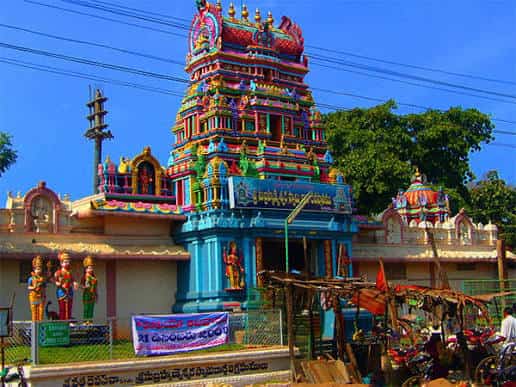
The temple showcases classic Dravidian architectural style, anchored by a towering gopuram that’s genuinely one of the site’s most photographed features. A large temple pond sits within the complex, locally believed to carry healing properties — many devotees consider a visit to this tank an essential part of their overall pilgrimage. The beautifully adorned idol of Lord Subramanya Murugan inside the sanctum draws devotees not just for astrological remedies but for standard devotional worship throughout the year.
Photography may be restricted inside the inner sanctum specifically — it’s worth checking with temple staff before attempting to photograph the deity area, even though the broader temple grounds are generally more relaxed about this.
Marriages and Other Ceremonies at Mopidevi
Beyond dosha-related rituals, Mopidevi Temple has also become a genuinely popular venue for performing marriages, with pilgrims traveling here specifically to have wedding ceremonies conducted within this spiritually significant setting. If you’re considering this, it’s worth contacting the temple administration directly at the listed contact number to understand booking procedures and any specific requirements for marriage ceremonies.
Festivals Worth Planning Around
Brahmotsavam, the temple’s grand annual festival, runs for five days and draws thousands of pilgrims from across the country — genuinely the most significant celebration on Mopidevi’s calendar. Skanda Shashthi, Subramanya Shashthi, and Nagula Chaviti are other major observance days, each bringing extended darshan hours and noticeably heavier crowds given their specific significance to Lord Subramanya worship.
Location: Where Exactly Is the Temple?
Sri Subrahmanyeshwara Swamy Temple sits in Mopidevi village, within Krishna District, Andhra Pradesh, in a genuinely serene rural setting well away from major urban congestion.
How to Reach Mopidevi Temple
By Air
Gannavaram Airport, serving Vijayawada, is the nearest, roughly 80 km from the temple. From the airport, taxis or buses complete the onward journey.
By Rail
Repalle Railway Station is the closest, about 20-30 minutes from the temple by road. Shared autos and taxis are readily available right outside the station, making this a genuinely convenient option for devotees traveling by train.
By Road
The temple connects well by road via Vijayawada, with the route passing through Kankipadu, Vuyyuru, Pamarru, and Challapalli. Shared autos, taxis, and cabs are available from all these towns for the final stretch directly to Mopidevi Temple.
Accommodation: For those planning an overnight stay, particularly devotees wanting to attend early morning rituals like Suprabhata Seva, several options exist near the temple — Sri Seshadri Rest House offers budget-friendly, simple accommodation closest to the shrine, Hotel S Vihar provides comfortable rooms with catering services nearby, and Novotel Vijayawada Varun, roughly 70 km away, offers a more premium option for those wanting modern amenities.
Frequently Asked Questions
Q1. We’re planning to arrive around 2 PM for the Rahu Ketu Pooja — will we be able to participate?
No, this specific pooja runs only from 6:00 AM to 12:00 PM daily, so arriving at 2 PM means you’ll have missed the day’s window entirely. Plan to arrive by 5:30-6:00 AM to comfortably join the sequence from the start, since the ritual follows a structured order beginning with Ganapathi Pooja.
Q2. Is Seegra Darshan worth the ₹500, or is general darshan manageable on a regular day?
On a normal weekday outside festival periods, general darshan is usually manageable without excessive waiting, so the free option works well for most visitors. Seegra Darshan becomes genuinely valuable during Skanda Shashthi, Brahmotsavam, or other high-footfall periods, when general queues stretch considerably longer.
Q3. We want to book both Rahu Ketu Pooja and Kuja Dosha Nivarana Pooja on the same visit — is that possible?
Yes, many devotees do combine both rituals in a single trip, though it’s worth planning your morning carefully given the Rahu Ketu Pooja’s fixed 6:00 AM to 12:00 PM window. Booking both through the temple’s official portal in advance, rather than hoping for same-day availability, genuinely helps ensure a smooth, unhurried experience for both ceremonies.
Q4. We’re considering Mopidevi for a wedding ceremony — how should we start the booking process?
Given that marriage ceremonies here require specific coordination with temple priests and administration, the most reliable approach is contacting the temple directly at their listed contact number to understand exact requirements, available dates, and any advance booking needed, rather than assuming you can arrange everything through the standard darshan booking portals.
 Karan Singh