 By Karan Singh
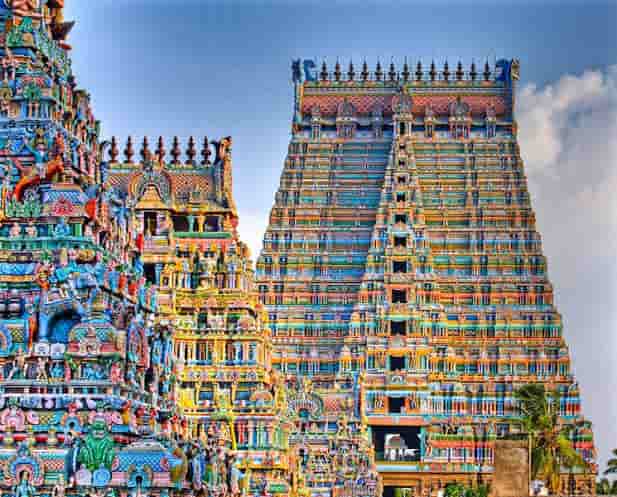
 Ask any serious Vaishnavite pilgrim about the one temple they’d call the pinnacle of the 108 Divya Desams, and Srirangam comes up almost every time. This isn’t just another stop on a South India temple circuit — it’s the world’s largest functioning Hindu temple complex, spread across 156 acres on an island between two rivers, with seven concentric enclosures you’ll actually walk through before reaching the sanctum. That scale is exactly why so many first-time visitors underestimate how long a proper visit takes, or miss the afternoon closure entirely. Here’s what you actually need to know before you go.
Quick Overview
| Detail | Information |
| Temple | Sri Ranganathaswamy Temple |
| Deity | Lord Ranganatha (reclining form of Vishnu) and Goddess Ranganayaki |
| Location | Srirangam Island, Tiruchirappalli, Tamil Nadu |
| Temple Area | 156 acres, 7 concentric enclosures, 21 gopurams |
| General Timings | 6:00 AM – 9:00 PM (with midday break) |
| General Darshan Fee | Free |
| Quick Darshan | ₹200–250 |
| VIP Darshan | ₹500 (peak festival days) |
| Nearest Railway Station | Srirangam Railway Station (~1 km) |
| Nearest Airport | Tiruchirappalli International Airport (~11–17 km) |
Temple Timings: The Two-Session Daily Schedule
Srirangam Temple opens at 6:00 AM and stays accessible through to 9:00 PM, but don’t mistake that for continuous access — there’s a substantial midday break built into the schedule.
Morning darshan runs from around 6:00 AM to 12:00 PM, opening with the Viswaroopa Seva — a viewing of the deity in his cosmic form, considered one of the most auspicious moments of the day. The temple then closes for roughly an hour, reopening for afternoon and evening darshan from about 1:15 PM through to 9:00 PM, with the exact evening start time varying somewhat between 1:15 PM and 3:15 PM depending on the specific day and ritual schedule.
Given this variance across sources, it’s worth treating the midday window (roughly 12:00 PM to 1:15 PM) as a safe closure period to plan around, rather than assuming exact reopening down to the minute.
Best time to visit: Weekday mornings between 6:00 AM and 9:00 AM offer the calmest darshan experience, well before the late-morning crowd builds up. Evening darshan from around 6:45 PM also tends to be noticeably quieter and cooler than the afternoon rush.
Darshan Ticket Types and Pricing
General darshan is free, and it’s how most pilgrims experience the temple — though be prepared for a genuinely long wait, sometimes up to 4 hours during busy periods, so don’t assume “free” means “quick.”
For those wanting faster access, the temple offers tiered options:
- Special Darshan — ₹100 per person
- Quick Darshan — ₹200 to ₹250, depending on the source and current rate
- VIP Darshan — ₹500, typically reserved for peak festival days like Vaikunta Ekadasi
Beyond darshan, Srirangam offers an extensive list of sevas for deeper ritual participation:
- Viswaroopa Seva — ₹100
- Sahasranama Archana — ₹150
- Thirumanjanam (abhishekam ritual) — ranges widely from ₹250 to ₹1,200 depending on the exact type
- Kalyanotsavam (symbolic divine wedding) — ₹500
- Dolotsavam (swing ritual) — ₹300
- Thulabharam (weight offering) — ₹100
- Unjal Seva — ₹250
- Mangala Harthi — ₹500
Booking process:
Both darshan and seva tickets can be booked online through the temple’s official HR&CE-linked portal, or purchased offline at the temple counter. Online booking is strongly recommended, especially during weekends and major festivals like Vaikunta Ekadasi or Brahmotsavam, when offline queues get considerably longer and rooms and slots fill up fast.
Dress Code and Entry Rules
The temple enforces a fairly standard South Indian dress code — modest, traditional clothing is expected, though it’s less rigid than some other major temples in the region.
A few practical rules matter more here than dress specifics:
- Footwear must be deposited outside, with a small fee of around ₹5 for the cloakroom.
- Mobile phones are allowed inside, but photography and videography are strictly prohibited throughout the temple premises.
- Entry gate for general devotees is the Southern Rajagopuram — using the wrong gate can mean being redirected, costing you time.
- Non-Hindu visitors are permitted up to the second prakaram (outer courtyard) but are not allowed into the gold-topped inner sanctum sanctorum.
Location: Where Exactly Is the Temple?
Sri Ranganathaswamy Temple sits on Srirangam Island, formed by the Kaveri River and its distributary, the Kollidam, right at the edge of Tiruchirappalli (Trichy) in Tamil Nadu. The island itself stretches about 31 km long and 2.4 km wide, with the temple town at its center.
What’s genuinely remarkable once you’re inside is the sheer scale — you’re not walking into a single sanctum, but through seven successive walled enclosures, each with its own gopurams, pavilions, and shrines, some of which function almost like small townships within the larger temple complex. It’s easy to lose track of time simply moving between prakarams.
How to Reach Srirangam Temple
By Air
Tiruchirappalli International Airport is the nearest, with distances cited anywhere between 11 and 17 km depending on the exact route, roughly a 30 to 40-minute drive. The airport has good connectivity to Chennai, Bengaluru, Hyderabad, Cochin, and several international destinations including Singapore, Dubai, and Colombo.
By Rail
Srirangam Railway Station is remarkably close, just about 1 km from the temple, though only select trains stop here directly. Most travelers arrive via Tiruchirappalli Junction, roughly 9 km away, which has far better connectivity with direct trains from Chennai, Bangalore, Hyderabad, and Coimbatore.
By Road
Frequent buses connect Trichy’s Central Bus Stand to Srirangam, running about every 5 minutes during the day and every half hour at night — genuinely one of the most convenient local transit setups for any major South Indian temple. Taxis and autos are also easily available throughout Trichy for a more direct, if pricier, route.
Frequently Asked Questions
Q1. We’re doing a day trip from Trichy — how much time should we actually block off for Srirangam?
Given the temple’s scale — seven enclosures and 156 acres — budget at least 3 to 4 hours for a proper visit, more if you’re doing general darshan during a busy period with longer queues. Trying to rush through in under an hour usually means missing most of what makes this temple worth visiting in the first place.
Q2. Is the ₹200-250 Quick Darshan worth it on a regular weekday, or is general darshan manageable?
On an average weekday, general darshan is usually manageable without an excessive wait, so the paid option isn’t strictly necessary. It becomes genuinely useful during weekends, festivals like Vaikunta Ekadasi, or the 21-day Margazhi festival in December-January, when free darshan queues can stretch to several hours.
Q3. Can our whole group, including a non-Hindu family member, do darshan together?
Partially. Non-Hindu visitors are welcome up to the second prakaram, which still covers a significant portion of the temple’s architecture and courtyards, but entry into the inner sanctum itself is restricted to Hindu devotees. It’s worth planning so the group can explore together up to that point before splitting for the final darshan.
Q4. We’re worried about missing the midday session boundary — what’s the safest arrival window?
Given some inconsistency in exact reopening times across sources, the safest approach is completing your morning visit by 11:30 AM at the latest, then either waiting until confirmed reopening or shifting entirely to the evening session after 6:45 PM, which tends to be calmer anyway.