 By Saurav Mehra
 Right in the heart of Thrissur — the city Kerala calls its cultural capital — sits a temple where you’ll never actually see the Shiva lingam. That’s not an oversight; it’s centuries of daily ghee offerings that have built up a genuinely massive mound covering the deity entirely, and local tradition holds this ghee has never once melted, even through Kerala’s punishing summers. Vadakkunnathan isn’t just Thrissur Pooram’s iconic venue — it’s believed to be the very first of Kerala’s 108 Shiva temples, founded by Parashurama himself. If you’re planning a visit, here’s what genuinely matters before you go.
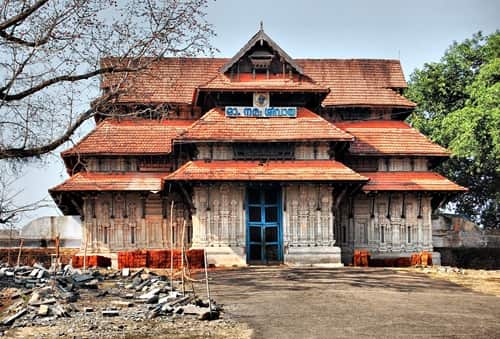
Vadakkunnathan Temple Quick Overview
| Detail | Information |
| Temple | Sree Vadakkunnathan Temple |
| Deity | Lord Shiva (Vadakkunnathan), with Parvati, Rama, Ganesha |
| Location | Thekkinkadu Maidan, Kuruppam, Thrissur, Kerala |
| Morning Darshan | 4:00 AM – 11:00 AM |
| Evening Darshan | 5:00 PM – 8:30 PM |
| Entry Fee | Free |
| VIP Darshan | Not offered separately; special darshan via Vazhipadu bookings |
| Nearest Railway Station | Thrissur Station (~2–3.7 km) |
| Nearest Airport | Cochin International (~50–60 km) |
Temple Timings: Morning and Evening Sessions
Vadakkunnathan Temple operates in two clear sessions daily — morning darshan from 4:00 AM to 11:00 AM (some sources cite a slightly earlier close around 10:00 or 10:30 AM), followed by a substantial closure until evening darshan reopens at 5:00 PM and continues until 8:30 PM.
That midday closure — roughly 11:00 AM to 5:00 PM — is genuinely the longest daily break you’ll find among major South Indian temples, so build your Thrissur itinerary around it rather than assuming continuous access. This is a great window to explore nearby attractions like Shakthan Thampuran Palace or the Thrissur Zoo, both within easy walking distance.
Best time for a peaceful visit: Early morning between 4:00 AM and 7:00 AM offers the calmest, most spiritually vibrant atmosphere, well before the day’s crowd builds. Weekends tend to be noticeably busier than weekdays, so if a quieter darshan matters more to you, plan accordingly. October to February brings Kerala’s most pleasant weather for exploring the temple’s extensive open grounds.
Darshan: Free Entry, No Formal VIP System
General darshan at Vadakkunnathan Temple remains completely free for all devotees, and there’s genuinely no separate VIP or fast-track darshan system here, unlike many other major Indian temples. That said, booking specific Vazhipadu (ritual offerings) does include a smoother, more organized queue experience as part of the package — effectively functioning as your closest equivalent to priority access.
Booking process: Visit the official website, sreewadakkunathantemple.org, navigate to “Online Services” or “Vazhipadu Booking,” select your preferred offering, date, and time, fill in your details, and complete payment. Arrive with your confirmation receipt, and plan to reach at least 15-20 minutes before your scheduled time.
Available prasadam varies by the specific offering booked — simple Vazhipadus typically provide theertham (holy water) and vibhuti (sacred ash), Neyyabhishekam offerings come with ghee-based prasadam, Appam and Ottayappam offerings include traditional rice cakes, and Annadhanam provides a full meal served to devotees.
Why You’ll Never See the Actual Shiva Lingam
This is genuinely the most distinctive thing about Vadakkunnathan, and it’s worth understanding before you visit. Unlike virtually every other Shiva temple in India, the lingam here is completely hidden from view — covered by an enormous mound of ghee built up over centuries of daily Neyyabhishekam (ghee ablution) rituals. Estimates of the mound’s exact height vary between sources, ranging from roughly 9 to 16 feet, embellished with thirteen cascading crescents of gold and three serpent hoods at the top.
According to traditional belief, this ghee mound represents the snow-capped peak of Mount Kailash itself — Shiva’s mythological abode — which is precisely why the temple is also known as Srimad-Dakshina Kailasam, the “Mount Kailash of the South.” Local tradition holds that despite centuries of accumulated ghee, it has never developed a foul odor and doesn’t melt even during Kerala’s hottest months, a claim devotees regard as a genuine mark of the site’s sanctity.
Anti-Clockwise Circumambulation: A Rare Practice
Here’s another detail that genuinely sets Vadakkunnathan apart. Most Hindu temples across India follow clockwise circumambulation (pradakshina) around the sanctum. At Vadakkunnathan, devotees circle in the opposite, anti-clockwise direction — a distinctive ritual practice tied to this temple’s specific traditions, and something worth being mindful of so you don’t inadvertently move against the flow of other devotees during your visit.
The Legend Behind the Temple’s Founding
Understanding this story genuinely deepens the experience. According to tradition, Sage Parashurama, the sixth avatar of Vishnu, requested Varuna, the Lord of the oceans, to bring forth new land from the waters — this land became Kerala. Parashurama then asked Shiva to take up residence in this newly formed region and bless it.
Shiva, accompanied by Parvati, Ganesha, and Subrahmanya, is said to have stopped at Thrissur and manifested as a lingam beneath a massive banyan tree — a spot still known today as Sri Moola Sthana. The lingam was later moved to a more suitable location, and the temple was built around it, becoming, according to tradition, the very first of Kerala’s 108 Shiva temples established by Parashurama.
A History That Survived Tipu Sultan’s Invasion
This is a genuinely remarkable historical footnote worth knowing. When Tipu Sultan, the Mysore ruler notorious for destroying temples during his Kerala campaigns, halted at Thrissur in 1789, he chose not to attack Vadakkunnathan. Instead, he borrowed cooking vessels from the temple to feed his army — and before leaving the city, he not only returned them but presented the temple with a large bronze lamp as a gesture of respect, a detail that continues to be recounted as part of the temple’s layered history.
The temple was also under the control of the Zamorin of Calicut between 1750 and 1762, before Sakthan Thampuran, the Maharaja of Cochin, shifted his capital to Thrissur and introduced what would become the world-famous Thrissur Pooram festival, forever tying this temple to Kerala’s most celebrated annual celebration.
Architecture Worth Taking Time to Appreciate
Spread across roughly 9 acres, Vadakkunnathan Temple showcases classic Kerala architectural style — a circular inner sanctum, four monumental gopurams facing north, south, east, and west, and massive stone compound walls enclosing the entire complex. Inside, detailed murals depict scenes from the Mahabharata, alongside extensive wood carvings throughout the temple structure.
The temple’s Koothambalam — a traditional theatre hall used for classical Kerala art forms like Kathakali and Koodiyattam — is believed to have been built by the legendary carpenter Perumthachan, and stands as one of the most architecturally significant such halls in the state. In 2015, the temple received the UNESCO Asia-Pacific Heritage Award for Cultural Heritage Conservation, and it’s recognized as a National Monument under India’s AMASR Act.
Deities Within the Complex
Beyond the main Shiva shrine, Vadakkunnathan houses sub-shrines dedicated to Goddess Parvati, Lord Rama (an incarnation of Vishnu), Shankaranarayana (the combined form of Shiva and Vishnu), Ganesha, Krishna, Ayyappa, Nandikeswara, and even a shrine honoring Adi Shankaracharya — giving devotees a genuinely comprehensive spiritual circuit within one temple visit.
Dress Code and Entry Rules
For men: A mundu or dhoti, worn without a shirt — bare-chested is the traditional and expected norm here.
For women: Saree, half-saree, salwar kameez with dupatta, or chudidhar with dupatta. Modern attire like jeans and shorts is strictly prohibited within the temple premises.
Non-Hindu visitors: Access to the inner sanctum sanctorum and certain restricted areas is limited according to traditional temple rules, though outer mandapams and general darshan areas remain accessible. Given how enforcement can vary, it’s worth checking current guidelines directly with the temple before planning your visit if this applies to you.
Location: Where Exactly Is the Temple?
Sree Vadakkunnathan Temple sits at Thekkinkadu Maidan in Kuruppam, right at the geographical and spiritual center of Thrissur city. This same open maidan surrounding the temple becomes the epicenter of Thrissur Pooram each year, when the grounds transform into a stage for one of India’s most spectacular temple festivals.
Nearby attractions worth combining with your visit: Shakthan Thampuran Palace (about 0.76 km), Thrissur Zoo and Museum, Sri Paramekavu Bhagavathi Temple, and the Basilica of Our Lady of Dolours — one of the tallest churches in India — sitting just 0.57 km away, genuinely making this area of Thrissur a compact, walkable heritage circuit.
How to Reach Vadakkunnathan Temple
By Rail: Thrissur Railway Station sits close by, with distances cited between roughly 2 and 3.7 km depending on the exact source — genuinely one of the most convenient temple-to-station distances you’ll find in Kerala. Auto-rickshaws and taxis are readily available for the short onward journey.
By Air: Cochin International Airport is the nearest, roughly 50-60 km away, about a 1.5-hour drive. Taxis and buses connect the airport to Thrissur city center.
By Road: Thrissur is well connected via national highways from major Kerala cities and neighboring states, with the KSRTC bus station handling regular interstate and long-distance services. Once in the city, the temple sits centrally around Thekkinkadu Maidan, easily reached by auto-rickshaw or local bus. Parking can get genuinely limited during busy hours, so using public transport or a drop-off point near the maidan is often more practical than driving deep into the city center.
Frequently Asked Questions
Q1. We’re planning to arrive around 12 PM hoping for a quick darshan before continuing our Thrissur trip — will we get in?
A: No, this falls right within the temple’s long midday closure, which runs from roughly 11:00 AM to 5:00 PM daily. Plan your visit for the morning session (before 11:00 AM) or the evening session (after 5:00 PM), and use the afternoon gap to explore nearby Shakthan Thampuran Palace or the Thrissur Zoo instead.
Q2. We’re visiting specifically to witness the ghee-covered lingam — will we actually be able to see it clearly during regular darshan?
A: Yes, though it’s worth setting the right expectation — you won’t see a traditional Shiva lingam form at all, since it’s entirely covered by the accumulated ghee mound, adorned with gold crescents and serpent hoods representing Mount Kailash. This is precisely the temple’s most distinctive feature, so viewing it during any regular darshan session genuinely delivers the experience most visitors come specifically to witness.
Q3. We’re planning our trip around Thrissur Pooram — should we expect the temple’s regular timings to still apply?
A: No, expect significantly extended and altered timings during this major festival period in April-May, given the massive crowds and the elaborate elephant processions centered right around the temple grounds. It’s worth checking the official website or contacting the temple office directly closer to your travel date, since Pooram-specific schedules differ substantially from the regular daily routine.
Q4. Can we combine this temple with Guruvayur Temple in the same day trip, given both are major Thrissur-area pilgrimage sites?
A: Yes, many visitors do combine both, though it’s worth planning carefully around Vadakkunnathan’s long midday closure and Guruvayur’s own separate schedule. A sensible approach is completing Vadakkunnathan’s morning darshan first, then traveling to Guruvayur (roughly an hour away) for its own session, rather than trying to fit both into a single rushed half-day.
 Karan Singh