 By Saurav Mehra
 Ask anyone from Maharashtra about the state’s most sacred Shakti temples, and Ambabai Mandir in Kolhapur comes up almost immediately. This isn’t just another Devi temple — it’s counted among the “Sade Teen” (three and a half) Shakti Peethas specific to Maharashtra, and devotees genuinely believe visiting Goddess Mahalakshmi here alongside Tirumala and Tiruchanur completes a spiritual trio said to ensure salvation. If you’re planning a visit, from the genuinely rare Kirnotsav sun-ray phenomenon to the online e-pass system that saves you hours in queue, here’s exactly what you need to know.
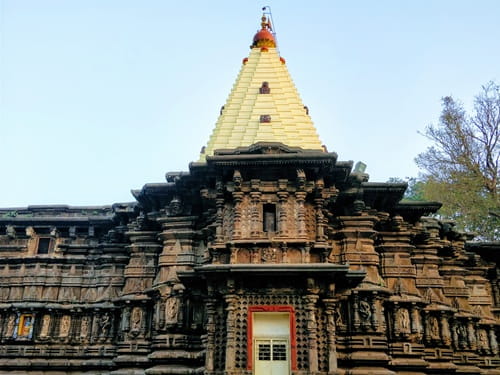
Kolhapur Mahalaxmi Temple Quick Overview
| Detail | Information |
| Temple | Shree Mahalakshmi Temple (Ambabai Mandir) |
| Deity | Goddess Mahalakshmi (Ambabai), four-armed, west-facing |
| Location | Kolhapur, Maharashtra |
| Best Darshan Windows | 4:00 AM–7:30 AM, 7:00 PM–9:30 PM |
| General Darshan | Free |
| Online E-Pass | Free, faster queue, bookable at mahalaxmikolhapur.com |
| Nearest Airport | Kolhapur Airport, KLH (~10 km) |
| Nearest Railway Station | Kolhapur Railway Station, KOP |
Temple Timings: When to Actually Visit
Shree Mahalakshmi Temple stays open throughout the year, welcoming devotees continuously rather than following a rigid single-window schedule. That said, the genuinely calmest and most spiritually rewarding times to visit are early morning between 4:00 AM and 7:30 AM, when you can witness the Padyapuja and Kakad Aarti — a soul-stirring start to the day that many repeat visitors specifically plan their trip around — and evening between 7:00 PM and 9:30 PM, when the temple grounds are beautifully lit and the atmosphere turns genuinely serene.
Best time of year: October through February brings Kolhapur’s most comfortable weather, making both temple visits and city sightseeing genuinely pleasant. Margashirsha month, Navratri, and Diwali bring significantly heavier crowds given their spiritual importance, so if a peaceful darshan matters more than the festive atmosphere, plan around these periods rather than during them.
Darshan: Free Entry With a Genuinely Useful E-Pass System
General darshan at Shree Mahalakshmi Temple remains completely free for all devotees. That said, given how busy the temple gets — particularly during festivals — booking a free Darshan E-Pass online genuinely saves considerable time by avoiding the general queue.
Booking process: Visit mahalaxmikolhapur.com, the only official and authorized platform for this temple — third-party sites should be avoided entirely to prevent booking complications. Scroll to the “E-Darshan Pass” or “Darshan E-Pass” section on the homepage, select your preferred date and available time slot, fill in your personal details including name, contact number, and ID proof information, review everything carefully, and submit. Your e-pass generates automatically as a PDF with a unique QR code, which you present at temple entry either printed or on your phone.
During high-traffic periods like Navratri, booking your slot 7 to 10 days in advance is genuinely worth doing, since availability fills up quickly closer to the actual dates.
On VIP darshan: Sources genuinely show some inconsistency here — a few mention VIP darshan slot booking as an option, while others explicitly state no VIP pass currently exists at this temple. Given this uncertainty, it’s safest to check the current status directly on mahalaxmikolhapur.com rather than assuming either option applies.
Sevas Worth Knowing About
Beyond standard darshan, the temple offers a range of sevas performed by trained priests following ancient Vedic tradition:
- Padya Pooja — a ritual where devotees offer respect by symbolically washing the deity’s feet
- Kumkum Archana — a relatively simple, affordable offering
- Panchamrut Abhishek — a ritual bath using five sacred substances
- Mahabhishek — a grand, elaborate abhishekam performed with sacred items and mantras
- Shashwat Pooja — an annual devotional deposit of ₹11,000, symbolizing lifelong dedication to Goddess Ambabai
Booking process: All sevas are booked through the same official portal, mahalaxmikolhapur.com, under the “Seva Booking” section. Select your preferred seva, choose available date and time slots, enter devotee details and ID proof, then complete payment to receive confirmation. Abhishek slots specifically fill up fast during Margashirsha month and Navratri, so booking several days ahead genuinely improves your chances of securing a preferred morning slot.
The Kirnotsav: A Genuinely Rare Astronomical Event
This is one of the most distinctive features of Ambabai Mandir, and it’s worth planning a trip around if the timing works for you. Kirnotsav, the “Festival of Sun Rays,” is a rare phenomenon occurring twice a year, when the rays of the setting sun fall directly onto the face of the deity for three consecutive days each time. Given how precisely this depends on the temple’s architecture and the sun’s exact seasonal position, it’s a genuinely unique spectacle you won’t find replicated at most other Indian temples, drawing considerable crowds specifically for this reason.
Understanding the Deity: A West-Facing, Self-Contained Idol
The presiding deity, Goddess Mahalakshmi (Ambabai), is depicted with four arms and carved from a single black stone weighing approximately 40 kg. What’s genuinely unusual here is that the idol faces west — most Hindu temples across India orient their main deity eastward, making this a distinctive architectural and spiritual detail specific to Kolhapur’s Mahalakshmi.
The temple’s origins trace back to the 7th century CE, built by King Karnadeva of the Chalukya dynasty, and it’s referenced across multiple Puranas as one of Maharashtra’s most spiritually significant Shakti sites. Depending on the specific textual tradition consulted, the temple is counted among either the regional “Sade Teen” (three and a half) Shakti Peethas of Maharashtra, or more broadly among the 13 Adi Shakti Peethas cited in certain Puranic lists — a variation reflecting genuinely different regional and textual counting systems within Hindu tradition rather than a single settled number.
The Three-Temple Pilgrimage Tradition
This is a genuinely meaningful detail for devotees planning a broader spiritual journey. Ambabai Mandir is traditionally considered spiritually complete when visited alongside the Tirumala Balaji Temple in Andhra Pradesh and the Padmavathi Temple in Tiruchanur — together forming a trio that devotees believe ensures the soul’s salvation. If your pilgrimage plans extend beyond just Kolhapur, many devotees specifically structure their trip to include all three temples over a broader journey.
Dress Code and Practical Rules
Modest, traditional, and culturally appropriate clothing is expected throughout your visit, in keeping with the sacred environment the temple maintains.
Practical rules worth knowing: Always carry a valid photo ID for entry and e-pass verification. Avoid bringing large bags, cameras, or valuables inside the temple premises. Maintain silence and queue discipline to keep the darshan experience peaceful for everyone. Wheelchairs and assistance are available for senior citizens and differently-abled devotees — worth requesting at the entrance if this applies to your group.
For those who can’t travel: The temple offers a “Devlok” mobile app (available on Google Play Store) providing 24/7 live darshan feeds and the ability to perform virtual puja remotely — genuinely useful for devotees living far away or unable to make the physical journey.
Festivals Worth Planning Around
Navratri stands as the temple’s most important annual celebration, spanning nine days with the Goddess adorned in a different form each day, culminating in a grand palanquin procession. Kirnotsav and Rathotsav are other genuinely significant events, alongside Lakshmi Puja, Varalakshmi Vratham, Lalita Panchami, and Diwali — each bringing extended rituals and considerably heavier footfall than a regular visit.
Location: Where Exactly Is the Temple?
Shree Mahalakshmi Temple sits in the heart of Kolhapur city, Maharashtra, currently managed by the Paschim Maharashtra Devasthan Samiti (also referenced as the Devasthan Management Committee), which oversees daily rituals, festival arrangements, and general temple maintenance.
How to Reach Kolhapur Mahalaxmi Temple
By Air
Kolhapur Airport (IATA code: KLH) is the nearest, roughly 10 km from the temple. From the airport, taxis, prepaid cabs, and auto-rickshaws are readily available for the direct journey.
By Rail
Kolhapur Railway Station (station code: KOP) serves as the city’s major railhead, well connected to Mumbai, Pune, Bengaluru, and several other major Indian cities.
By Road
Kolhapur is well connected by road with major Maharashtra cities and beyond, making it easily accessible by bus or private vehicle regardless of your starting point.
Beyond the temple itself: Kolhapur’s local markets are worth exploring for traditional items like kumkum, turmeric, and sacred accessories, and the city offers a genuine taste of authentic Maharashtrian culture and cuisine alongside your spiritual visit.
Frequently Asked Questions
Q1. We’re planning to visit specifically during Navratri — how far in advance should we book our darshan e-pass?
Given how significantly crowds swell during Navratri, booking your e-pass 7 to 10 days in advance is genuinely worth doing, since popular time slots fill up quickly as the festival dates approach. The same advance planning applies if you’re also hoping to book Abhishek or other sevas during this period.
Q2. We keep seeing conflicting information about VIP darshan — does it actually exist at this temple?
This is genuinely unclear across current sources — some mention a VIP darshan slot option, while others explicitly state no such pass currently exists. Given this inconsistency, check the official website, mahalaxmikolhapur.com, directly before your visit rather than assuming either option is available.
Q3. We want to time our trip around Kirnotsav — how do we find out the exact dates for this year?
Since Kirnotsav occurs twice annually based on precise seasonal sun positioning, the exact dates can shift slightly year to year. It’s genuinely worth checking the official temple website or contacting the Devasthan Management Committee directly closer to your planned travel dates to confirm the current year’s specific three-day windows.
Q4. Is it worth combining this visit with Tirumala and Tiruchanur given the traditional pilgrimage significance, or are these too far apart for one trip?
Given the considerable distance between Kolhapur in Maharashtra and the Tirupati region in Andhra Pradesh, most devotees treat this as separate journeys over time rather than a single continuous trip. Many families visit all three temples across different years or occasions, treating the tradition as a lifelong pilgrimage goal rather than something to complete in one visit.
 Karan Singh