 By Saurav Mehra
 Ask any Mumbaikar starting a new business, buying a house, or launching literally anything important, and Siddhivinayak comes up almost automatically. This 220-year-old Ganesha shrine in Prabhadevi has earned a genuinely rare reputation — devotees call the deity “Navasacha Ganapati,” the god who fulfills earnest wishes, and that belief pulls in everyone from ordinary families to Bollywood stars and politicians. But between the Tuesday crowd surges, the Maha Abhishekam closure window, and multiple aarti timings scattered through the day, first-time visitors often show up at the wrong moment entirely. Here’s exactly what you need to know.
Quick Overview
| Detail | Information |
| Temple | Shree Siddhivinayak Ganapati Mandir |
| Deity | Lord Ganesha (Siddhivinayak, with Riddhi-Siddhi) |
| Location | S.K. Bole Marg, Prabhadevi, Mumbai – 400028 |
| Wed–Mon Timings | 5:30 AM – 9:50 PM |
| Tuesday Timings | 3:15 AM – 11:30/11:45 PM |
| General Darshan | Free |
| VIP Darshan | ~₹200 per person |
| Nearest Station | Dadar / Currey Road (~10-min walk) |
Temple Timings: Regular Days vs Tuesday
Siddhivinayak Temple opens at 5:30 AM every day from Wednesday through Monday, beginning with the Kakad Aarti, and stays accessible through to the Shejaarti at 9:50 PM, after which the doors close entirely until the next morning.
Tuesday runs on a completely different schedule. Since this is considered the most auspicious day for Ganesha worship, the temple opens as early as 3:15 AM and stays open until around 11:30 PM to 11:45 PM to accommodate the genuinely massive footfall this day draws. If you’re specifically planning a Tuesday visit, be prepared for crowd control measures and special entry arrangements depending on how many devotees show up that day.
Daily aarti and ritual schedule (Wed–Mon):
- Kakad Aarti — 5:30 AM to 6:00 AM
- Naivedya offering — 12:15 PM
- Sandhya (evening) Aarti — 7:30 PM to 8:00 PM
- Shejaarti — begins around 9:50 PM, the final ritual before the temple closes
Maha Abhishekam closure: This is genuinely the detail most visitors miss. During the Maha Abhishekam ritual, which several sources place somewhere between 7:30 AM and 1:00 PM (though exact windows vary slightly across accounts), devotees aren’t permitted inside the main temple, and flowers or fruit offerings aren’t accepted during this stretch. Darshan is still possible from a distance during this window, but if you want close, unrestricted access, plan your visit for after 1:00 PM or well before this closure begins.
Best time for a peaceful visit: Early morning between 6:00 AM and 7:00 AM on weekdays offers the calmest, most unhurried darshan. Wednesdays specifically tend to be quieter than other days, since most regular devotees have already made their Tuesday visit. Genuinely avoid Tuesdays and major festivals like Ganesh Chaturthi if a peaceful, low-wait experience matters more to you than the day’s spiritual significance.
Darshan: Free Entry, With a VIP Option Worth Knowing About
General darshan and all daily aartis at Siddhivinayak Temple are completely free for every devotee, and this remains how the vast majority of visitors experience the temple, joining the standard Shree Darshan queue.
For those wanting to skip the longer wait, VIP Darshan is available for approximately ₹200 per person, offering a separate, faster-moving queue with better viewing access — genuinely worth considering during Tuesdays or festival periods, when regular queue wait times can stretch to 5-8 hours. Pricing can vary seasonally, so it’s worth confirming the current rate directly with the temple or through the official app before finalizing your plans.
Booking process: Visit www.siddhivinayak.org, navigate to “Online Services,” select your preferred pooja or darshan option, and complete payment securely. The temple also offers a dedicated mobile app for real-time updates, booking, and live darshan access.
Personalized Darshan is a distinct, quieter option offering guided rituals with significantly less crowd exposure — genuinely well-suited for elderly devotees, pregnant women, or families with young children who might struggle with the standard queue’s pace and density.
Vehicle Pooja, a genuinely popular Mumbai tradition for blessing new vehicles, costs ₹751 for two-wheelers and ₹2,501 for four-wheelers, with prasad included in the four-wheeler package.
Why the Idol Itself Is Considered Genuinely Unique
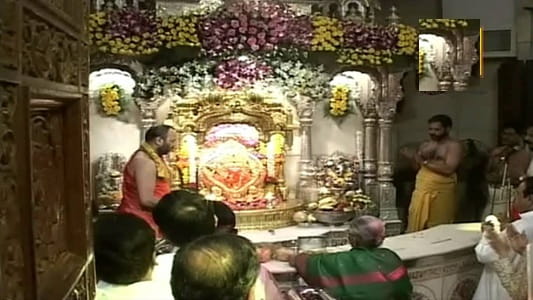
This is worth understanding before your visit, since it explains much of the temple’s reputation. The main idol, carved from a single black stone, features Ganesha’s trunk curved to the right — unusual, since most Ganesha idols across India traditionally show the trunk curved left. This right-tilted form is considered especially powerful and significant within Ganpati worship traditions, and it’s a large part of why devotees consider prayers here particularly potent.
The idol’s upper hands hold a lotus and an axe, while the lower hands hold a modak (sweet) and a japmala (prayer beads). A distinctive third eye marks the forehead, echoing Shiva’s iconography, and a sacred thread runs across the left shoulder and right side of the belly. Flanking the main idol are separate images of Riddhi and Siddhi — prosperity and spiritual accomplishment — which is precisely why the temple carries the name Siddhivinayak.
A genuinely charming detail: several rat (mushak) idols are placed around the temple, since the mouse is traditionally Ganesha’s vehicle. Local belief holds that whispering your wish into a rat’s ear here helps carry that desire to the deity — a small ritual many first-time visitors don’t know about until they’re already inside.
A Temple Built From One Woman’s Personal Hope
Understanding Siddhivinayak’s origin story genuinely adds meaning to the visit. The temple was built in 1801 by Deubai Patil, an Agri woman who didn’t have children of her own. Believing that constructing a temple to Ganesha would help other childless women conceive, she funded and built what was originally a modest, square brick structure in the Hemadpanthi style — a traditional blend of stone and wood construction.
The temple underwent a significant transformation in the 1990s, when architect Shri Sharad Athale of S.K. Athale & Associates redesigned it into the six-story marble and granite structure you see today, crowned with a gold-plated central dome symbolizing Ganesha’s power. Throughout this renovation, the original black stone idol — the same one Deubai Patil consecrated over two centuries ago — remained the unchanged centerpiece of the sanctum.
Dress Code and Practical Rules
There’s no strictly formal dress code, but modest attire is genuinely expected — cover your knees and elbows, and avoid revealing clothing or beachwear. Jeans are generally acceptable as long as they’re modest and cover the knees.
Not permitted inside: Shoes and any leather items. Free cloakroom facilities are available for storing belongings, so plan a few minutes for this before joining the darshan queue.
Facilities: Drinking water and rest areas are available on the premises, and live darshan streaming is offered on the temple’s official website and YouTube channel for devotees who can’t visit in person — genuinely useful for those living outside Mumbai or abroad wanting to stay spiritually connected.
Location: Where Exactly Is the Temple?
Shree Siddhivinayak Ganapati Mandir sits on S.K. Bole Marg in Prabhadevi, central Mumbai. A small Hanuman Mandir sits nearby as well, with a genuinely interesting backstory — during a road-widening project on Sayani Road near Elphinstone Road, municipal workers unearthed a Hanuman idol, which the temple’s head priest later brought to this location, leading to the smaller shrine’s establishment.
How to Reach Siddhivinayak Temple
By Rail
Dadar station serves as the most commonly cited nearby railway hub, while Currey Road station offers an even shorter approach, roughly a 10-minute walk from the temple.
By Road
City buses numbered 28, 35, and A-385, along with several others, stop directly at the “Siddhivinayak Mandir” bus stop every 10-15 minutes, costing just ₹10-20 per ride — genuinely the most economical option given Mumbai’s traffic. Metered taxis from South Mumbai typically charge around ₹250, while short app-based cab rides from Bandra run closer to ₹150, depending on traffic conditions.
Parking: Limited and paid near the temple, generally ₹20-50 for up to four hours. Given how congested the area gets, particularly on Tuesdays and festival days, public transport is genuinely the more practical choice for most visitors.
Frequently Asked Questions
Q1. We’re planning to arrive around 10 AM on a Wednesday — will we be able to get close darshan, or will we hit the Abhishekam closure?
This genuinely depends on the exact day’s schedule, since sources show some variance in the Maha Abhishekam window, generally falling somewhere between 7:30 AM and 1:00 PM. To be safe, plan your visit for after 1:00 PM if close, unrestricted darshan matters to you, or accept that a 10 AM arrival might mean viewing the deity only from a distance during this ritual period.
Q2. Is the ₹200 VIP Darshan genuinely worth it, or is the free queue manageable on a regular weekday?
On a normal weekday outside Tuesday, the free Shree Darshan queue is usually manageable within a reasonable time, so many visitors find it perfectly sufficient. VIP Darshan becomes genuinely valuable specifically on Tuesdays or during major festivals like Ganesh Chaturthi, when regular queue waits can stretch to 5-8 hours — the ₹200 fee is a small price for that time saved.
Q3. We want to book a vehicle pooja for our new car — do we need to bring the vehicle to the temple, or is this done symbolically?
Vehicle pooja at Siddhivinayak typically requires bringing the actual vehicle to the temple premises for the ritual to be performed directly on it, following standard practice for this popular Mumbai tradition. Given the ₹2,501 four-wheeler package includes prasad, it’s worth booking this in advance through siddhivinayak.org, particularly if you’re planning around a specific auspicious date.
Q4. We’re traveling with elderly grandparents and want a less crowded experience — what’s genuinely our best option?
Personalized Darshan is specifically designed for this situation, offering guided rituals near the sanctum with significantly less crowd exposure than the standard queue. Combined with an early morning weekday visit — ideally Wednesday, when Tuesday’s heavy crowd has already dispersed — this genuinely gives your grandparents the calmest, most comfortable version of the temple experience.
 Karan Singh